



Extreme weather events like Cyclone Gabrielle as well as higher interest rates, pandemics and global supply chain insecurity have placed great pressure on Aotearoa New Zealand’s building and construction industry.
These shocks and stresses have disrupted business as usual within the industry. Can we do anything differently to meet these challenges? Adopting a circular economy approach is one way we can make the building and construction industry more resilient and sustainable.
What is a circular economy?
In a linear economy, resources are extracted, made into products and materials and disposed of as waste at the end of their life.
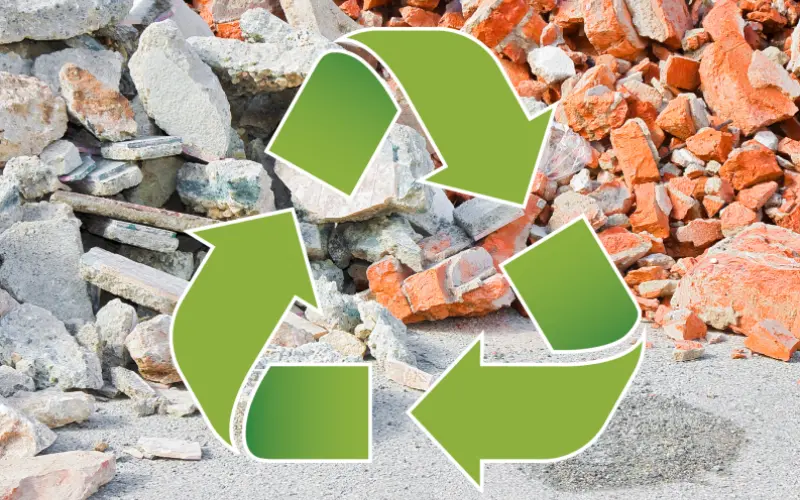
A circular economy keeps resources in use for as long as possible to maximise their value. Products and materials are recovered and regenerated at the end of their service life (for more see the article on page 64).
A circular economy also incorporates the idea of regenerative construction – regenerating natural systems and reducing waste production by designing out waste from the beginning of a build. A circular economy creates ‘new and different value so that building and construction activities help the environment and communities within that environment thrive’, according to the Construction Sector Accord Environment Roadmap for Action.
Circular economy thinking shares many values with te ao Māori. According to the Ministry for the Environment (MfE), both the circular economy and te ao Māori ‘focus on not creating waste in the first place and cycles of continual regeneration. In te ao Māori, the concept of whakapapa adds further richness. Whakapapa is the kinship between all living things – it exists not just between people but between people and the planet. That kinship creates connection, respect, and responsibility. In this way, whakapapa gives rise to kaitiakitanga and our responsibility to actively care for our environment.’
Implementing a circular economy
In 2023, MfE launched Te rautaki para | Waste strategy. The strategy has a key vision that, ‘by 2050, Aotearoa New Zealand is a low-emissions, low-waste society, built upon a circular economy. We cherish our inseparable connection with the natural environment and look after the planet’s finite resources with care and responsibility.’
The strategy identifies six guiding principles to assist circular economy thinking:
- Take responsibility for how we make, use, manage and dispose of things.
- Protect and regenerate the natural environment and its systems.
- Ensure our systems for using, managing and disposing of materials are financially sustainable.
- Apply the waste hierarchy preferences to how we manage materials.
- Deliver equitable and inclusive outcomes.
- Think across systems, places and generations.
These guiding principles underpin a three-phase implementation plan for Aotearoa New Zealand:
- Phase 1: now to 2030 – embedding circular thinking into our systems.
- Phase 2: 2030 to 2040 – expanding to make circular normal.
- Phase 3: 2040 to 2050 – helping others do the same.
Alongside these system and behaviour change initiatives, MfE is looking to make regulatory changes that support the growth of a circular economy. These include replacing the existing Waste Minimisation Act 2008 and Litter Act 1979 with new legislation. This will support delivery of initiatives such as the waste strategy and the waste management actions of the emissions reduction plan.
Need to change behaviour
While legislation is critical if we are to implement a circular economy approach in the building and construction industry, there are also system and behaviour change shifts that need to occur:
- Reappraising value – considering the value of including and prioritising repair and reuse within the design and construction process.
- Shaping market practice and processes – for example, through regulatory/steering instruments, performance drivers and market shifters that set expectations around the circular economy.
- Tilting investment flows – promoting sustainable building practices through finance, capital and tax incentives and public sponsorship of industry best practice.
- Building capacity – promoting sustainable construction skills, knowledge and training across the industry. This is being actively addressed by the Hanga Ara Rau and Waihanga Ara Rau Workforce Development Councils, which are reviewing qualifications on resource recovery and demolition unit standards.
We also need to restructure our environment to support the change to a circular economy. Issues to address include investing in waste infrastructure to enable sorting, creating market pathways for waste, enabling reserve logistics and, most importantly, improving product stewardship. To make the industry more resilient and sustainable, it is also essential to build skills and knowledge through training.
Supporting action within construction
Some recent examples of circular economy thinking in action:
- Naylor Love’s construction project at the AUT North Campus, which diverted over 90% of its construction waste by weight from landfill (see article on page 70).
- Upcycled Building Materials Ltd’s saveBOARD product is made by diverting composite packaging waste and turning it into affordable, high-performance building materials.
- Marley, one of Aotearoa New Zealand’s largest plastics manufacturers, is recycling uPVC and HDPE plastic. Clean uPVC and HDPE from commercial, industrial and construction sources will be remanufactured into high-value engineered products.
There are also efforts to create system shifts. BRANZ has partnered with MfE to update and refresh the REBRI (Resource efficiency in the building and related industries) tool – branz.co.nz/sustainable-building/reducing-building-waste. REBRI helps to reduce the amount of building waste sent to landfill from construction and demolition sites.
Through this and other projects, BRANZ supports industry action on waste and helps the industry apply an approach to construction practice in which a circular economy is front and centre.