

Table 8.2 in NZS 3604:2011 Timber-framed buildings covers stud selection for various configurations:
● For a single or top storey with light or heavy roofs, use Table 8.2(a).
● For the lower of two storeys, or subfloor walls beneath one storey, use Table 8.2(b).
● For subfloor walls beneath two storeys, use Table 8.2(c).
All the tables give stud sizes and spacings for given stud lengths and wall loaded dimensions.
Notes important
It’s important to read the notes at the bottom of the tables (see Figure 1).
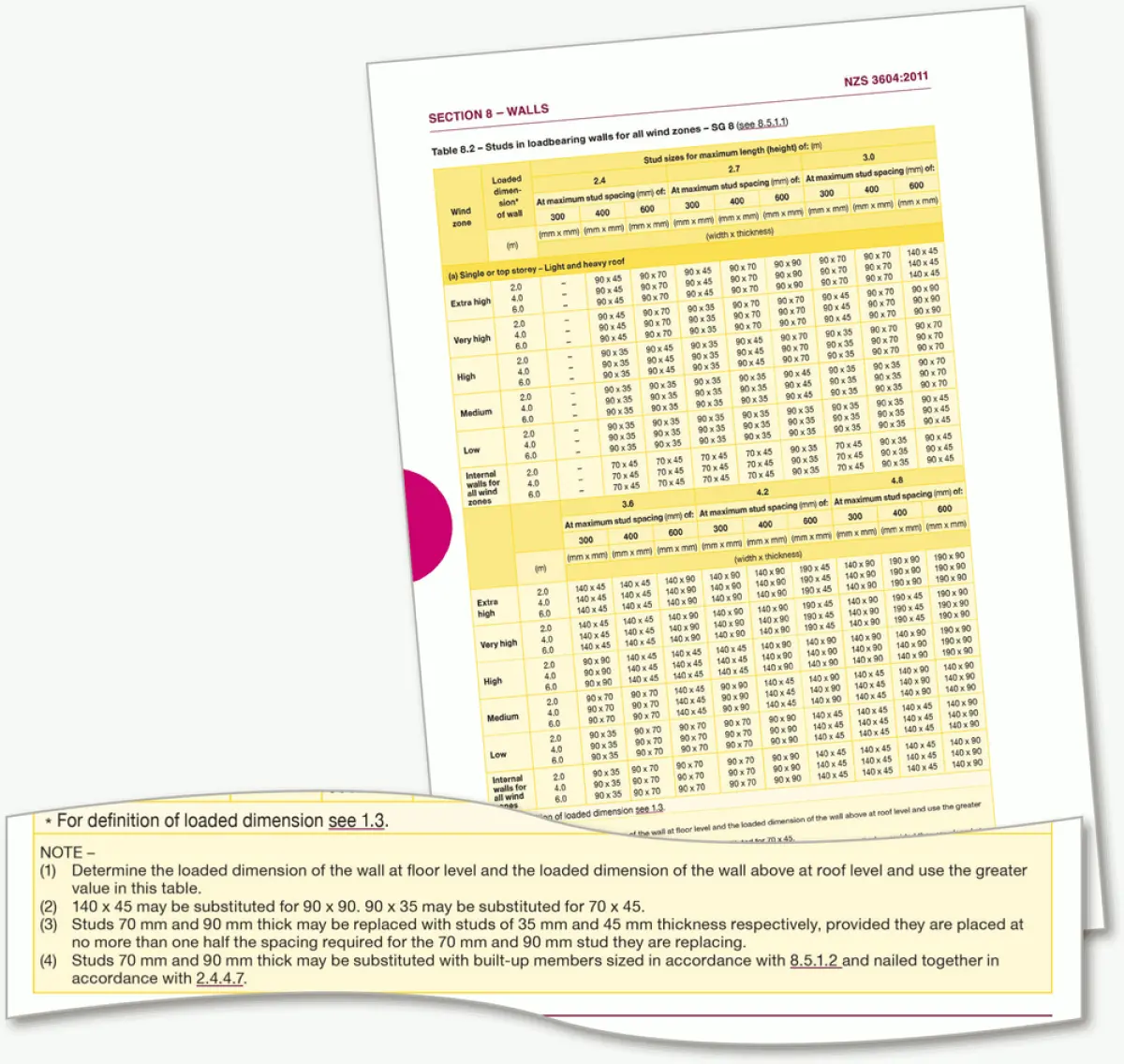
Note 1
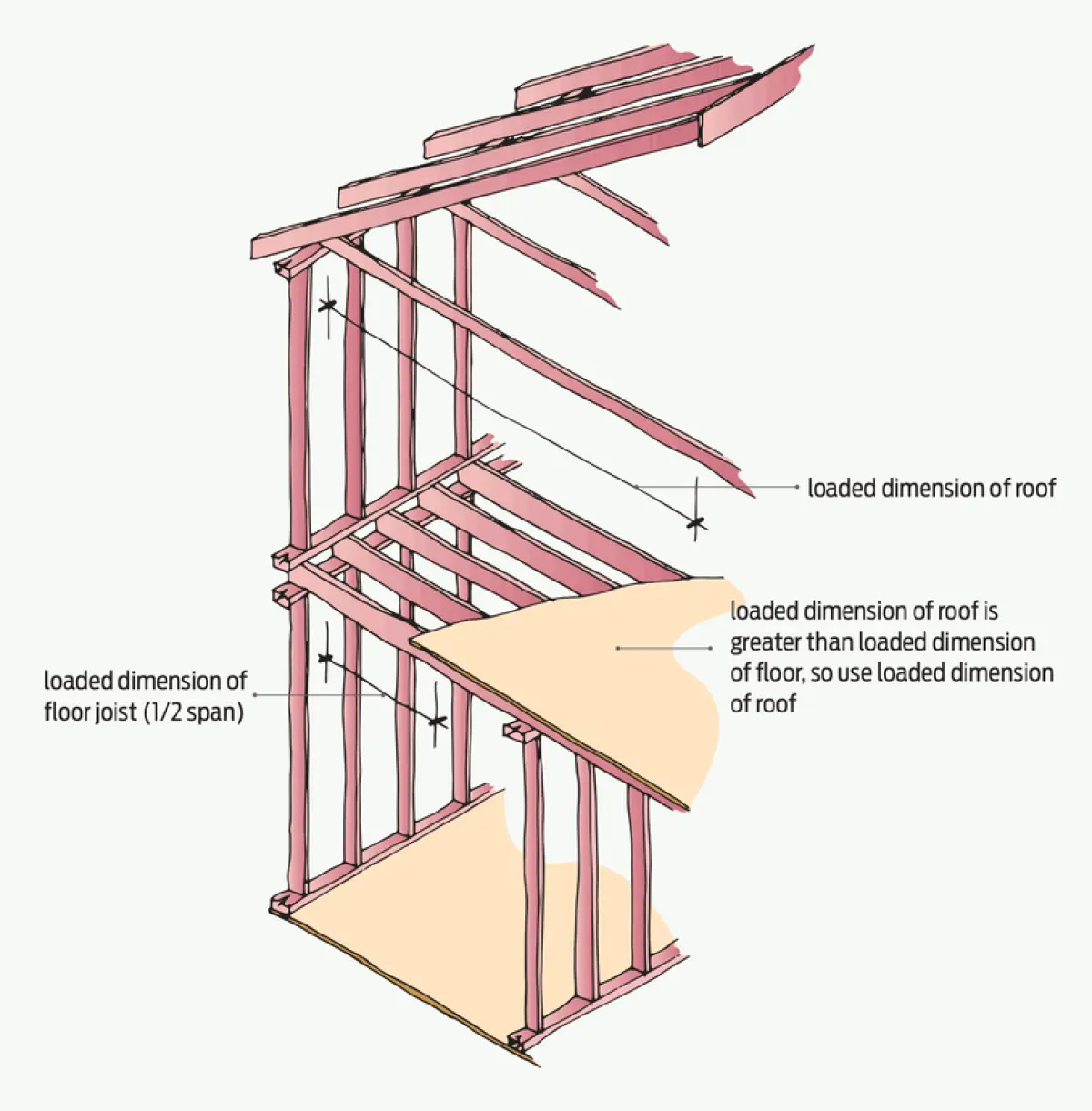
Note 1 says ‘Determine the loaded dimension of the wall at floor level and the loaded dimension of the wall above at roof level and use the greater value in this table.’
This means that, where the stud is supporting a floor that, in turn, supports a wall above and that wall supports a roof, the greatest loaded dimension of the floor or roof is used to select the studs from the table (see Figure 2).
Note 2 often misinterpreted
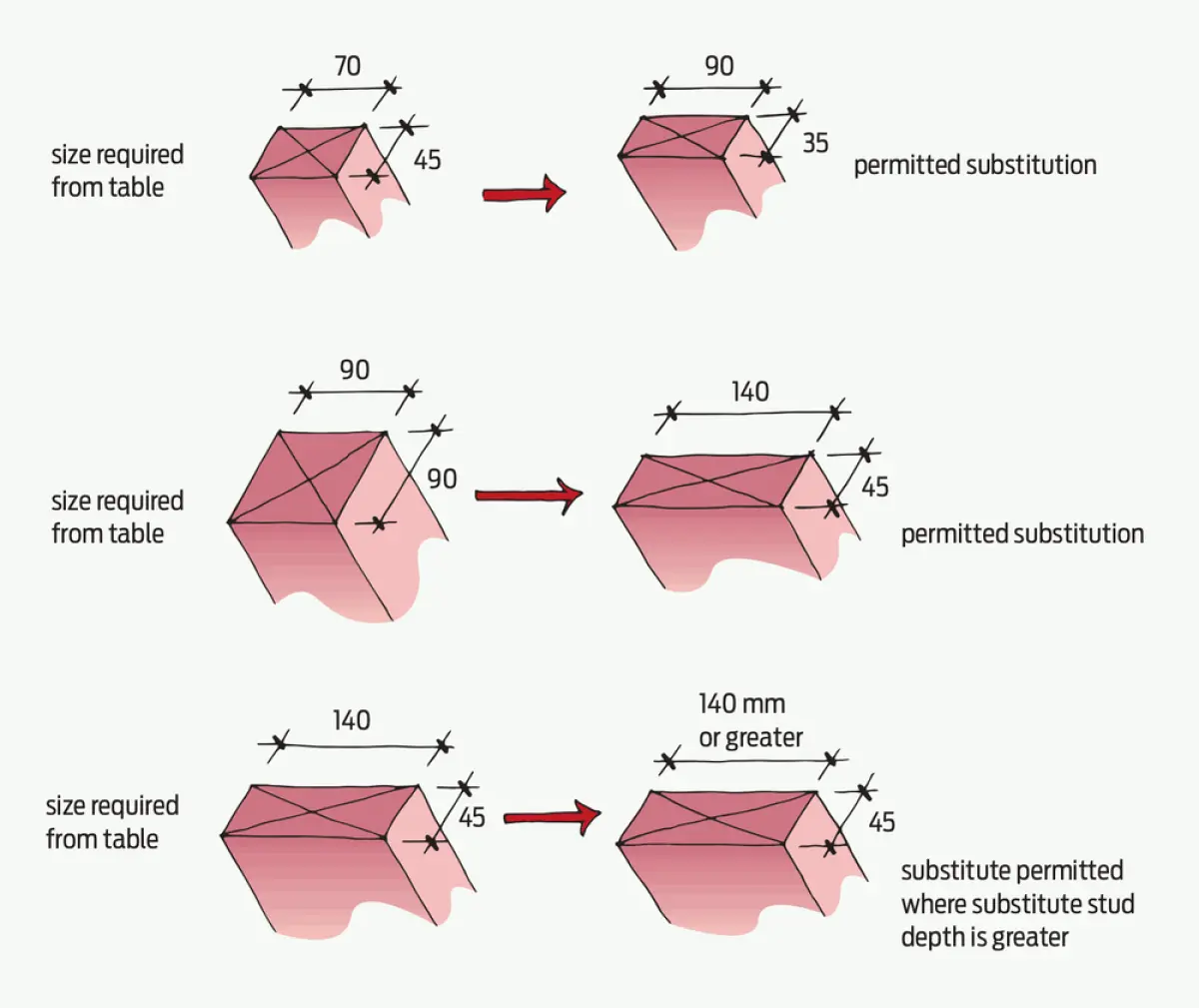
Note 2 says ‘140 × 45 may be substituted for 90 × 90, 90 × 35 may be substituted for 70 × 45’.
This means that, where the tables require a 90 × 90 mm stud, it can be substituted with a 140 × 45 mm stud. The reverse is not true – where a 140 × 45 mm stud is required in the tables, it cannot be substituted with a 90 × 90 mm stud.
If Table 8.2 requires a given depth of stud, any substitution must be with a greater depth stud. For example, where the table requires:
● a 70 mm deep stud, it can be replaced with a 90 mm stud
● a 90 mm deep stud, it can be replaced with a 140 mm stud
● a 140 mm deep stud, it cannot be replaced with a lesser depth stud.
The other example – ‘90 × 35 may be substituted for 70 × 45’ – means that, where a 70 × 45 mm stud is required in the table, it can be substituted for a 90 × 35 mm stud, so a deeper (now 90 mm) but thinner stud (see Figure 3).
Note 3
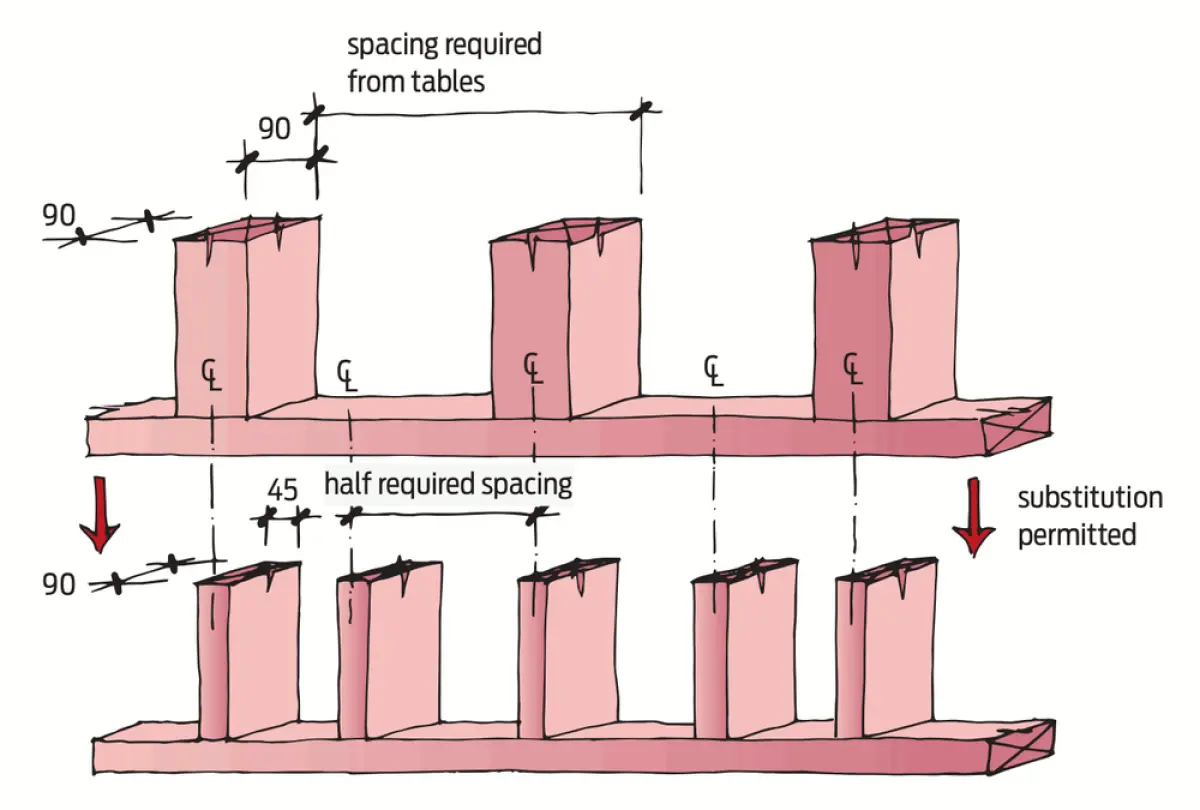
Studs of 70 mm thickness may be replaced with 35 mm studs and 90 mm thick studs replaced with 45 mm, provided the spacing is reduced to no more than half of the spacing required for the 70 mm and 90 mm studs they are replacing (see Figure 4).
Note 4
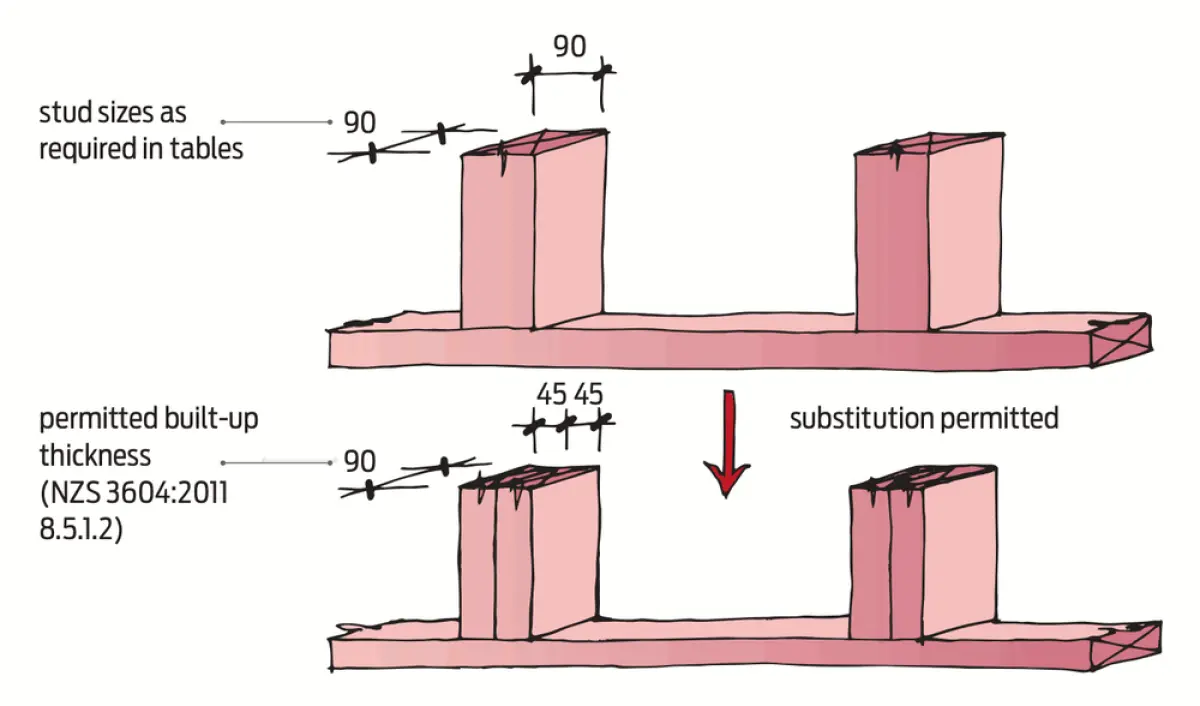
Studs 70 mm and 90 mm thick may be substituted with built-up members sized in accordance with NZS 3604:2011 clause 8.5.1.2 and nailed together in accordance with clause 2.4.4.7 (see Figure 5).