




NZS 3604:2011 Timber-framed buildings requires that floor joists are stabilised against any tendency to tip over sideways by providing lateral support at specified locations. This can take the form of boundary joists, blocking or even herringbone strutting.
Where is blocking required?
NZS 3604:2011 clause 7.1.2 specifies that lateral support must be located:
- at joist ends (blocking or boundary joists)
- within 300 mm of subfloor lines of horizontal support (for ground floors)
- within 300 mm of wall bracing elements in the floor below (for upper floors)
- at the middle of longer spans (for deeper or more slender joists).
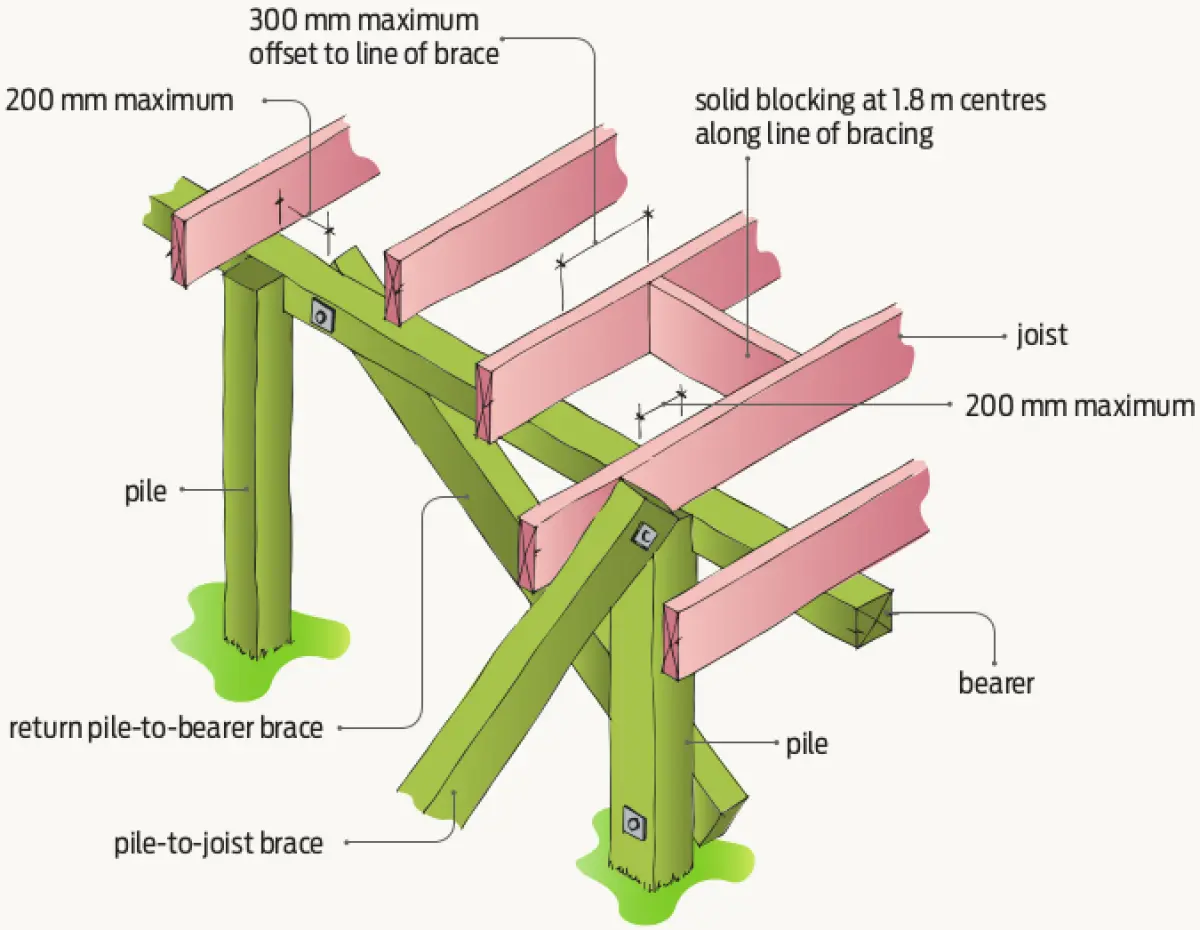
How this joist lateral support might look in a ground floor is shown in NZS 3604:2011 Figures 6.5 (cantilever piles), 6.7 (braced piles), 6.9 and 6.10 (anchor piles). Further examples are shown here in Figures 1, 2 and 3.
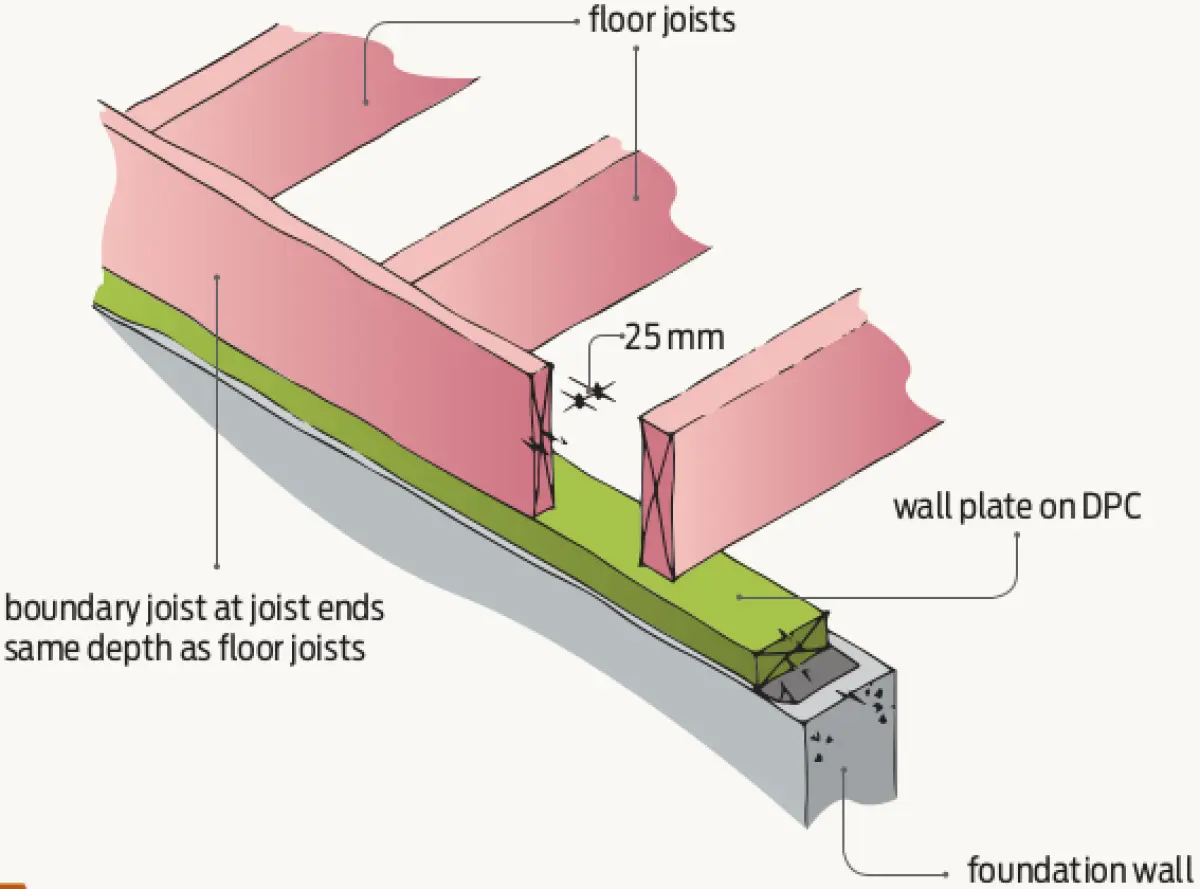
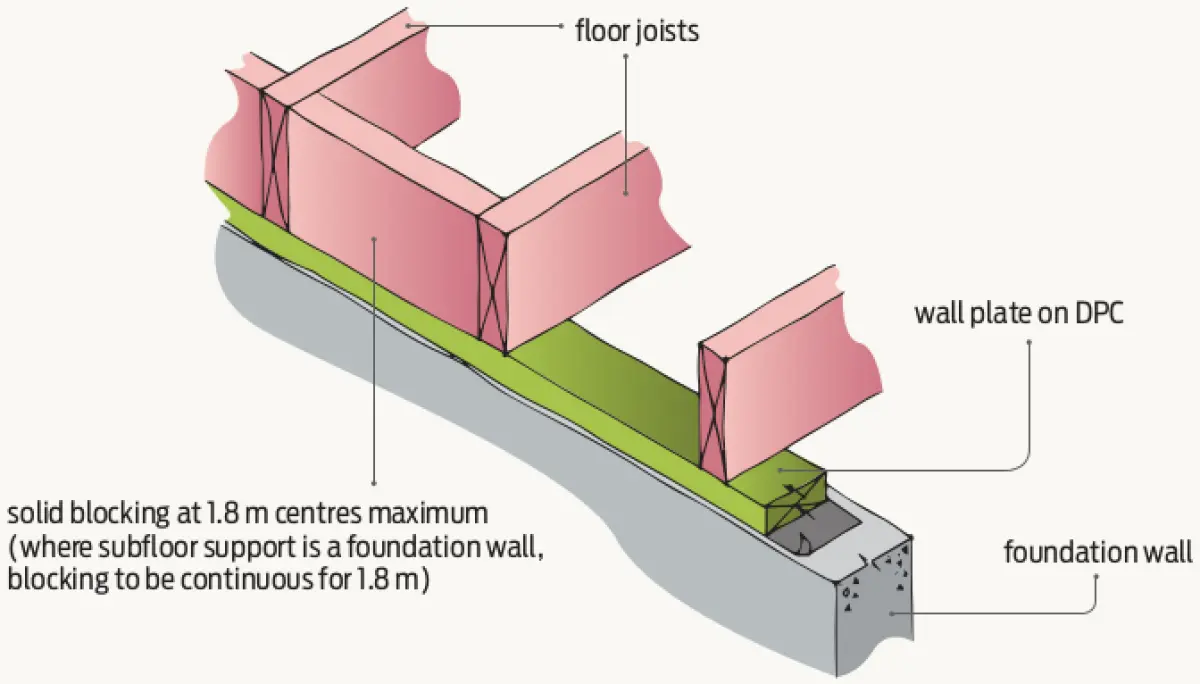
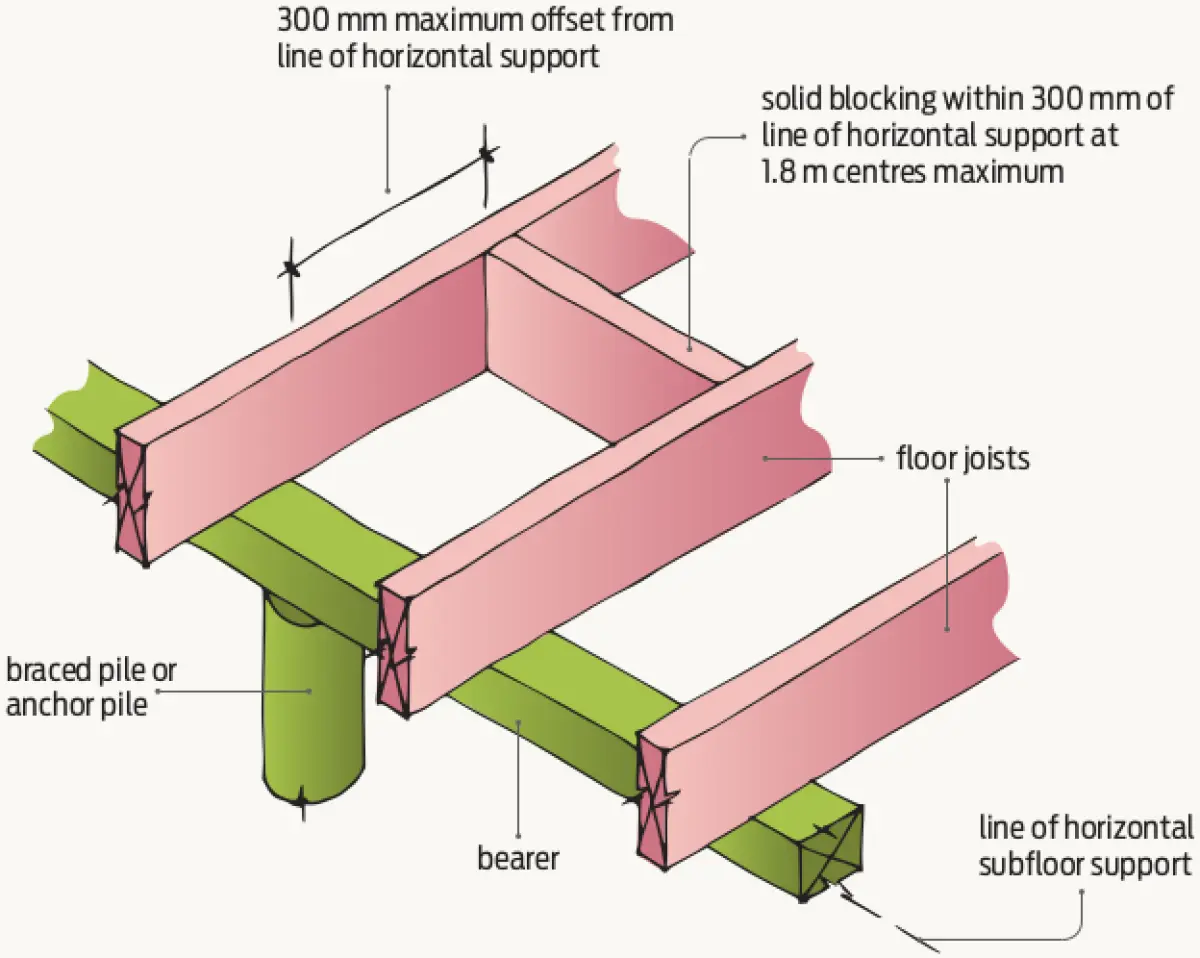
Note that the possible return brace, shown dotted in NZS 3604:2011 Figure 6.8, would also need lateral support blocking to the joists – see Figure 4.
Same principles for upper floors
For an upper floor, essentially the same principles apply. Lateral support is required over braced walls in the storey below, and NZS 3604:2011 Figure 7.2 shows some examples. In addition, clause 7.1.2.3 requires blocking at the mid-span for the stability of deeper joists. So, where joists span 2.5 m or more and the joists are four or more times their thickness (190 × 45 mm or larger), blocking is required at the mid-span.
Further consideration should also be given to where joists are cantilevered out over a beam or wall below. This is normally provided by the blocking used for the backing of the flashing (see NZS 3604:2011 Figure 7.6).