



‘We have long since passed the time for climate action, and incremental change is no longer an option.’ This sentence is in the publication United Nations Emissions Gap Report 2022. It concludes that avoiding dangerous levels of warming will require ‘wide ranging, large scale and rapid transformation’.
Nearing the limits
Scientists tell us we must limit warming to 1.5°C if we are to avoid the worst impacts of climate change. As a globe, we have a finite amount of carbon we can emit before we reach this threshold, and if we carry on emitting at current rates, we will use up this budget in only 9 years.
Aotearoa New Zealand has been very active recently in planning for reducing emissions. However, past action has been too little, with our emissions rapidly going in the wrong direction and increasing by 26% since 1990. We must act now, and this action must be decisive and transformative.
Transport accounts for nearly one-fifth of our total greenhouse gas (GHG) emissions and around half of the carbon dioxide emissions – with the remainder largely methane from agriculture. Significant emissions reductions need to come from our transport sector if we are to achieve our targets, and these reductions are fundamentally underpinned by the urban form of our cities.
Under the government’s emissions reduction plan, a transport emissions reduction target of 41% by 2035 has been established. While many argue this is insufficient, it will still require a massive rethink in how we build towns and cities – away from low-density, sprawling neighbourhoods that lock in high emissions futures towards mixed-use, higher-density neighbourhoods. This will, in turn, enable residents to reduce their reliance on cars and move towards active and public transport modes.
This is not news to the many councils and advocates who have been pushing in this direction. However, what is unclear and unresolved is how we deliver this transformation at the scale and pace required.
A new approach to urban development
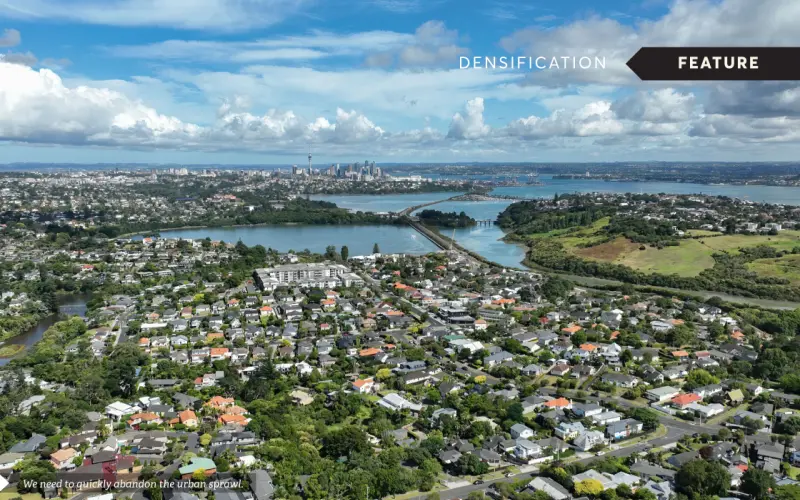
Aotearoa’s urban form has been developed around the car. Like many other countries, we have ended up with an urban sprawl that has generated a wide range of negative impacts – and not only in terms of emissions. A low-density development pattern presents real challenges with funding infrastructure and services over the long term. It can reduce the viability of public transport networks and lead to increasing traffic congestion and often the decline or near death of main street shopping areas and CBDs. All this has been seen in large and mid-size cities around Aotearoa.
The housing supply crisis has been putting pressure on councils to release more greenfield land as it is generally easier and quicker to deliver, but this only exacerbates the problems outlined.
Density done well, by comparison, can address many of these issues, creating more economically productive communities that are greener and more sustainable and build vibrancy and social capital. Liveable, dense cities are faster to get around – providing more choice, more diversity and more affordability. They are good for people and good for business. They also preserve open space, productive land and natural ecosystems.
Why urban sprawl is unsustainable
Ultimately, development choices have direct impacts on the costs of running a city and rates.
Urban sprawl requires significant infrastructure – roading, footpaths, water and wastewater, power and waste management. All these systems and services must be built, maintained and eventually renewed. Simply put, low population density requires far more expansive networks and services and there are fewer people to pay for them.
In higher-density environments, more people per hectare creates economies of scale and lower costs and consequently lower rates over the long run.
A recent study by Canadian thinktank the Smart Prosperity Institute estimated that the costs of low-density development are around twice that of higher-density cities. Many other independent studies have developed similar conclusions.
What’s holding us back?
Admittedly, changing our approach to urban development is not easy. From a practical perspective, retrofitting existing areas is extremely complex, and there are also the cultural norms regarding quarter-acre sections and the suburban dream.
The development patterns in most towns and cities in Aotearoa have been driven by a range of complex and interrelating factors – including land prices, preconceptions around housing preferences, lending criteria and a largely laissez-faire approach to development controls. Tax incentives and land banking also makes site acquisition difficult, which inhibits existing centres from being reimagined and redesigned at scale.
Further, Aotearoa also doesn’t have many good examples to point to, making it hard to win over support. Change is unpopular if it is not possible to see what it will look like.
There are, however, some increasingly promising examples of well-designed, mixed-use neighbourhoods with plenty of green space that are close to public transport. Hobsonville Point is an excellent example, as well as Wynyard Quarter, though these were both originally greenfield areas.
While the emissions reduction plan focuses on transport reduction and acknowledges the importance of urban form to deliver this, as mentioned before, concrete policies are missing.
I hope that the 2026–2030 emissions budget advice from the Climate Change Commission will be strengthened to deliver deliberate interventions to reshape our cities to enable low-emissions lifestyles. Certainly, current policies in some councils are promising, but more could be achieved if investment was coordinated and projects delivered together, at scale and with strong, cohesive design principles.
Public sector must get involved
Change will be complex, potentially risky and require significant capital. It points to the need for public sector involvement to partner with and catalyse the market.
Apotential solution is to establish urban regeneration agencies (URAs) in key centres. This is not a new idea – international examples include the Perth Metropolitan Redevelopment Authority,
Urban Growth NSW, Renewal South Australia, Sydney Harbour Foreshore Authority, London Legacy Development Corporation and many more.
Locally, Auckland Council has established Eke Panuku, which has a broad range of functions in urban regeneration across council-owned sites. URAs could adopt a variety of structures and operating models as well as relationships to other initiatives and stakeholders such as Kāinga Ora, iwi and private developers.
The specific role of a URA needs careful consideration – from facilitation through to land acquisition and development – as well as its funding sources, approval and acquisition powers. If done well, these agencies could play a key role in kickstarting the transition we need.
Learning from others
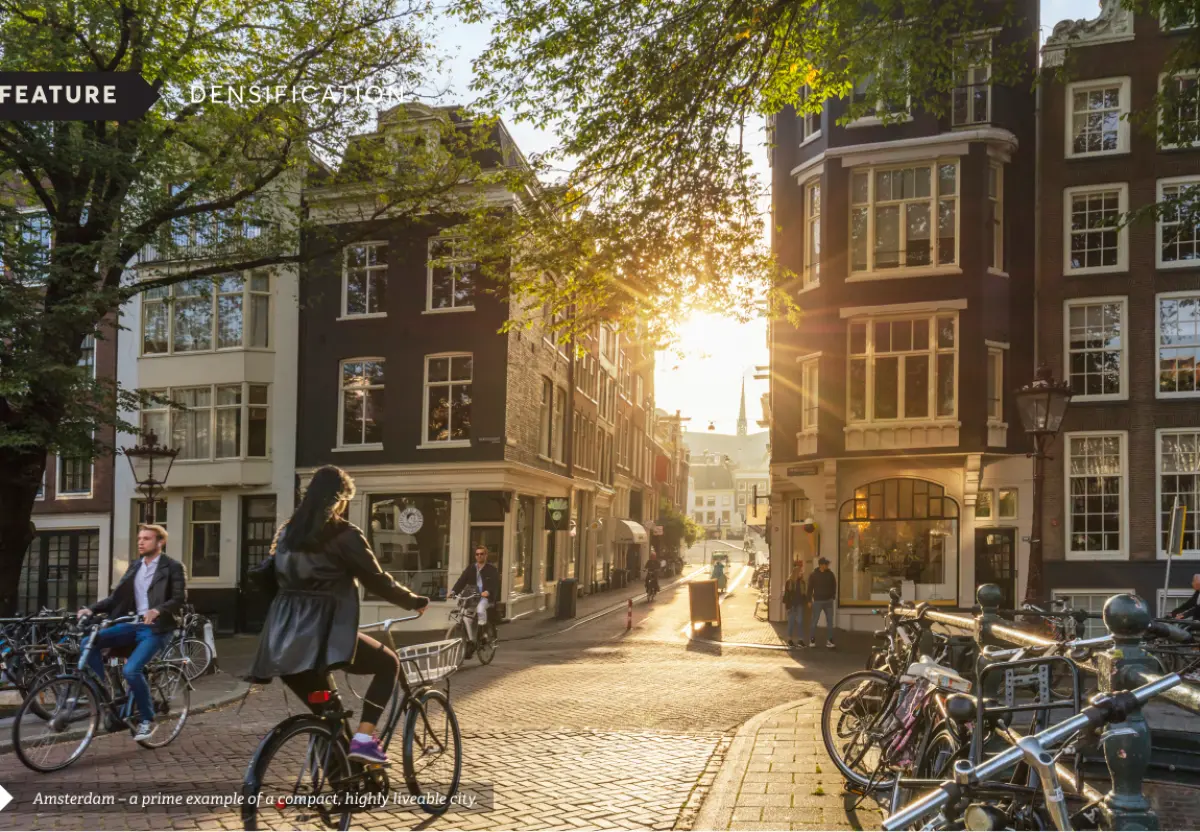
We should look to overseas examples and learn from them. People visit cities like Amsterdam and think they are fantastic – unlike Aotearoa’s car-centric cities. But what they don’t understand is that
Amsterdam was also a car-centric city following WWII and up until the 1970s when several very deliberate changes were made to make the city more liveable.
The establishment of entities such as URAs would enable more active and purposeful shaping of our cities. It would demonstrate examples of success and allow the private sector to follow and feel more confident to invest.
The successful delivery of such projects will demonstrate new ways of living and moving around, create new and vibrant urban areas and, importantly, will make the most of our existing infrastructure investment.
This will ultimately make our cities and towns more connected and sustainable, with a wider range of housing – including more affordable options – while supporting quality living environments across the housing continuum.
It will also give us a fighting chance to reach our emissions targets and do our bit globally to halt the deafening march of climate change.