

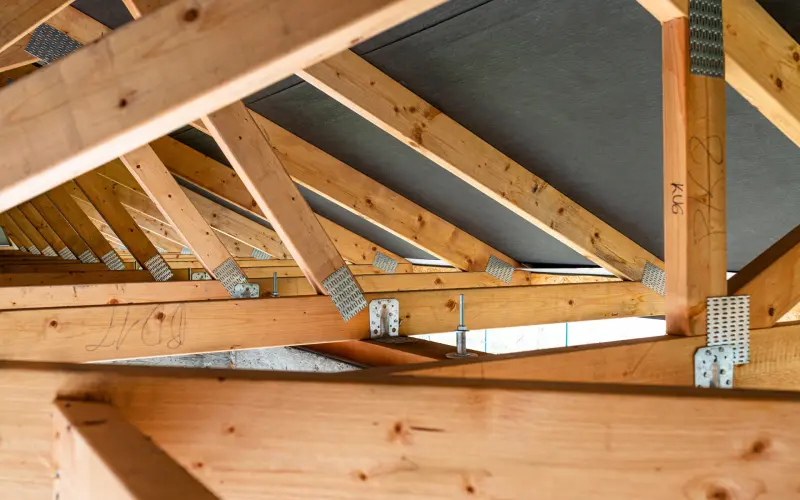


Previous versions of NZS 3604 put most of the emphasis on close-coupled roof framing design and construction and left nail-plated roof trusses to the realm of specific engineering design. Roof truss information was in the commentary in the 1999 standard, making it informative. NZS 3604:2011 has moved it into ‘normative’ text (where it is mandatory) and updated the requirements to reflect current industry practice.
What is current industry practice?
The Frame & Truss Manufacturers Association (FTMA) Code of Practice was developed at the same time as the NZS 3604 revision. This assisted in determining current industry practice.
The truss documentation section of the Code of Practice sets out the requirements for FTMA members for the minimum level of documentation, specific details and identification requirements to provide when manufacturing timber nail-plated roof trusses. Some of this information has been used in NZS 3604:2011.
Accredited fabricators and SED
Roof trusses used with NZS 3604:2011 remain specific engineering design and must be manufactured by an accredited fabricator. An accredited fabricator is a company accredited by a nail-plate manufacturer to fabricate roof trusses using nail plates and construction details supplied by that same nail-plate manufacturer.
This is an important inclusion as the controls in these production environments help ensure the integrity of the manufactured structural item.
Limitations when using NZS 3604
Being a proprietary product and subject to specific engineering design, it is necessary to provide limitations to the use of roof trusses within a building designed using NZS 3604:2011. This is to avoid loads that may have an adverse effect on the rest of the structure.
Limitations applied to roof trusses are:
- a span no greater than 12 m
- eaves overhang shall not exceed 750 mm measured horizontally from the face of the support
- spacing no greater than:
• 900 mm for heavy roof claddings
• 1200 mm for light roof claddings - resultant loads not exceeding 16 kN in either an upwards or downwards direction
- ground snow load may not exceed 2 kPa.
Clause 10.2.2.3 sets out the three levels of documentation required for each project:
- Producer Statement (design) for the design software used.
- Design statement by the accredited fabricator listing the specific project design particulars.
- Manufacturing statement by the fabricator confirming that the truss installation is in accordance with the design statement and truss layout plan.
It is critical that designers receive and review roof truss documentation before completing the design of the supporting structure.
Trusses need identification
NZS 3604:2011 introduces the requirement for truss identification labels as a means of determining that the roof trusses installed in a building match the documentation provided to the builder, specifier or building official.
Six trusses in every job shall be labelled or all the trusses where there are less than six in a job.
Roof truss bracing requirements
The requirements for roof truss bracing are set out in section 10.3 of NZS 3604:2011.
Whoever designs the roof bracing should also design the bracing for the rest of the structure. Systems to resist horizontal or vertical loads should be considered using a whole-of-house approach rather than be designed in isolation.