



In Aotearoa New Zealand, a rental property remains first and foremost a landlord’s asset rather than a tenant’s home. In recent years, several amendments to the Residential Tenancies Act (RTA) have been made with the aim of improving security of tenure and wellbeing for renters.
Regulations strengthening tenants’ rights
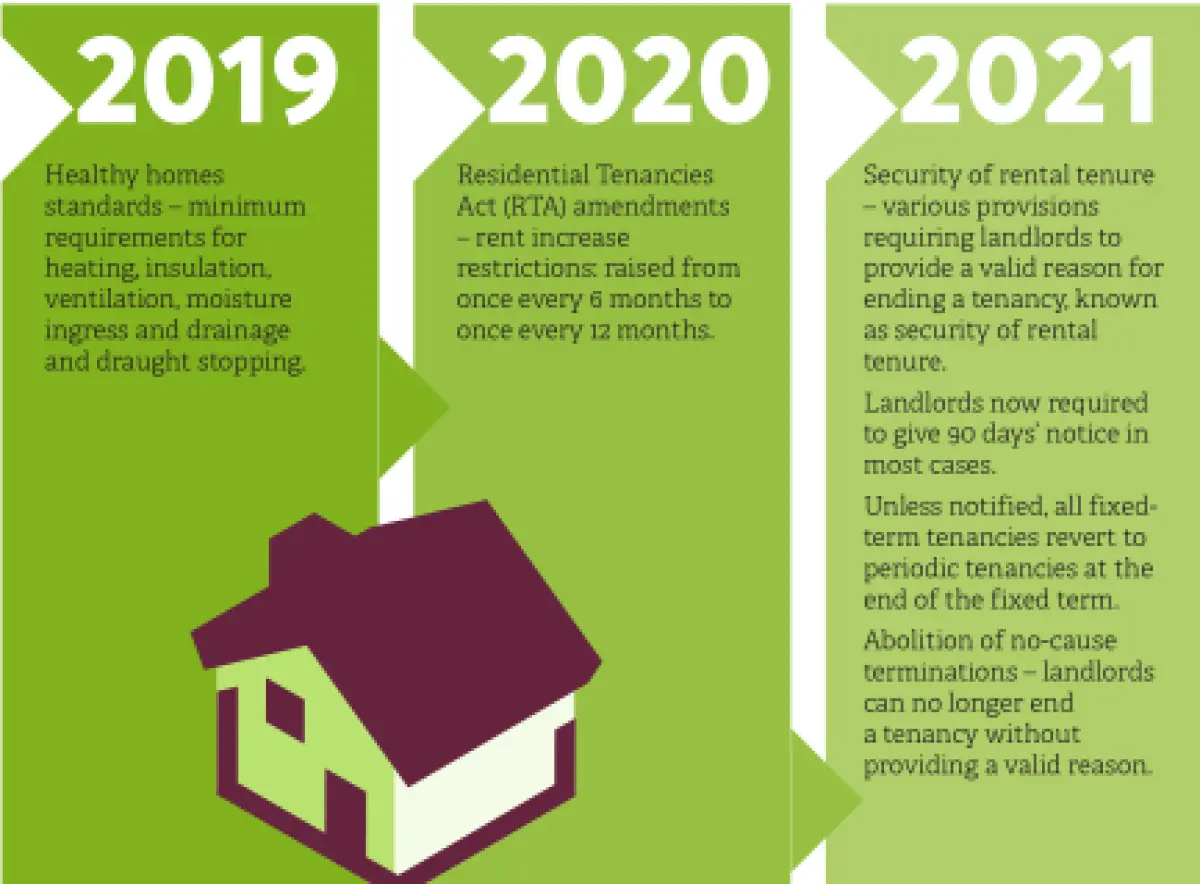
The changes have included the abolition of no-cause terminations, legal allowances for renters to make minor home-making modifications to their dwellings, limiting rent increases to once a year and increased notification periods.
Further, the healthy homes standards have introduced more stringent regulations on the physical condition of rental properties, particularly around heating and insulation (Figure 1). Our research into the private rental sector provides an early indication that these changes have positively impacted the experiences of renters. However, there remain concerning continuities.
2021 survey background
In 2021, we conducted a survey of 812 tenants and 420 landlords across Auckland, Wellington, Christchurch and Dunedin - investigating their experiences of the private rental market. The research was a follow-up to a similar study conducted in 2015. Data was collected through:
- telephone and online surveys with tenants
- a telephone survey with landlords
- in-depth interviews with subgroups of tenants and landlords.
The timing of these studies before and after substantial legislative change provides useful data and commentary on shifting views and continuities in landlord and tenant perceptions and experiences of the private rental market. As in 2015, our 2021 survey revealed a wide range of experiences and views.
What’s changed since the 2015 survey
Compared with the 2015 survey, the healthy homes standards were no longer seen as controversial. In the previous survey, many landlords voiced opposition, seeing it as unnecessary or well intended but misguided. By 2021, landlords had largely accommodated to the healthy homes requirements and accepted the legislation, recognising the value of providing healthy rental homes.
A positive change since 2015 has been more tenants and landlords indicating they had signed a tenancy agreement and reporting bonds had been lodged with
Tenancy Services, suggesting improving adherence to the RTA requirements.
However, there was a concerning continuity in the data with a small number of tenants describing a rental scenario of low rent for poor-quality housing. For example, one renter commented that, while the property was ‘really old’ and that the landlords had ‘done nothing to the house’, they didn’t want to raise any issues.
This desire to not rock the boat was common. Tenants expressed a reluctance to request maintenance or modifications to the property, even if they were included in the healthy homes requirements. Asserting their rights and the use of a legal avenue for redress like the Tenancy Tribunal had to be weighed against the possibility of repercussions in the form of rent increases or increased inspections.
While both parties might see such an arrangement as mutually beneficial, negative health outcomes due to substandard housing remain a serious issue – and it’s likely to continue as long as market rents remain unrestricted and high.
Are landlords leaving the market?
The recent changes to the RTA to improve security of tenure give renters the right to make minor changes to personalise their home and abolish no-cause terminations of tenancies. However, there were concerns from landlords that these regulatory changes were a step too far and now tipped the scale unfairly towards tenants’ rights over their rights. Amendments to tax settings for investment properties also led some landlords to feel they were being made a scapegoat for housing unaffordability.
A rental provider in Auckland believed it was becoming too hard to be a landlord with the recent changes in tenancy law, leading them to consider selling their rental property. ‘We feel the rights of landlords have really diminished … they can do painting and alterations and goodness knows what else in your home [sic] … if we can’t find the right tenant, we will probably sell,’ they said.
The survey numbers suggest this is not a unique perspective. Landlords intending to purchase additional rental properties dropped from 26% to 15% between 2015 and 2021. The most common reason was uncertainty about current and proposed changes to government policy (37%) followed by rising house prices (32%) and access to finance (20%). Intention to sell rental property was also higher in 2021 (21%) compared with 2015 (15%). But other landlords, especially those who’d been in the business for longer, were less concerned by the changes. As one said, ‘Landlords have had a very good run and putting more pressure on landlords and making it more fair for tenants is a good idea.’
Residential mobility is high for renters compared with owner-occupiers. A quarter of tenants surveyed had moved within the last year, and just over half the sample had been at their current address for less than 2 years. While the RTA (2021) amendments improve security of tenure, landlords can still decide to sell a rented dwelling or extensively renovate it with 90 days’ notice required.
If they’re moving staff, family members or themselves into the house, then only 63 days’ notice must be given to the tenant. Arguably, these exceptions provide a relatively basic loophole for landlords to circumvent the no-cause termination provisions.
Anxiety about security of tenure
Anxiety about a lack of secure tenure was evident, even among some renters who had lived in their homes for a decade or more. As in the earlier study, renters commonly talked about feeling ‘lucky’ and ‘fortunate’ to have somewhere to live that was comfortable and affordable, but feelings of being lucky sat close to anxiety that at any time they might have to move and find somewhere else to live. As one renter said, ‘We’ve been so lucky. I can’t believe it’s been this long … we pay so little compared to houses in the same street. I get nervous because I don’t know if they’re going to let me stay … I don’t want to jinx it.’
While it is encouraging that most tenants (82%) continue to report their current accommodation is adequate and meets the needs of their household, 16% reported their accommodation as inadequate. The most common reasons were that they found their accommodation too small or expensive, or it was damp or needed maintenance.
In the 6 years between the surveys, insulation standards have reportedly improved, and an increase in signed tenancy agreements and bond lodgement rates suggest an increased professionalism within the sector.
Yet, despite efforts to improve housing conditions and tenant security, many renters remain in vulnerable housing situations due to high housing costs and a fear of rent increases.
Another key continuity is the perception that rental housing is a second-class option, with home ownership remaining a primary aspiration for most renters.