

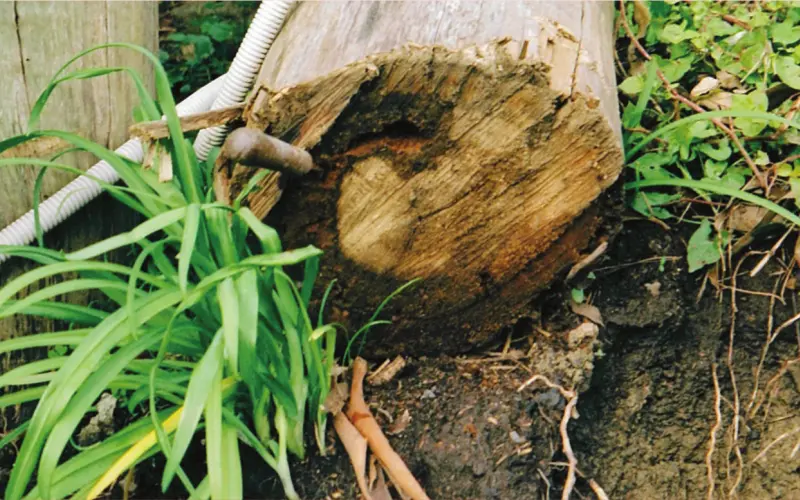


From time to time, we hear about or see evidence of premature decay in timber or wood products. This may be due to:
- the wrong preservative treatment used for that end-use situation
- poorly treated product
- treated timber being cut or machined following the preservative treatment and no remedial treatment applied.
New timber may not solve the decay problem
Where decayed timber is observed, it is often removed and replaced.
However, occasionally the replacement timber also degrades at an increased rate. There are several reasons why this may occur due to an active fungal population present in the surrounding area.
Site may have high fungal inoculum
Where treated timber shows evidence of decay, there is potential for exposure to an active fungal population. If this exists, it can have a negative ongoing impact on the durability of the replacement timbers.
Precautions when replacing poles
An active fungal population has been observed when replacing poles affected by brown rot in sandy soils. In these circumstances, it is recommended that:
- the replacement pole is not installed in the same hole or position
- where the pole cannot be repositioned:
- the soil should be dug out and replaced with a new fill material, or
- a physical barrier is included or the pole is set in concrete, or
- an alternative preservative system is applied, such as creosote, to protect the timber in contact with the soil.
Boxing timber a culprit
Another situation to be wary of occurs when laying concrete pads or paths during construction. The boxing timber used is often untreated or has low hazard class treatments and is in direct contact with the ground installation. This may present an extreme or severe decay hazard to neighbouring treated timbers, such as posts or building poles, if they are in contact.
This decay hazard occurs because the timber edging may begin to decay, increasing the fungal inoculum potential in the area and presenting a risk to the long-term durability of the post or pole.
This hazard will be present regardless of the post or pole being treated to a higher hazard class level.
Replacing weatherboards and flooring
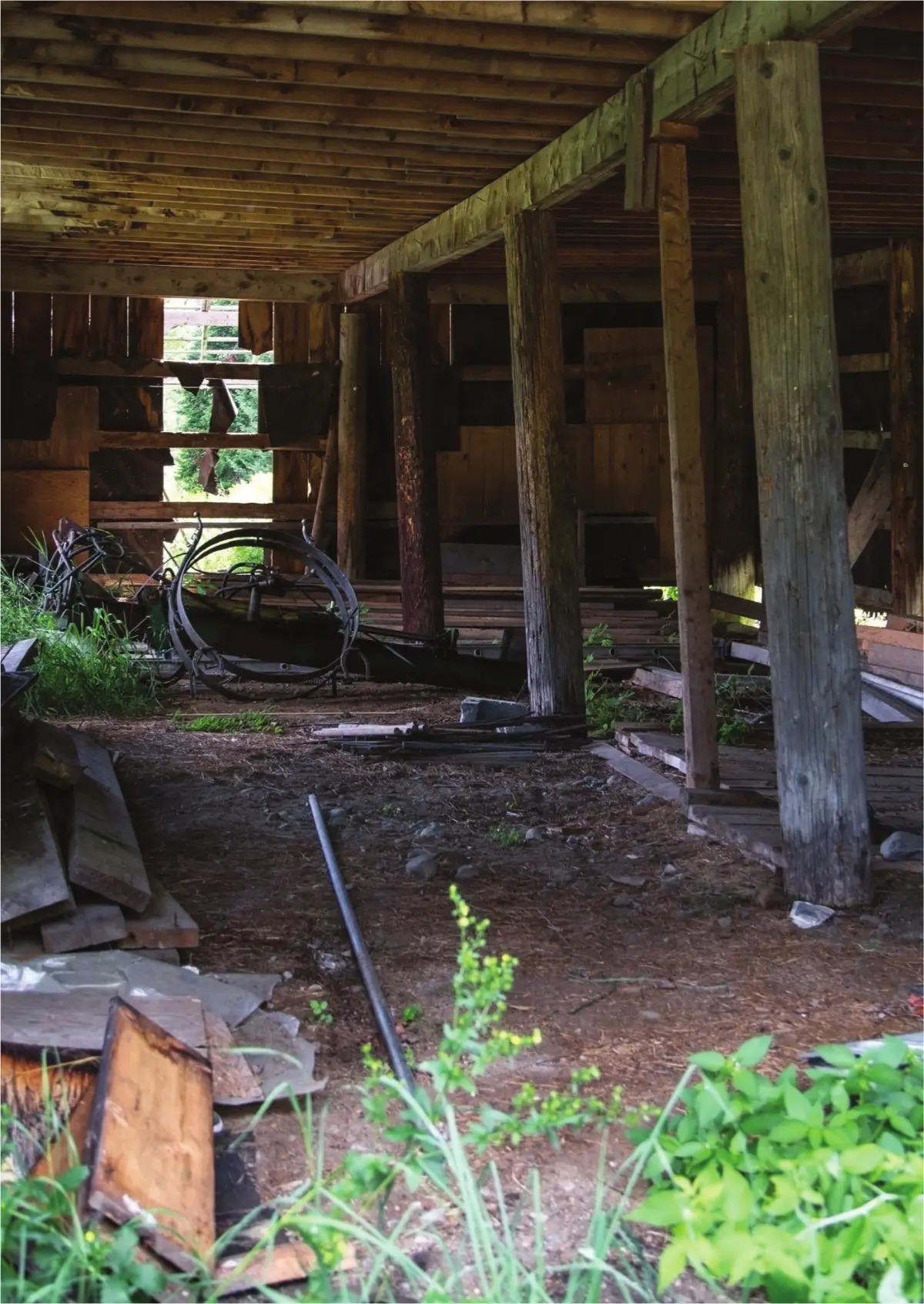
When replacing decaying timber such as weatherboards or flooring, a surface treatment with H1.2 paint-on boron is advised for adjacent framing.
When you are replacing timber with evidence of fungal decay or are in doubt about the suitability of a particular treatment or protection system, seek technical advice.