Initially designed as removable fasteners for fixing plant and machinery to concrete walls and floors, concrete screw-type anchors are a popular option for fixing timber bottom plates to concrete foundations in residential and commercial construction.
Can work well
Screw-type concrete anchors offer some advantages:
- They are quick and easy to install – a hole is drilled in the concrete floor in the correct location, the timber framing lined up above and the screw-type anchor is installed using either a power driver or manual socket or wrench.
- They can be removed easily if necessary – with no wedge, sleeve or adhesive holding them in place, they simply screw out.
- They put less stress on the concrete – as the screw-type concrete anchors do not have an expanding wedge or sleeve, they apply less expansion force than wedge or sleeve-type anchors.
But need to check a few things
However, there are some items to consider when using any type of post-installed anchor in concrete foundations:
- Does the fastener have the correct capacity strength to meet the requirements of NZS 3604:2011 Timber-framed buildings clauses 7.5.12.3 and 7.5.12.4?
- If the fastener is to be used as a hold-down at the end of a bracing panel, can it achieve the required characteristic tensile strength for this task?
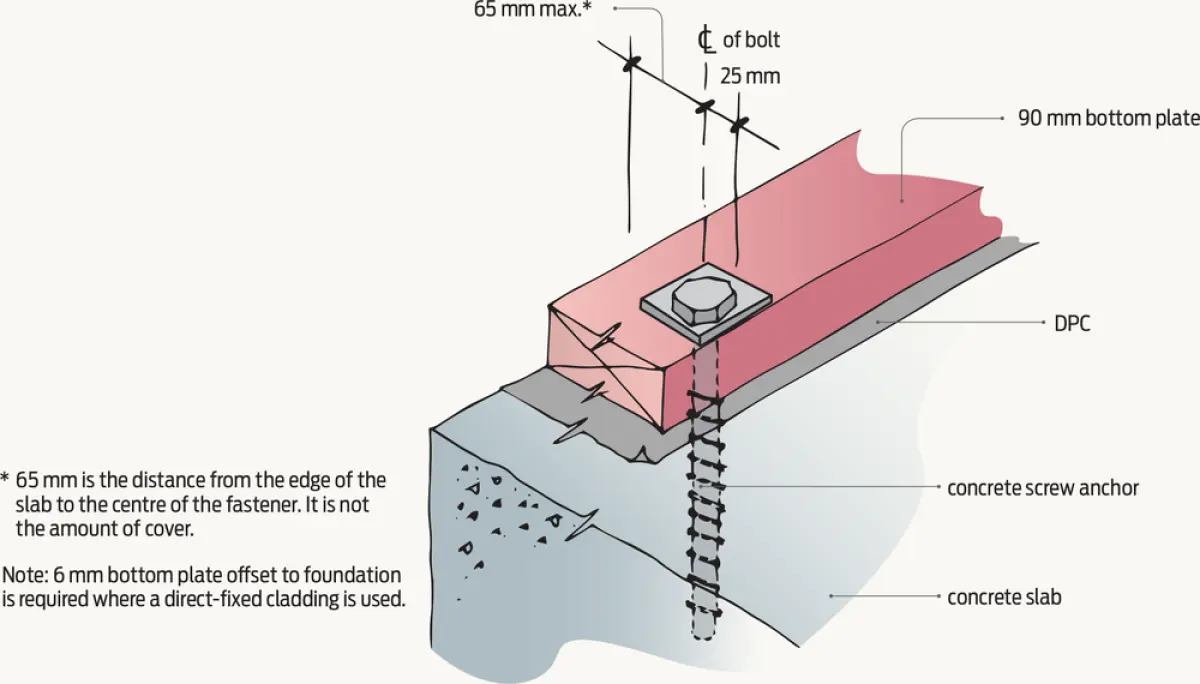
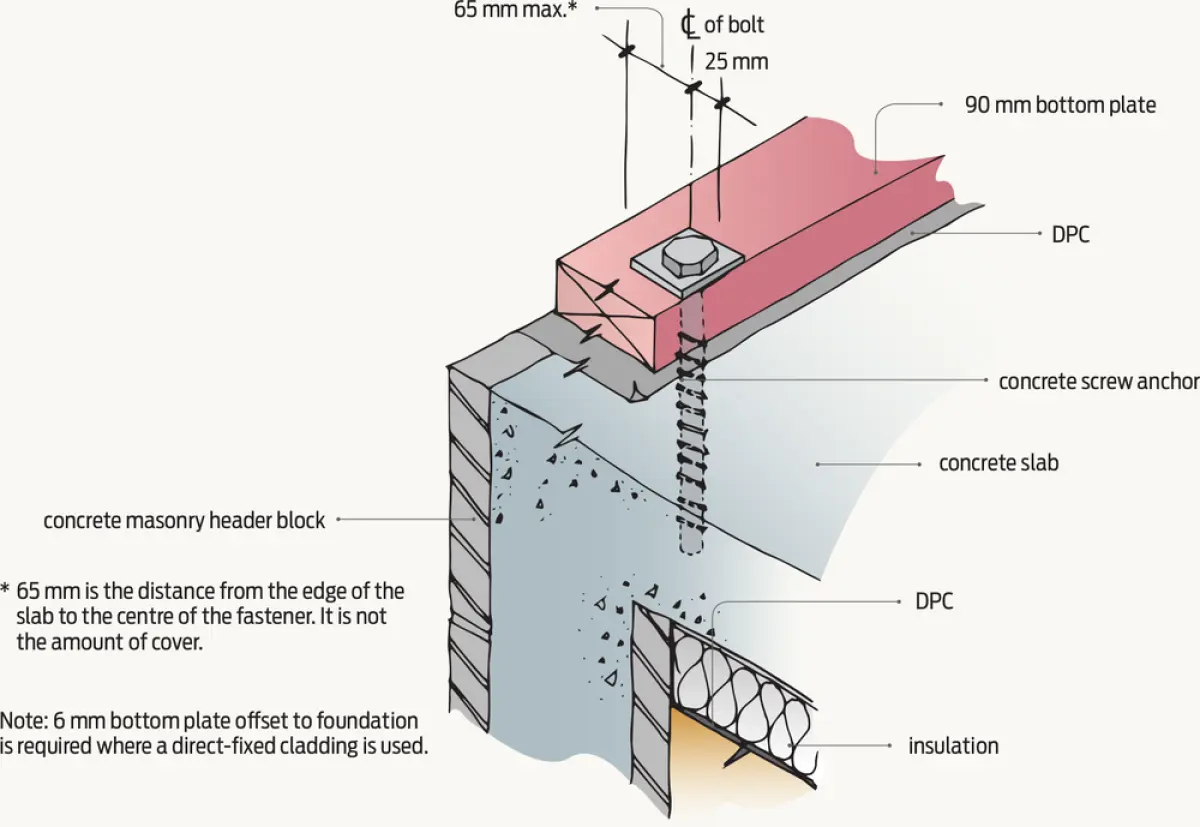
- Can suitable cover to the fastener be achieved, especially in NZS 3604:2011 exposure zone D and where concrete and concrete masonry header block foundations are used? It may be necessary to specify stainless steel anchors in these locations. Figures 1 and 2 demonstrate how maximum covers can be achieved in two common situations.
- Is the drill bit the correct diameter – if worn, the bolt can be hard to install and may damage the concrete.