



When I joined NIWA as a climate scientist in 2014, the IPCC’s 5th Assessment Report on climate change had recently been released. NIWA had just finished adapting the data produced by global climate models into higher-resolution projections for Aotearoa.
We call that process downscaling. Detailed information about local terrain, land use and atmospheric dynamics is incorporated into the global data to produce projections that are much more meaningful and helpful for organisations and individuals in those localities.
Advancements in data processing and accessibility
Ten years on, following the release of the IPCC’s 6th Assessment Report in 2021, vastly more data from global models is available. This time, the downscaling process took over 12 months to complete on NIWA’s supercomputer using the equivalent processing power of 150 high-end laptops running simultaneously.
Back in 2014, the projections were summarised nationally, and the data was used chiefly by councils to produce regional climate change guidance. Today, the demand for climate change information extends well beyond central and local government and the resolution of the new projections means they can be applied more reliably at a local level and for many more purposes.
Businesses required to make climate-related disclosures are relying on the new datasets as they consider future climate scenarios. Others are integrating climate considerations into their long-term plans even though they are not mandated to disclose climate-related risks. Councils and iwi are moving beyond merely understanding risk to creating plans for adaptation.
This has been made possible in part because the Ministry for Business, Innovation and Employment and Ministry for the Environment funded the downscaling of the new projections so that the data would be freely available to everyone who needs it for adaptation planning – from central and local government to businesses, communities and individuals.
Our changing climate affects everyone in different ways, so it is heartening to see that this information is increasingly being used to inform, mitigate and adapt to future changes.
The updated outlook
So how has the outlook changed over the last decade? Generally, it remains the same – hotter temperatures and more extreme rainfall events punctuated by long dry spells in many areas. For the built environment, the challenges associated with that outlook remain.
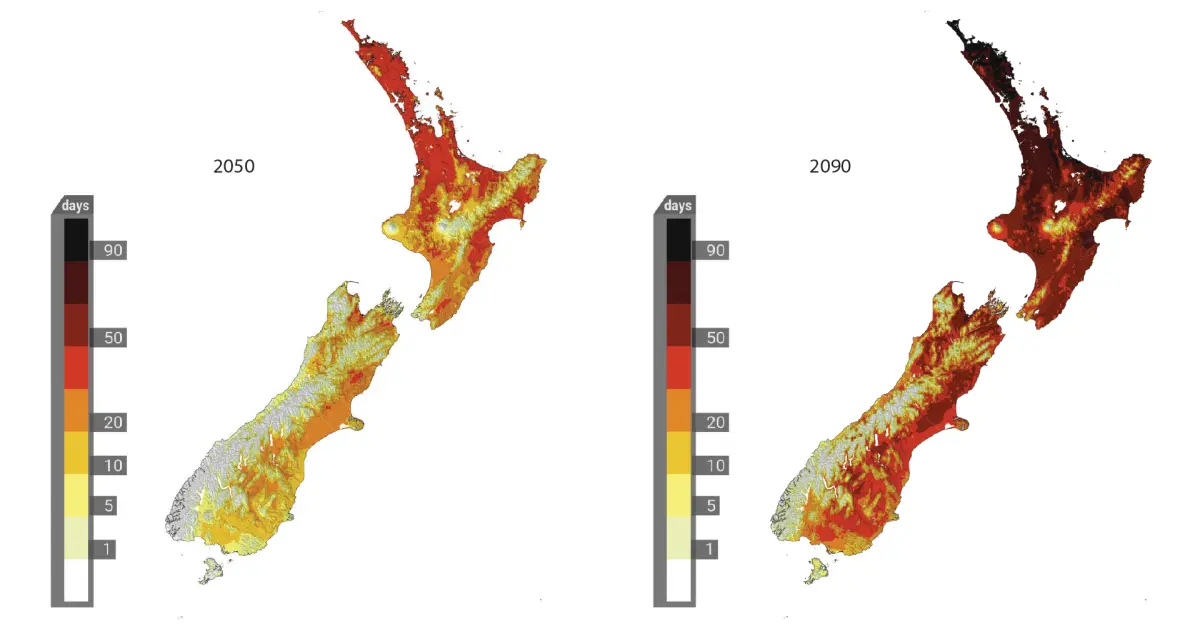
By the end of the century, the upper North Island is likely to experience 50 more hot days (maximum temperatures greater than 25°C) compared with our current climate. Extreme temperatures can put pressure on building cooling systems and increase energy consumption.
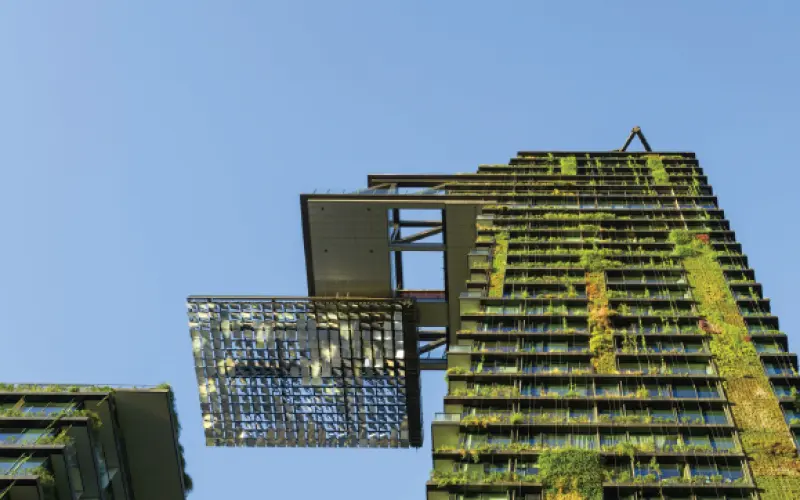
Higher temperatures can affect the performance and lifespan of building materials, emphasising the importance of adopting green building design practices. Simple changes like orienting buildings and planting for shade can help.
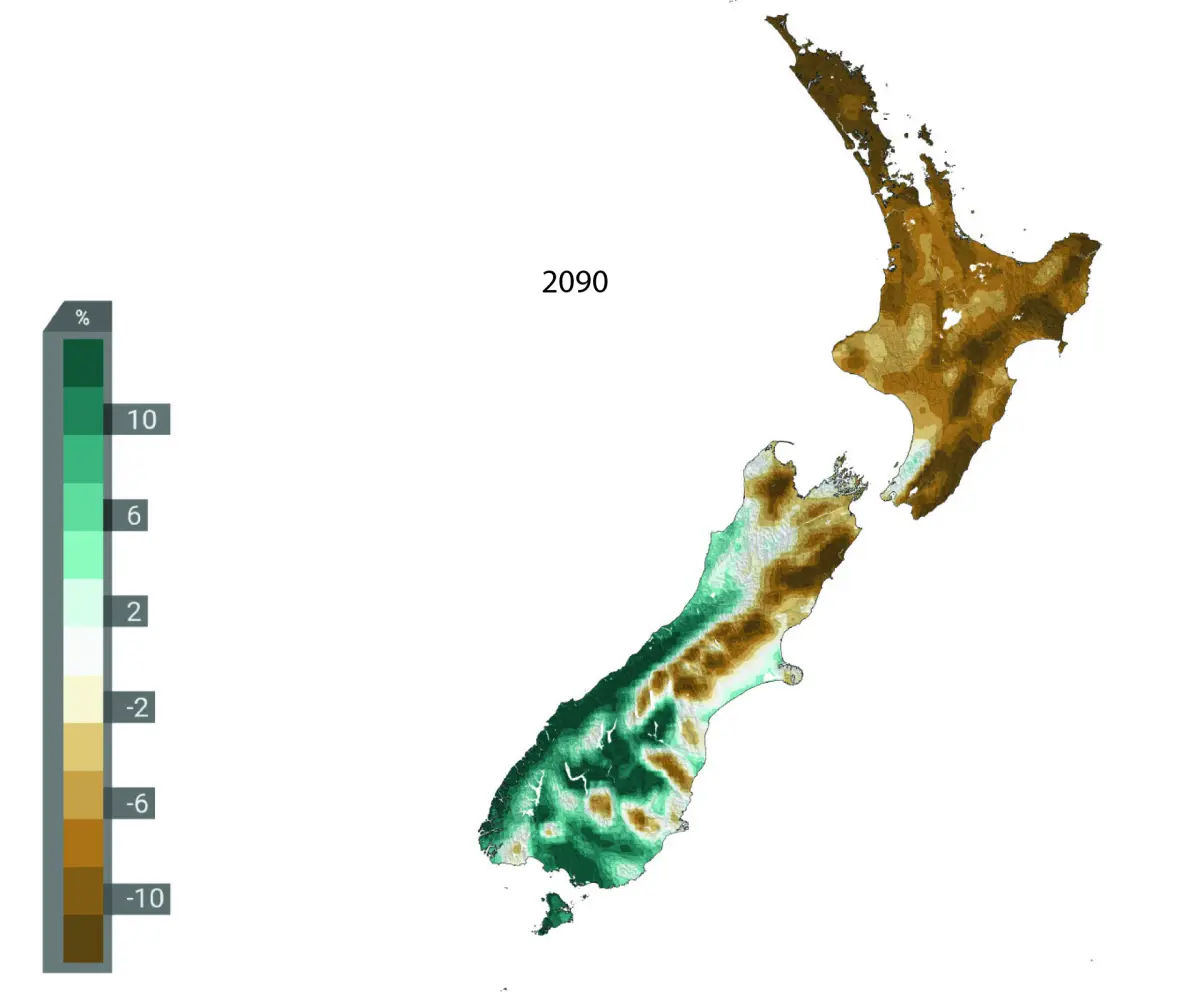
More frequent high-intensity rainfall events can lead to increased flooding, putting stress on drainage systems, roads and buildings. Warmer temperatures are associated with increasingly extreme rainfall events because a warmer atmosphere can hold more water.
If you transplanted a 2024 rainstorm 50 years into the future it would release more water just because the atmosphere will be warmer 50 years from now. Of course, sea-level rise and natural vertical land movement are factors too in many coastal and low-lying areas and must be considered when planning for the future.
Designing and building infrastructure to withstand flooding, such as elevated buildings, water-resistant materials and improved drainage systems can mitigate flood risks. We can also turn to innovative solutions for managing flood risks such as wetlands, retention basins and permeable surfaces to reduce run-off.
We hope that the new climate projections will empower decision-makers to make sensible choices now to help us in the future.
The future is not set in stone, and the projections cover a range of possible pathways including those where we continue working as a global community to achieve lower emissions and experience less severe impacts (see box below).
Accessing the projections
The new projections are available on the Ministry for the Environment’s website. You can download the data to use how you prefer, and the Ministry is developing an interactive map-based tool to help you explore it.
It’s still up to us
The IPCC’s 6th Assessment Report introduced a new set of five future climate scenarios based on Shared Socio-economic
Pathways (SSPs).
Each scenario is based on a range of socio-economic and geopolitical assumptions that, alongside economic and technological
trends, will influence future greenhouse gas emissions. In other words, the future is still up to us.
The SSPs were designed to reflect worlds with widely varying levels of mitigation and adaptation, ranging from low to very
high. NIWA has downscaled projections for three SSPs (SP1-2.6, SSP2-4.5 and SSP3-7.0) and is currently producing a fourth
(SSP5-8.5).
Here’s what the scenarios look like:
- SSP1-1.9: CO₂ emissions reach net zero by 2050. Societies prioritise sustainability, shifting focus from economic growth to wellbeing, with increased investment in education and health. Inequality decreases, and while extreme weather is more common, severe climate impacts are avoided. The average global temperature rises by ~1.5°C by 2100.
- SSP1-2.6: CO₂ emissions reduce significantly, reaching net zero after 2050. Societies make similar shifts towards sustainability as in SSP1-1.9. The temperature rise stabilises at ~ 1.8°C by the end of the century.
- SSP2-4.5: CO₂ emissions hover around current levels before falling mid-century, not reaching net zero by 2100. Socioeconomic factors follow historical trends, leading to slow sustainability progress and uneven development. The average global temperature rises by ~ 2.7°C by 2100.
- SSP3-7.0: emissions and temperatures rise steadily, with CO₂ emissions doubling by 2100. Nations focus on competition and self-sufficiency, hampering global sustainability efforts. The average temperature increases by ~3.6°C by 2100, resulting in severe climate impacts.
- SSP5-8.5: a scenario to avoid, which has CO₂ emissions doubling by 2050 and continuing to rise. Rapid economic growth is driven by fossil fuels and energy-intensive lifestyles. The average global temperature rises by ~ 4.4°C by 2100, leading to extreme climate impacts.