

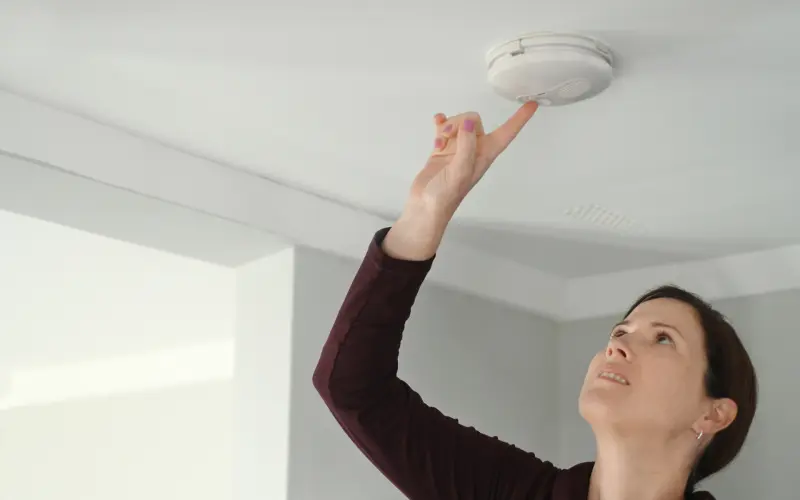


Building Code clauses C4 Movement to place of safety and F7 Warning systems require a fire detection and warning system in all new homes. Alarms are also a requirement with alteration work that requires a building consent and with changes of use to existing houses. The Acceptable Solution C/AS1 references NZS 4514:2021 Interconnected smoke alarms for houses. The Acceptable Solution F7/AS1 references C/AS1 and C/AS2:
- C/AS1 applies where each dwelling has an independent escape route and no more than one dwelling unit above another, such as detached houses and two-storey townhouses and terraced housing.
- C/AS2 applies to other buildings including medium-density housing of three or more storeys, all apartment buildings, hotels and motels, backpackers, buildings where six or more people pay for accommodation, wharenui and other community sleeping spaces.
Some must-haves with domestic alarms
NZS 4514:2021 sets out some general requirements for the alarms themselves:
- The alarms can be hard wired or operated with a long-life (minimum 10-year) sealed and non-removable battery. Where hard wired, they must be tested and certified by a licensed electrical worker. Alarms with long-life batteries must be replaced by the manufacturer’s replacement date or when the indicator shows low battery, whichever comes first.
- All alarms in a home must be interconnected so that when one is activated, all units sound an alarm.
- The interconnection between the alarms can be wired or wireless and they can be incorporated into a security system.
- Alarms must have an audible signal with a sound pressure level not less than 75 dB(A) and not more than 110 dB(A) in all bedrooms, living spaces, hallways and landings in the home.
- Alarms must have a hush button either on the alarm itself or another readily accessible location to allow temporary disablement of the audible alarm for situations such as nuisance activations.
Smoke alarms required in rental properties
Under the Residential Tenancies (Smoke Alarms and Insulation) Regulations 2016, all rental homes must have smoke alarms that are:
- photoelectric hard wired or battery powered with a battery life of at least 8 years
- installed in each sleeping space or within 3 metres of the entrance to a sleeping space
- installed on each floor of a multi-storey home.
The landlord is responsible for the installation of operational smoke alarms in their properties and ensuring that the alarms remain in working order.
Tenants are responsible for changing batteries in alarms with replaceable batteries, and for reporting faulty alarm systems to the landlord. Tenants must not damage, disconnect or remove a smoke alarm.
Location important
FNZS 4514:2021 sets out these key requirements for locating alarms:
- Alarms must be installed on or near the ceiling.
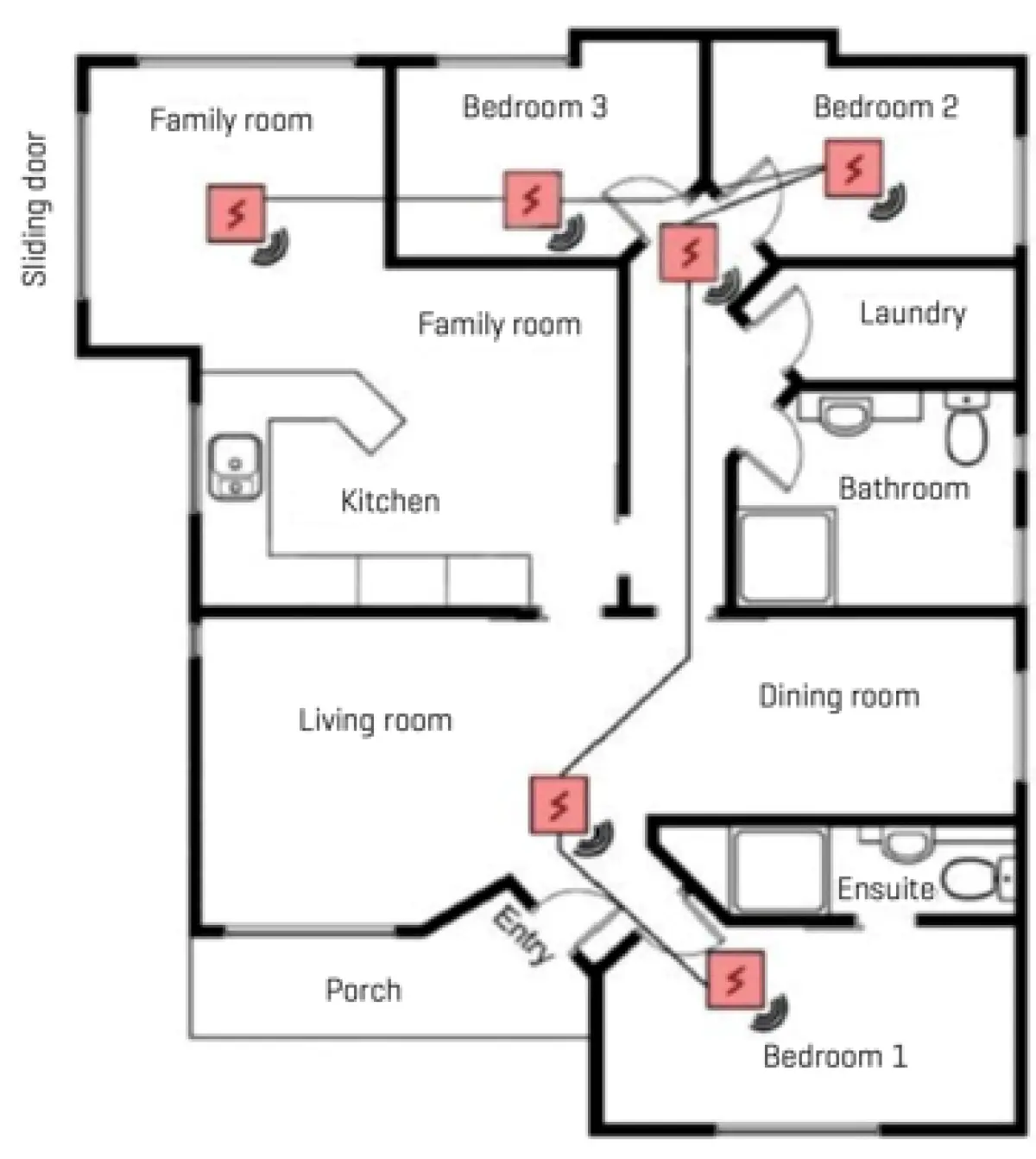
- There must be alarms in all bedrooms, living spaces, hallways and landings (Figure 1) and on each level of a multi-level home within 10 m of another alarm in any direction.
- Where doors separate a kitchen from living spaces and hallways, an alarm suitable for kitchens (which may be a heat alarm) must be installed in the kitchen.
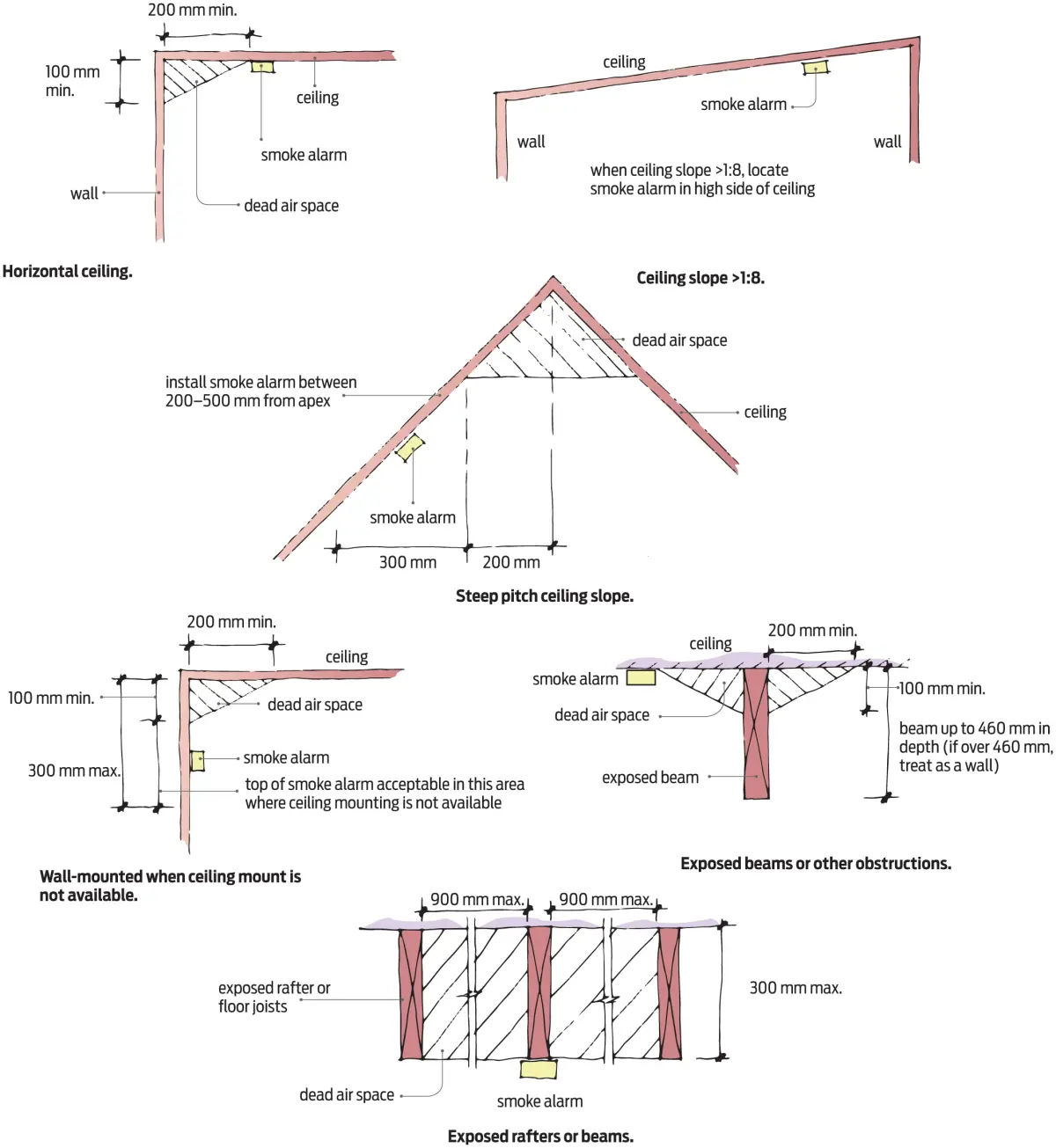
- There are requirements about the locations where alarms are mounted (Figure 2) and recommendations around where they should not be located.
A few places to avoid
Smoke alarms should not be installed:
- in dead air spaces (Figure 2)
- within 300 mm of a light fitting
- within 400 mm of a ventilation air supply opening
- directly above heaters, air conditioning vents, opening windows or wall vents.
Different types of alarms
As well as conventional smoke alarms, other types of alarms may be specified for certain circumstances:
- NZS 4514:2021 allows heat alarms to be installed in kitchens. These are activated with dangerous increases in termperature and avoid nuisance activations such as from burning toast. They may also be an appropriate choice for hobby rooms, workshops or garages if smoke may result in nuisance alarms. Be aware that in bedrooms and most living areas, smoke alarms must be used as they provide earlier warning of a fire than heat alarms and give more time for escape.
- There are devices made specifically for the hearing impaired to be alerted to fires, especially overnight when people take out their hearing aids. Specialised devices may include a sounder with an extra-loud and/or lower-pitch alarm sound, flashing strobe lights or under-pillow or bed shakers.
- Fire alarm systems in larger or more complex buildings must comply with NZS 4512:2021 Fire detection and alarm systems in buildings. This standard does not apply to interconnected smoke alarms for houses, which are covered in NZS 4514:2021.
Regular maintenance and testing needed
NZS 4514:2021 recommends a monthly test and six-monthly inspection and cleaning:
- monthly testing by activating the test function to check power supply and alarm sounding device
- 6-monthly inspection and in situ cleaning with a vacuum cleaner and brush to remove dust and dirt that may block smoke entry into the unit – do not use liquid cleaners or solvents as this may damage the unit