




The BRANZ New House Owners’ Satisfaction Survey has been running for 12 years. The data in the 2022 survey, which looks at how satisfied new house owners are with different aspects of their build, is one of the only available measures of how new-home builders perform.
Survey focus
The survey reports on various aspects of a build, from the callback rates of trades after handover to what attributes clients seek when choosing a builder.
We look at how clients thought their builder performed across a variety of metrics while putting a spotlight on defects according to new-build clients.
Choosing to build
Most respondents of the 2022 survey were building for the first time (66%). When asked, respondents said their main reasons for choosing to build new was because they wanted a house that was easier to maintain, they already owned an empty section or they believed that the current market did not cater to their current needs.
First-time and repeat clients used similar methods of choosing a builder. When choosing their builder, respondents saw the show home as a crucial feature in the decision-making process. The second most important factor was a recommendation from friends, family or professionals in the construction sector.
Overall satisfaction scores
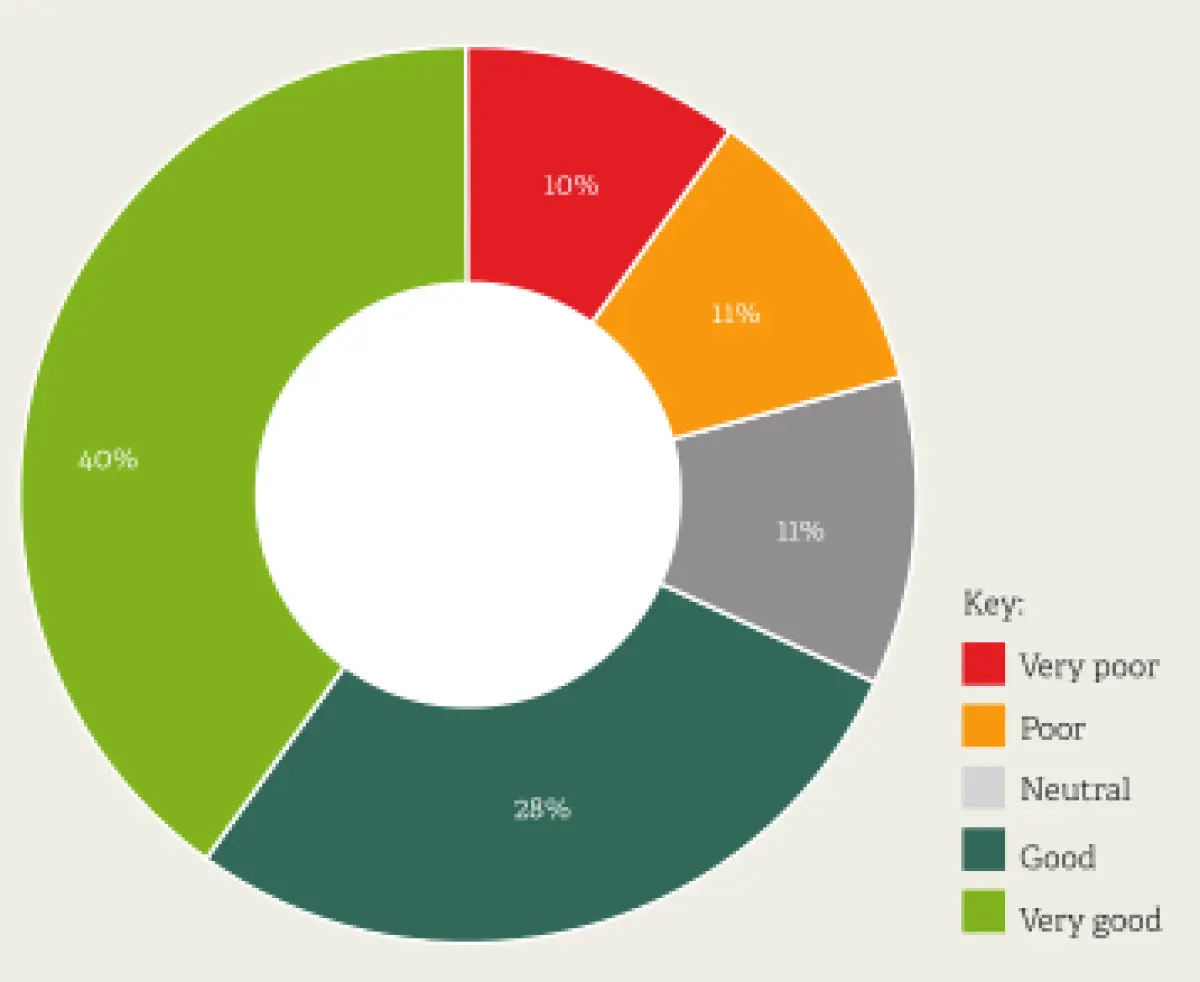
Respondents rated how satisfied they were with their builder on 12 different items on a 5-point Likert scale (1 = very poor, 5 = very good). The results were averaged across all items to calculate the overall satisfaction score.
Questions included how satisfied clients were with the service during the buying process, the condition of the house on the day they moved in, value for money, overall quality, level of communication and completion times.
Most respondents rated their builder’s performance as good (28%) or very good (40%). Respondents were most satisfied with the value for money, overall quality and condition of their home the day they moved in. There were still a moderate amount of people who thought their builder performed poorly (11%) or very poorly (10%). Respondents were least satisfied with the fixing of defects after they had moved in, the service provided by their project manager and the timeliness of the builder regarding completion of their home.
Recommendations and referrals
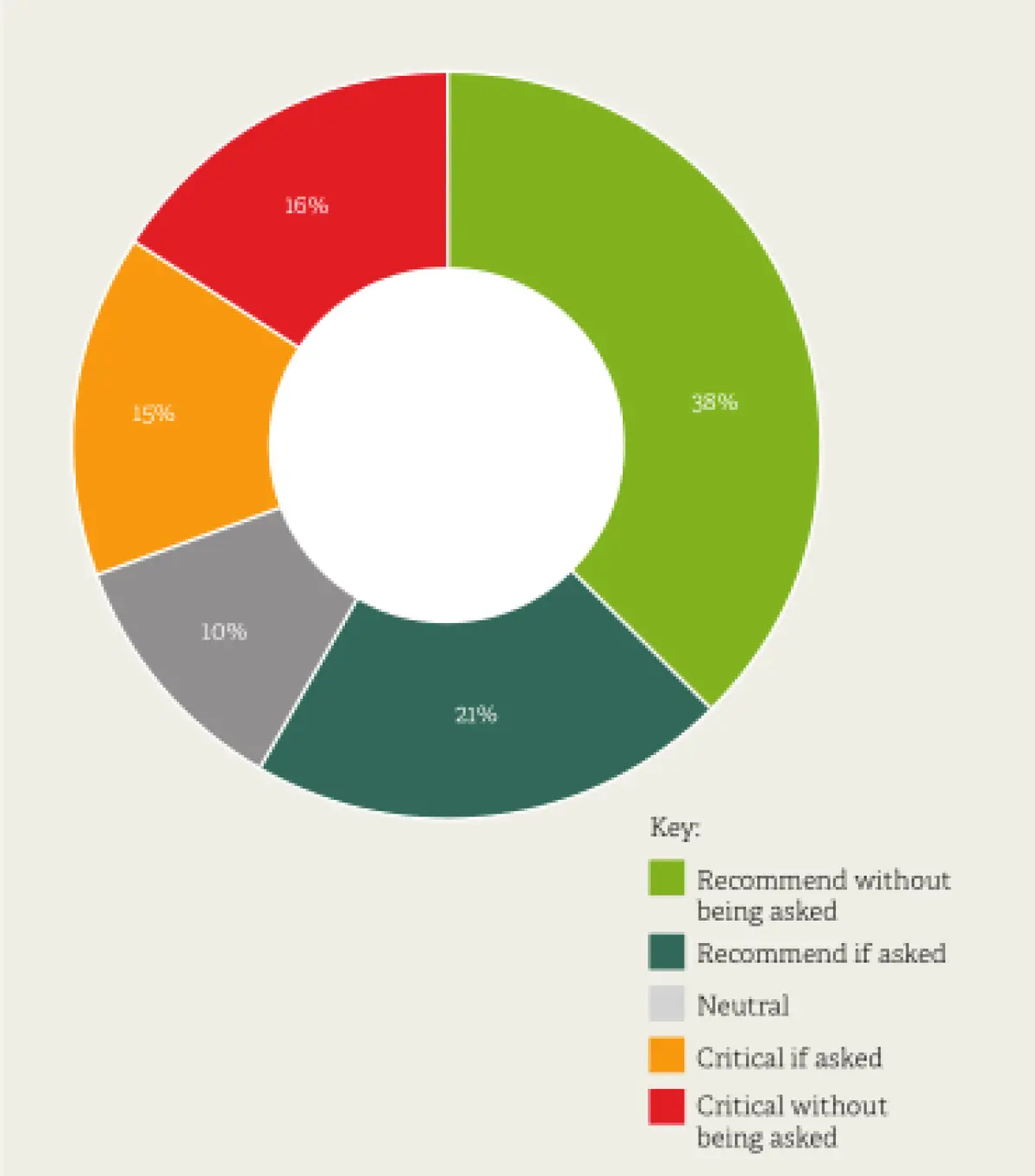
Referrals are an important part of securing future work in the sector, so we also asked how likely it was that new-build clients would recommend their builder based on how satisfied with the builder they were. When asked if they would recommend their builder to other people, most respondents reported they would (59%), and over half of those would do so without being asked (38%).
Defects in new homes
Most new house owners reported having to call back their builder to repair defects after first occupancy in 2022 (86%). The most frequently called back tradespeople were painters (51%), plumbers (49%) and electricians (39%).
Respondents who stated they had to call back a tradesperson were asked to specify whether it was due to an installer-related defect (error by the tradesperson) or a product-related defect or if they were unsure of the type of defect. Of the respondents who had to call back a tradesperson for repairs, the defects were mostly considered installer-related such as an error by the tradesperson (31%) rather than product-related defects (8%).
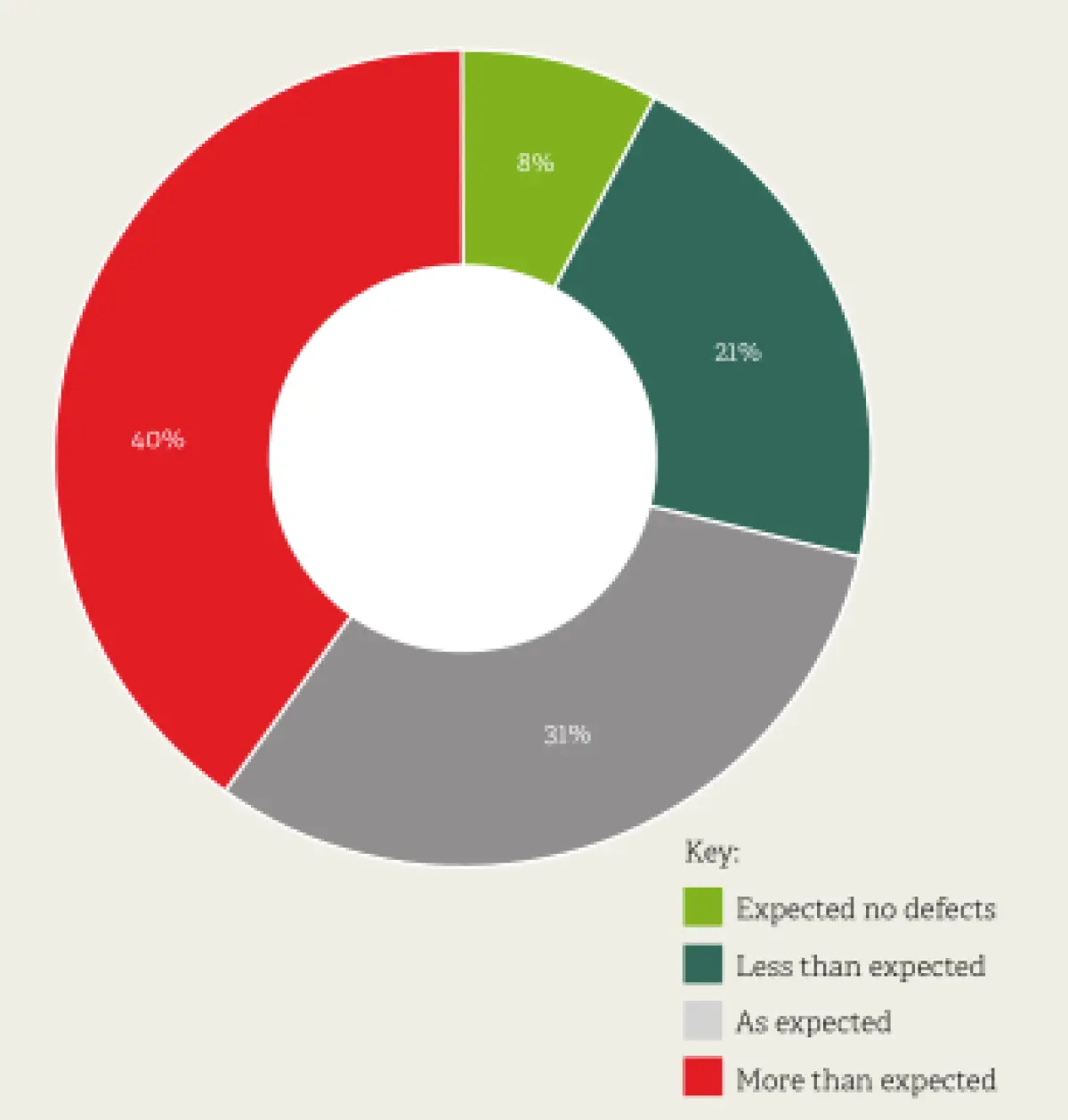
New house owners were asked to rate how the number of defects in their new home matched their expectations. Most respondents thought there were more defects than they expected (40%). Another large group of respondents was not surprised and expected the number of defects (31%). Just over one-fifth of house owners believed there were fewer defects than expected (21%), and a small number of respondents expected no defects (8%).
Setting expectations
When commenting on the overall performance of their builder, respondents were primarily focused on the service provided by the builder throughout the process rather than specific comments on workmanship or the overall quality.
New house owners, for the most part, were complimentary of the final quality of the build. This was true for those who had built for the first time or who had built previously. The results of this survey show the importance of the customer-facing aspects of the process, mainly the communication and service provided, as a frame of reference for clients in assessing the performance of their builders.
Building together
A good relationship with the client can make or break a building project. Disagreements during builds are common, and if poorly resolved, they can cause significant stress and dissatisfaction for everyone.
BRANZ has created a resource with some of these communication-related issues and provides guidelines for how to manage this builder/client relationship. Explore BRANZ’s builder and client relationship research at www.branz.co.nz/pubs/research-now/building-sector-wellbeing.