



Recent weather events across Aotearoa New Zealand have more than reminded us of the need to reconsider how our relationship with urban water needs to better reflect the risks posed by a climate.
Cyclone Hale, Cyclone Gabrielle and the atmospheric river that dumped over Auckland provided a dramatic wake-up call around the increasing threats of large flood events. Meanwhile, in other parts of the country, extended dry periods and infrequent downpours ratcheted up the stressors on our precious and unique freshwater ecosystems.
Consequences of our landscape
With our towns and cities largely positioned in a landscape shaped by water, it is unsurprising that changes in climate will be experienced close to home. With valleys incised by millennia of streamflow, floodplains formed by the power of riverine sediment transport and indigenous ecosystems evolved over millions of years to thrive in our unique corner of the globe, we are a land shaped by the power of nature.
As sea levels rose and fell with ice ages and our landscape heaved under tectonic forces, a landform of harbours, estuaries, rivers, wetlands and streams attracted early Māori settlers and more recent European arrivals. Kāinga (villages), māra (gardens) and ara (pathways) were established with an understanding of the natural environment and with freshwater to sustain.
As cities grew, water became managed
European colonisers saw the same value in the landscape, but as populations grew, they tamed nature to create towns and cities where the development of floodplains, valleys and coastal margins could somehow be managed to sustain rampant urban growth without undue risk to life or property.
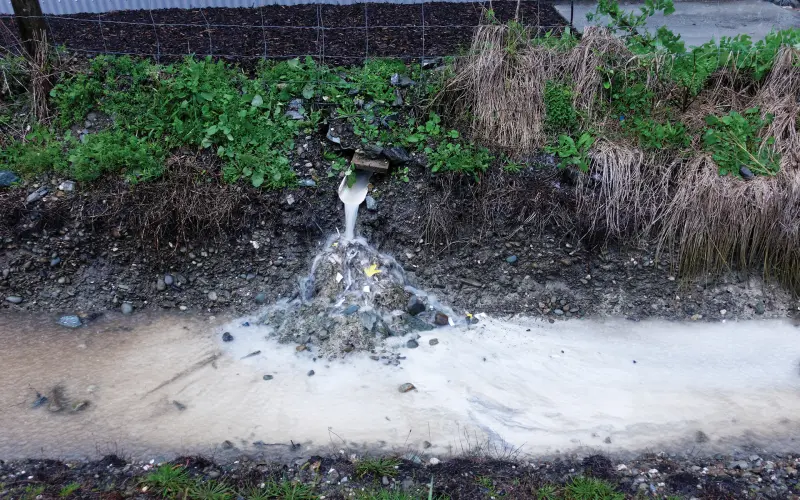
Rivers were dammed to supply municipal water systems, wastewater was collected and treated before being returned to the environment and surface run-off was redefined as stormwater and forced into a web of pipes and concrete-lined channels that often follow the same alignment a the once abundant streams and wetlands.
This trajectory of urban water modification has continued to disconnect communities from the nature that defined where they live. Today, contaminants and hydrological modifications threaten our indigenous freshwater fish, shellfish and invertebrates and, as seen over recent months, threaten our properties and people.
It is time to reconsider our relationship with urban water and look to more nature-based solutions to protect and enhance our freshwater and coastal water ecosystems.
Urban growth’s impact on waterways
As we continue to better understand the impacts that urban development has on our freshwater and coastal waters – and the ecological, cultural and social values they support – there has been an increasing focus on how the water industry needs to change.
Over the past 20 years or so, concepts such as low-impact design, water-sensitive urban design and green infrastructure have crept into terminology to describe a more holistic way of mitigating the impact of urbanisation on the natural environment.
Uptake is lagging
Many councils around New Zealand now have policy and guidance to support improved outcomes with urban stormwater, but the uptake has not kept pace with urban growth and the implementation of alternative stormwater measures has often been poorly delivered.
This has resulted in expensive and underperforming assets that in many instances are a long-term financial burden for councils. At a time when the water industry has been struggling to reliably deliver the transformative change needed to how urban water is managed, many councils have experienced rapid residential and commercial growth and accelerated infill intensification due to the National Policy Statement on Urban Development.
If we are serious about realising the intent of Te Mana o Te Wai and supporting the aspirations of communities across the country for healthy thriving ecosystems, we need to urgently find ways to improve on the status quo.
Looking to nature for solutions
Recently, across the globe, there has been a shift towards the use of the term ‘nature-based solutions’ to describe a holistic approach to the built and modified environment that works with natural processes rather than against.
In 2022, the UN Environment Assembly adopted a definition of nature-based solutions as ‘actions to protect, conserve, restore, sustainably use and manage natural or modified terrestrial, freshwater, coastal and marine ecosystems, which address social, economic and environmental challenges effectively and adaptively, while simultaneously providing human well-being, ecosystem services and resilience and biodiversity benefits’.
While encapsulating the principles of water-sensitive urban design and the use of green infrastructure, nature-based solutions are defined by the ability to respond to more than one driver in a human-influenced landscape and utilise natural systems to provide resilience.
Examples of water-focused urban nature-based solutions include:
- capturing rainwater for non-potable uses, avoiding contaminant discharge, reducing demand on mains supply, connecting communities with water and providing resilience in natural disasters such as earthquakes
- integration of water-sensitive design elements to treat stormwater, retaining small rainfall depths, connecting communities with nature and increasing urban ecology
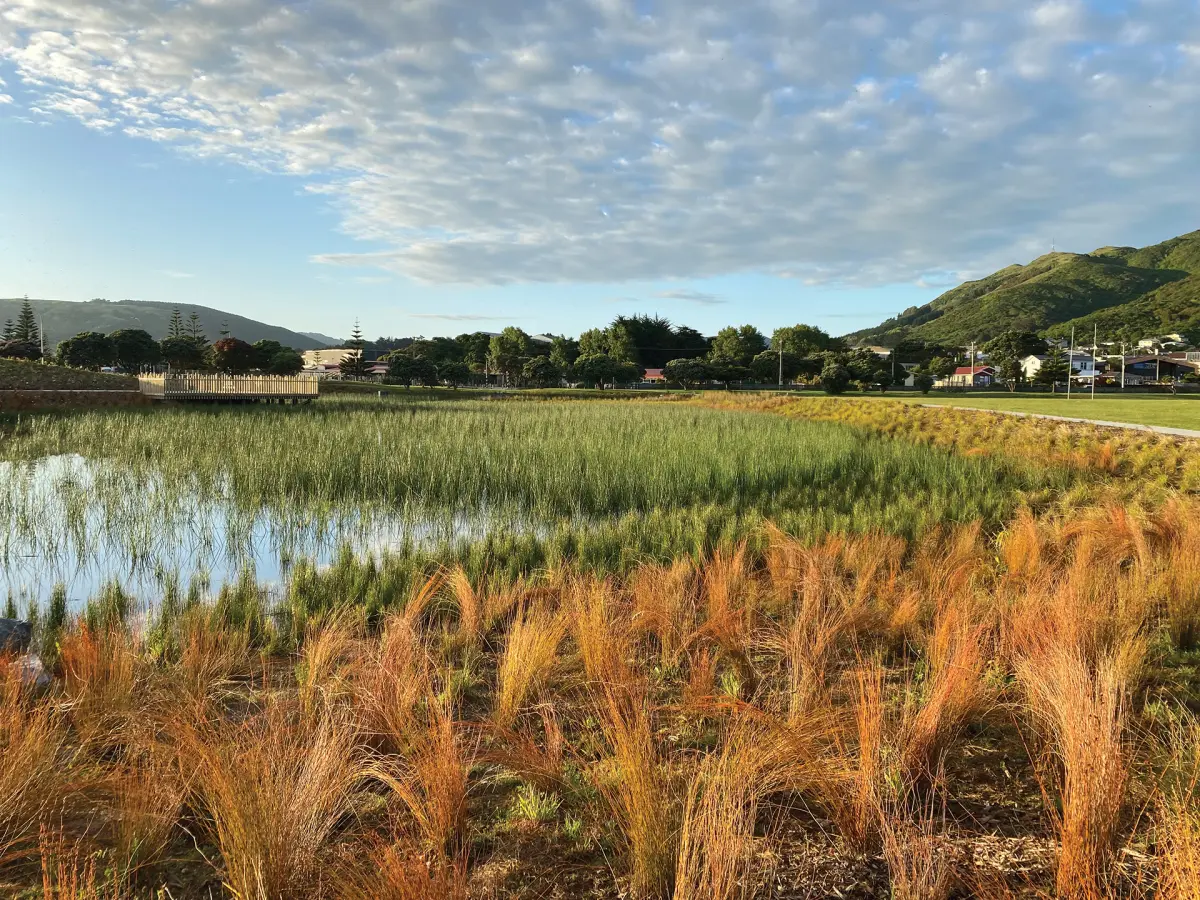
- construction of urban wetlands to treat stormwater, providing flood detention, connecting communities with nature and increasing urban ecology
- increased planting of urban trees – particularly indigenous street trees – to mitigate urban heat impacts, reducing run-off in small rainfall events and supporting urban ecology
- protection and restoration of functional riparian corridors to reduce sedimentation, sequestering carbon and supporting indigenous biodiversity
- protection and reinstatement of natural urban stream channels to safely pass extreme flood flows and support urban ecology and biodiversity
- identifying and protecting overland flows paths to manage risk to life and property.
Alternatives to nature-based solutions will not typically provide co-benefits and, in many instances, may result in negative outcomes such as:
- high-embodied carbon in heavily engineered concrete structures
- lack of resilience to large flood events, including where power outages occur and maintenance access is cut off
- increased life cycle costs from mechanised or bespoke water treatment systems
- financial impacts on private or public land through engineered solutions causing worsening of conditions such as coastal erosion on adjacent land.
Working across the nexus of engineering and ecology
Nature-based solutions offer cost-effective and resilient solutions to a range of often complex land-use-related problems while supporting other non-financial benefits to communities and indigenous ecosystems.
In working with nature, it is fundamentally important to ensure that the designs and solutions developed support the complex biological chemical process that nature-based solutions rely on while also being resilient to a climatic context – particularly changes in regular rainfall patterns and urban temperatures.
While existing design guidelines for devices such as constructed wetlands, bioretention and other green infrastructure are often presented in the calculation-based engineered approach, it is critical that designers understand the reason for design decisions and the importance of the more nuanced ecological aspects of design.
An understanding of the role that rainwater reuse plays in mimicking the natural hydrological processes – replicating interception evapotranspiration that occurs before any infiltration or surface run-off – is fundamental to ensuring integrated designs mitigate the potential impacts of urbanisation to protect existing bodies of water and enhance those historically degraded.
The effective implementation of nature-based solutions requires water professionals, architects, developers and urban designers to broaden the technical knowledge base and increase the ability to work across the nexus of ecology and engineering.
As urbanisation and intensification accelerate, developers will need to address the resulting challenges with nature-based solutions at scale. The failure to do so will limit any ability to protect our remaining freshwater and coastal waters and compromise efforts to enhance degraded urban waters.