

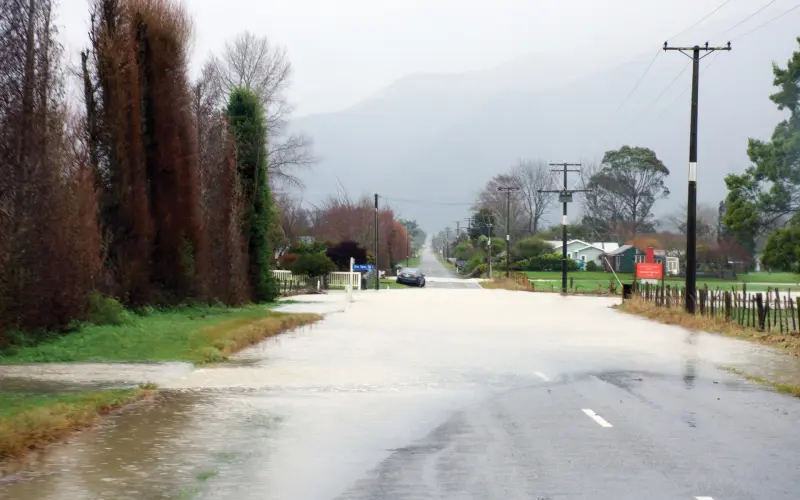


The impact of recent devastating events and the reality that Aotearoa New Zealand will increasingly face risks associated with climate change have reignited public awareness and discussion about how we manage the ongoing risk to people, properties, assets and critical infrastructure.
What is managed retreat?
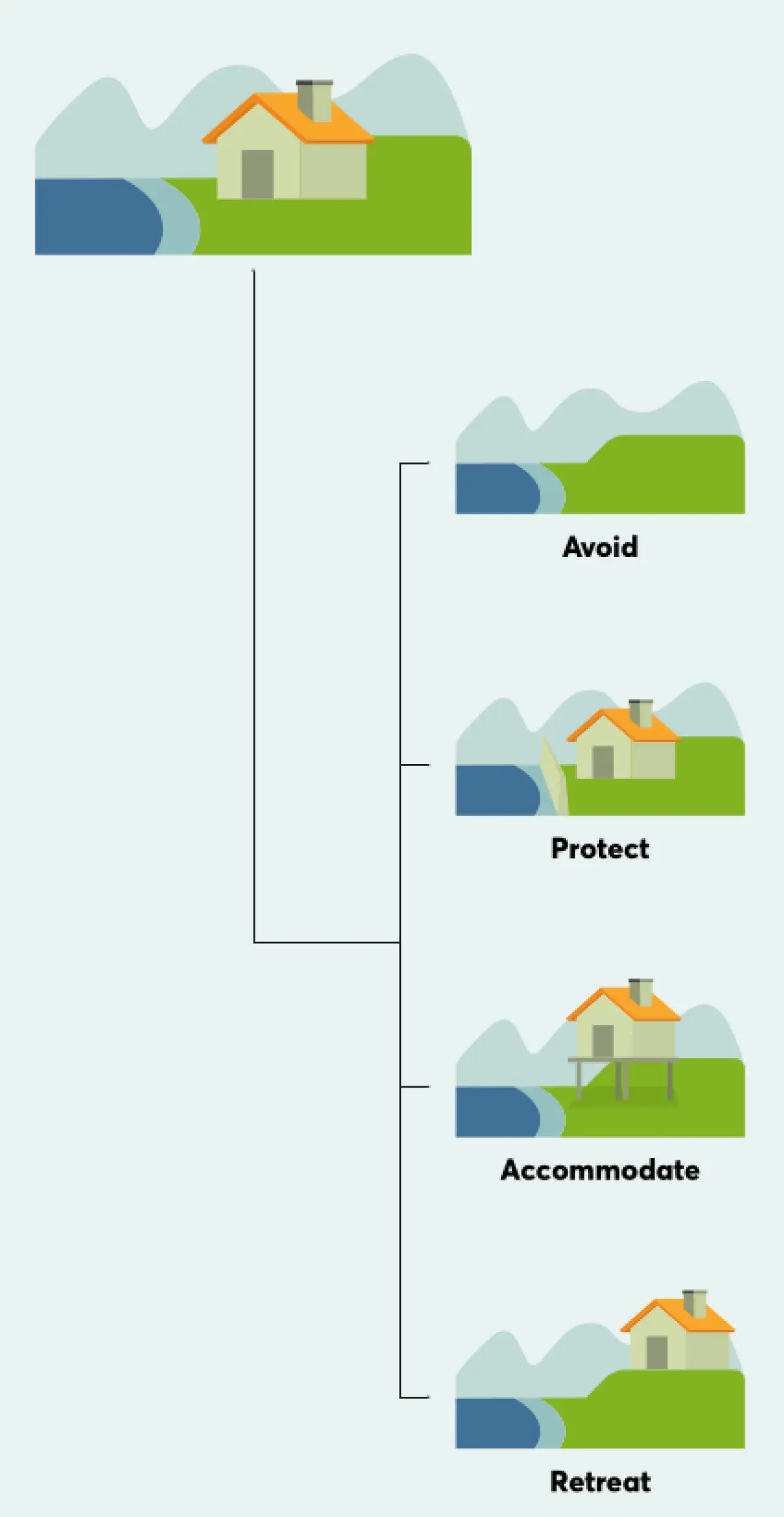
Managed retreat is the process of moving people and assets out of harm’s way. It’s a subset of a range of adaptation options (Figure 1) that are part of the national adaptation plan (NAP). These include:
- avoiding risk – for example, by locating development away from areas prone to hazard
- protecting assets from risk – for example, by building protective structures such as sea walls
- accommodating risk – for example, by incorporating adaptation options into the design of developments
- retreating from risk – for example, by relocating existing development away from high-risk areas.
New Zealand has limited examples of managed retreat, mostly through voluntary acquisition at pre-disaster market value. These include red-zoning areas after the 2011 Christchurch earthquakes, which relocated more than 20,000 people. There was also managed retreat at Matatā – both post-event and pre-emptive – with houses rebuilt after a 2005 debris flow and later acquired.
A current example is the RiverLink project in Hutt Valley involving the acquisition of 141 properties – 112 already voluntarily acquired – as part of an integrated regeneration, flood protection and transport improvements project.
Figure 1: Risk avoidance strategies from the NAP.
So what’s the purpose of the EDS paper?
The reason for the EDS paper is to develop recommendations for the content of the new Climate Adaptation Act (CAA), expected later this year. The CAA will address complex issues associated with managed retreat such as funding, compensation, land acquisition, liability and insurance. It is considered necessary because other proposed legislation such as the Natural and Built Environment Bill and Spatial Planning Bill – replacements for the Resource Management Act (RMA) – and the existing Public Works Act are inadequately tooled for the job.
The working paper seeks feedback on:
- what the purpose of managed retreat should be
- what principles should underline it
- to what extent funding support should be provided to those affected.
How does this fit with the NAP?
Released in August 2022, New Zealand’s first NAP recognises climate impacts already locked in and focuses on 43 priority risks New Zealand faces from the impact of climate change from 2020–2026. It will be updated every 6 years to account for the changing climate and associated risks.
The NAP lays the foundations for a range of adaptation options, including managed retreat. Many issues are left unanswered, however, such as:
- how risks and costs associated with adaptation should be shared
- what the process should look like
- whether people should be allowed to stay in areas when community services are withdrawn
- issues of equity, flood insurance and effects on Māori coastal and river settlements.
It indicates that a hybrid approach using different adaptation options may be appropriate and that the options may change over time. It also indicates that councils should work with communities to assess options that will be adopted but leaves key issues for future processes. This includes further central government direction through RMA reform and local government review, the legislative mechanics of managed retreat if it is required and, importantly, how such matters will be funded.
Principles for managed retreat
The EDS paper identifies 21 relevant principles that could form the basis for a managed retreat legal framework and related decision-making. The principles include:
- transformative principle – social power and constraints should be transformed for improved outcomes for people and nature
- intergenerational equity principle – those currently alive have a moral obligation to protect the interests of future generations
- compensatory justice principle – unjustified loss, damage or disruption should be compensated for
- Te Ao Māori principles – Māori should retain self-autonomy in decision-making over their land and resources
- ability to pay principle – those who are wealthier have a greater duty to pay than those who are poorer
- polluter-pays principle – those responsible for causing harm should pay to remedy it
- voluntarism principle – voluntary action is to be preferred over compulsion.
The principles differ significantly from the objectives and principles for managed retreat legislation released by the Ministry for the Environment (MfE) as part of its consultation on the draft NAP. As noted by EDS, MfE’s objectives were relatively light on the specific outcomes sought by managed retreat and are directed more at providing clarity around roles, responsibilities and process for managed retreat – including stronger tools for councils.
The objectives and principles provided by MfE directly reference matters such as limiting the Crown’s fiscal exposure and reducing liabilities, including contingent liabilities, on the Crown and ensuring risks and responsibilities are appropriately shared across parties, including property owners, local government, central government, banks and insurance industries.
But who pays?
The EDS paper examines the need for public compensation, provides some overseas examples and explores potential options for New Zealand.
The options include:
- full property replacement cost
- creating a fixed compensation rate or cap
- compensation based on the remaining habitable life of the property – with conversion from freehold to leasehold
- differentiations based on knowledge of climate-related risk, principal residence, or net worth and income of the property owner.
The paper outlines the advantages and disadvantages – including how palatable the options and costs are likely to be – and identifies options worth further consideration.
It also addresses options for creating a public compensation fund while noting difficulties in estimating the associated cost. It briefly explores potential revenue sources, including increases in taxes or rates, additional home insurance or fossil fuel levies, new taxes – for example, a comprehensive capital gains tax – or as part of the Climate Emergency Response Fund through the Emissions Trading Scheme.
The paper also addresses the difficult questions of managed retreat of critical infrastructure sources and businesses that have locational and operational constraints that impact their ability to relocate.
What happens from here?
Constructive feedback on the paper is being welcomed by EDS. It intends to provide two further working papers and a final synthesis report to inform the development of the Climate Adaptation Act.