

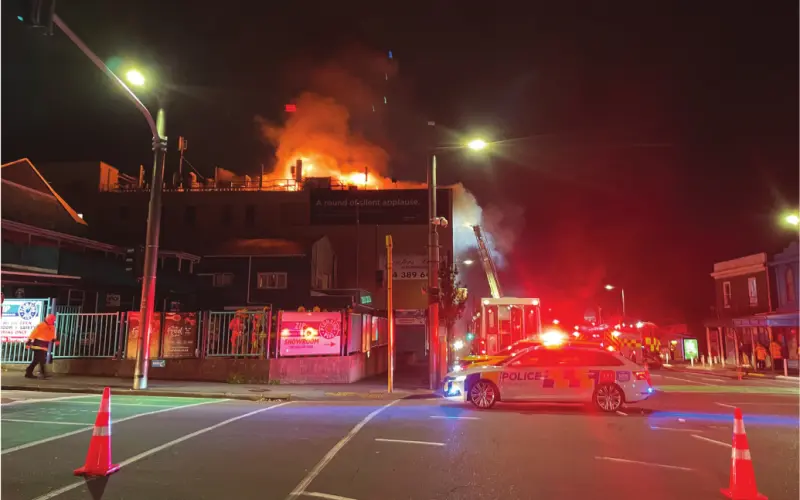


On 16 May 2023, a fire broke out at Loafers Lodge in Newtown, Wellington, killing five people and injuring 20. This tragic event has resulted in a review of how a building warrant of fitness (BWOF) is issued under the Building Act 2004, resulting in proposed changes to both the Building Act and regulations that will hopefully make boarding houses safer as well as all buildings subject to the BWOF regime under the Building Act.
Background
Where a building contains specified systems, which are listed in Schedule 1 of the Building (Specified Systems, Change the Use, and Earthquake-prone Buildings) Regulations 2005, it is a requirement of the Building Act that a compliance schedule is issued to ensure the effective operation of the specified systems for the life of the building.
Compliance schedules are issued with the Code Compliance Certificate, which confirms the requirements of the relevant building consent and the Building Code have been met. Each year following the issue of the compliance schedule, building owners are required to obtain a BWOF for their building.
A BWOF is issued by the owner of buildings subject to the BWOF regime under the Building Act. Building owners engage an independent qualified person to undertake inspection, maintenance and reporting procedures listed on the compliance schedule, typically issued by a building consent authority (BCA), for the building.
The independent qualified person then issues a certificate of compliance with inspection, maintenance and reporting procedures, known as Form 12A, which is attached to the BWOF provided by the building owner to the relevant TA.
There is no centralised national system for how independent qualified persons, act and there is disparity across the country as to how Form 12A is completed.
For example, there are instances of Form 12A being issued where it should not be – as indicated in a paper submitted to Cabinet by MBIE on 18 September 2023, this is most commonly due to negligence rather than knowledge of the failure. For example, this can result where a sprinkler system is not operating as it should be in an unsafe building.
Independent qualified persons
TAs hold independent qualified person registers. The registers vary in nature, including as to the competency requirements for registration and how TAs set up their disciplinary and complaints process. There is no national register, registration is limited to the geographic area in which the independent qualified person is registered and there is no legislative framework for the regulation of independent qualified persons.
To resolve this issue, the Hon Dr Megan Woods commissioned MBIE to work with TAs to agree a nationally consistent approach to assist both TAs and independent qualified persons.
She also proposed the Building Act be amended to include an express requirement to the effect that ‘independent qualified persons have an obligation to only issue a 12A Form where the procedures in the building’s compliance schedule relating to the specified systems have been fully complied with during the previous 12-month period’. This proposal was accepted by Cabinet.
Introduction of offences and fines
To support this change, it was proposed the Building Act be amended to include an offence under the Act subject to a maximum penalty of $50,000 for individuals and $150,000 for a body corporate where Form 12A is issued negligently. This proposal was also accepted by Cabinet.
In 2021, the fines in the Building Act for failing to provide and display BWOFs was increased to up to $50,000 for individuals and up to $150,000 for a body corporate. There is no intention to change these amounts. However, the fee in the regulations for failing to provide or display a BWOF will, under the regulations, increase from $250 to $1,000.
With the imposition of an offence where Form 12A is issued negligently and the increase in fines under the regulations, it is hoped that building owners and independent qualified persons will pay more attention to inspections of the systems required and completion of Form 12A and the display of BWOFs.
It is also hoped that creating a more unified approach for TAs and the increase in fines will assist in making sure the buildings are safer for occupants and our communities.