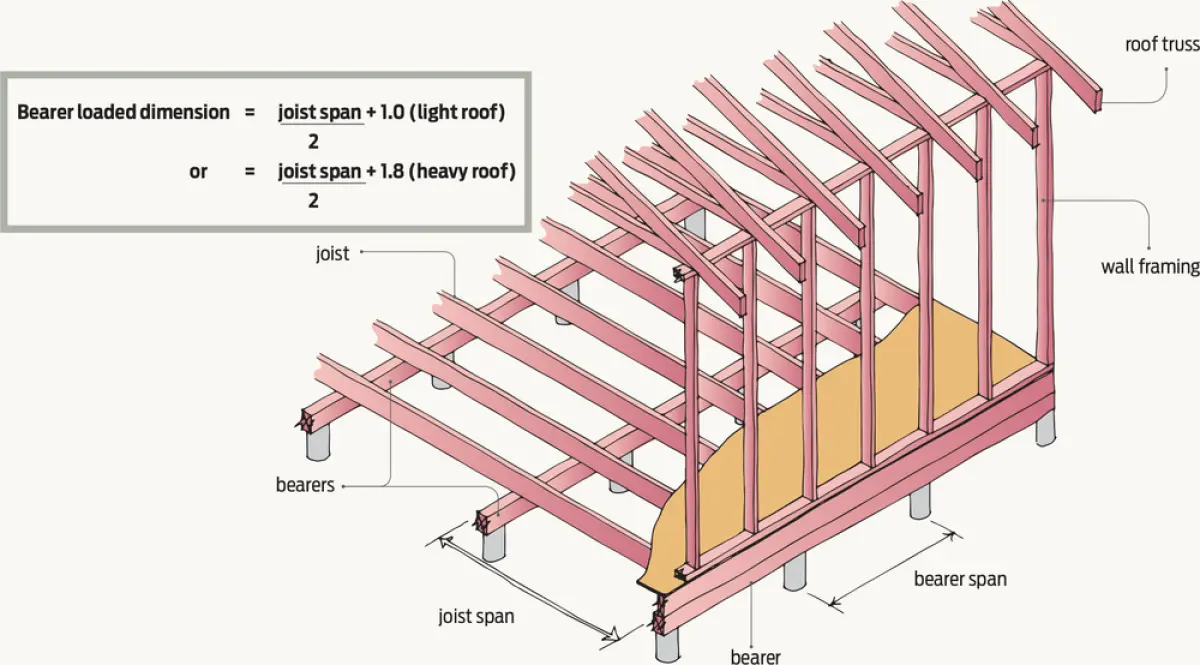
Figure 1.3(G) of NZS 3604:2011 Timber-framed buildings shows joists supported by a foundation wall. However, it’s silent for bearers under external loadbearing walls, although it does make provision for the pile footings under external loadbearing walls.
A few complications
A bearer under an external wall of a single-storey building could be supporting the roof and the wall and even a suspended upper floor in a 2-storey building. A 2-storey building will often have a continuous foundation wall around the exterior, so the floor joists will be continuously supported on a wall plate or stringer.
The situation is complicated, as the roof could be light or heavy with rafters propped off an internal wall, or it could be trusses spanning the full building width. However, the external wall will stiffen the bearer to some extent if it does not have too many openings.
Single-storey calculation
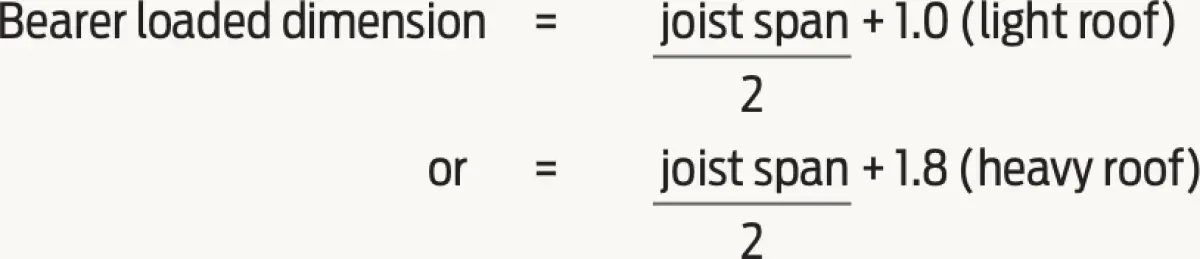
Taking all this into account, for a bearer under an external wall of a single-storey building, we suggest that, from NZS 3604:2011 Figure 1.3(G):
Specific design for 2-storey
If the building is 2-storey and has no perimeter foundation wall (common in some parts of the country), it is advisable to have the bearers specifically designed by a structural engineer. The loading can be quite high, perhaps necessitating additional piles or larger bearer sizes.