

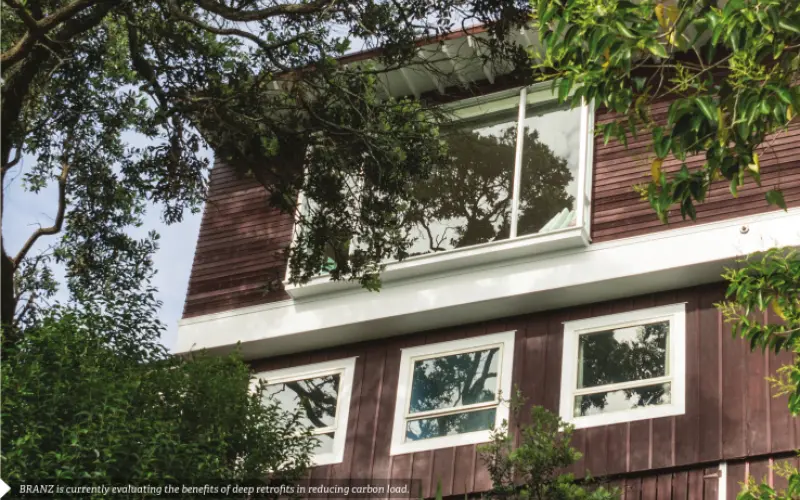


There are warehouses of research findings showing retrofitting cold and damp houses has huge health benefits for the occupants and wide benefits for Aotearoa as a whole. Consecutive governments have funded retrofitting programmes such as the current Warmer Kiwi Homes scheme. EECA has supported 385,000 insulation retrofits since 2009.
Why retrofitting is important
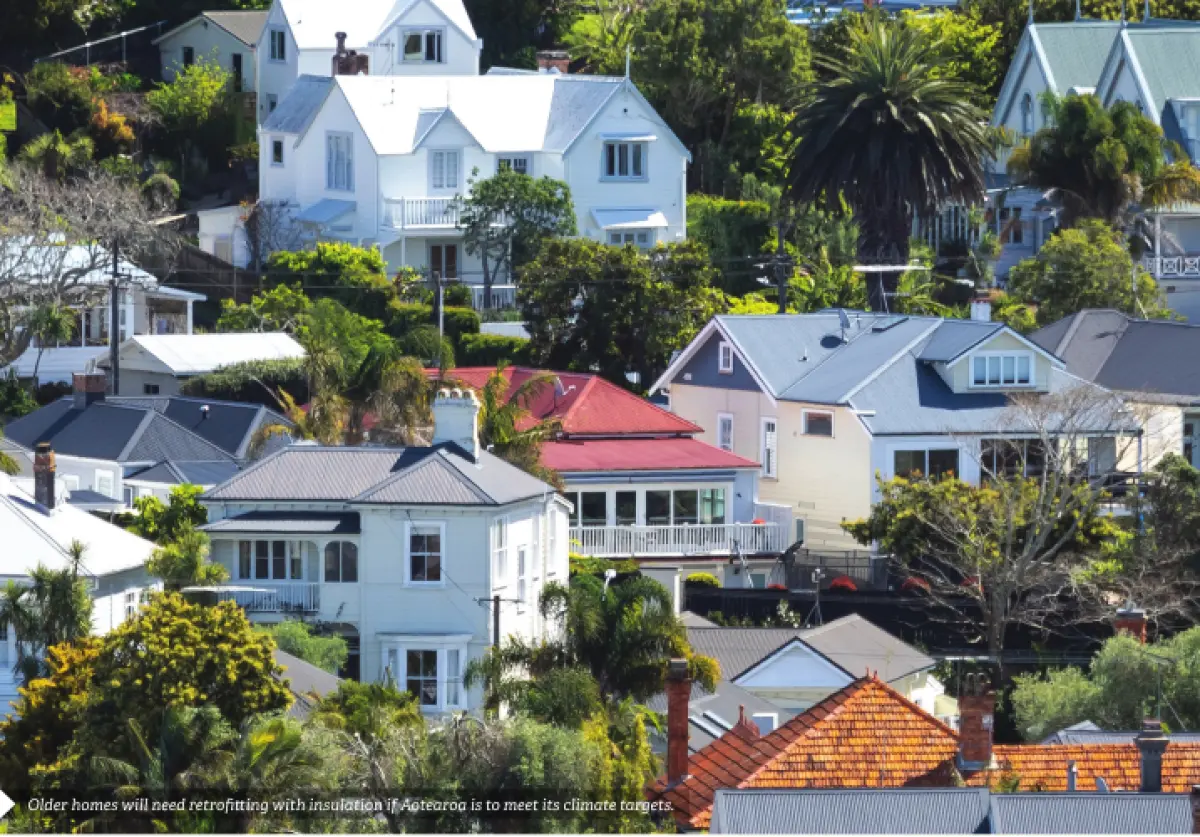
Retrofits have a new driver today – the pressure for Aotearoa to reduce greenhouse gas emissions by 2030 under its commitment to the UN’s Paris Agreement and then to reduce net emissions except methane from plants and animals to zero by 2050. This is likely to accelerate the pace of retrofits.
At present, insulation retrofits – other than for rental homes – are voluntary, but MBIE has given notice that upgraded building performance requirements will eventually be extended from new builds to the existing housing stock.
As part of its Building for climate change programme, MBIE has said, ‘In the future, it’s likely that changes will need to be made to ensure existing buildings operate as efficiently as possible.’ Its work programme already includes developing ‘emissions reduction policy measures for operational emissions in existing buildings’.
Not as easy as it looks
On the face of it, retrofitting insulation sounds straightforward. You just install insulation where none exists or replace or top up existing insulation that is insufficient. That is not difficult in many pitched roof spaces and under many suspended floors. But beyond that, there are two especially thorny issues that need to be considered, including where there is either no building paper or the building paper is in poor condition:
- If it is not done properly, insulation added to walls can get wet when rain reaches the back of the cladding and can pass water to the timber framing. This could lead to the familiar leaky building problem.
- Operational emissions savings from the retrofit should ideally be greater than the embodied emissions in the materials used for the retrofit. How can you be sure this is the case?
BRANZ and its research partners have research in both these areas that can help.
Insulation retrofits and moisture transfer
BRANZ has studied the issue of retrofits and moisture in a number of projects such as SR436 Linings-on retrofit insulation in weatherboard walls: Ensuring effective water management. More recently, BRANZ conducted a series of lab experiments on insulation retrofit options for timber-framed walls with direct-fixed weatherboards and without existing wall underlay. For the results, see the article Insulating external timber-framed walls in this issue.
Balancing embodied against operational emissions
If a key goal of retrofitting existing homes is to reduce their operational emissions – chiefly through less requirement for space heating – clearly that should be measured against the embodied emissions of the materials used in the retrofit. Looked at purely from a climate change perspective, there should be a net reduction in emissions. What is the optimal approach to retrofits? Can deeper retrofits work in several areas to achieve a substantial improvement in energy efficiency giving operational benefits that offset their embodied emissions?
Overseas studies and the initial findings from work in Aotearoa indicate that, in some cases with deeper retrofits, the embodied carbon in the new materials can be so high that it largely offsets the reduction in operational emissions. Work in this area is continuing and BRANZ will publish its findings.
This is absolutely not to say that extensive retrofits should never be considered. In many cases, there will be huge health and social benefits for both occupants and country that will justify a deep retrofit to turn a cold, damp house into one that is warm, dry and healthy.
Thermal improvements beyond insulation
There are many options for improving thermal performance in a retrofit beyond insulation in the roof, floor and walls including:
- secondary glazing
- reducing excess moisture in the air
- eliminating draughts.
Secondary glazing
Work funded by a BRANZ research scholarship and supported by Beacon Pathway involved four secondary glazing systems retrofitted to a single-glazed aluminium window. An aluminium-framed, sliding sash, low-E secondary glazing system performed best, giving a 290% improvement in R-value over the thermal performance of the single-glazed window alone. Three other options – aluminium-framed clear secondary glazing, magnetically attached acrylic and thin plastic film – all produced R-value improvements of around 130–150%.
Secondary glazing was found to be cost-effective in cooler climates but not in warmer climates such as Auckland. Palmerston North Eco-Design Advisor Nelson Lebo urges caution with exterior windows subject to wind-driven rain as moisture that gets between the original and secondary panes can take days or weeks to dry out unless the panel is removed.
Reducing excess moisture in the air
A key benefit of retrofitting is being able to maintain a warmer indoor environment in the cooler months. This also makes ventilation more effective at removing moisture, particularly as the outdoor air is usually drier than indoors. (For more, see New home, old habits in Build 156.)
Eliminating draughts
Occupants in Wellington City Council apartments finished in 2015 said the units were cold in winter. Researchers from the Department of Public Health at the University of Otago in Wellington found draughts were to blame. Fixing sealing strips to doors helped eliminate draughts, making the apartments an average of 1.36°C warmer.
Retrofitting bigger buildings
While this article has focused on retrofitting domestic buildings, the potential for work in other buildings is enormous, and some great work has already been completed.
The University of Auckland’s old Social Sciences building was reopened in September this year after substantial work to a 6 Green Star Design, including enhanced thermal performance. Simon Neale, the University’s Chief Property Officer, says, ‘This project highlights how we can avoid knocking down our existing spaces and instead adaptively reuse them, slashing our carbon emissions while creating a space fit for the future.’
The BRANZ website has three case studies of renovation and retrofitting from a building life cycle perspective, including a 1917 office building and a 1923 warehouse – see Building LCA/Carbon footprint