

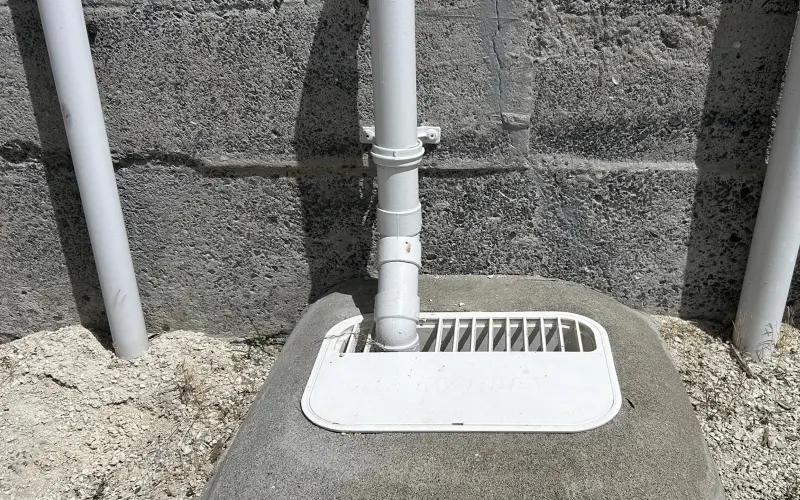


Gully traps are part of the foulwater drainage system receiving discharge from kitchen, bathroom (apart from toilet pans) and laundry wastewater fixtures before the discharge enters the sewer system.
They are located externally to ensure that, if the drainage system becomes blocked, the wastewater will overflow outside instead of inside the building. Gully traps include a water seal to block odours from the sewer.
Building Code requirements
Installation of sanitary plumbing and drainage systems in New Zealand must be in accordance with New Zealand Building Code clause G13 Foul water. Compliance with clause G13 can be achieved by meeting the requirements of Acceptable Solution G13/AS2 or AS/NZS 3500 Plumbing and drainage. Select one document for compliance — do not mix and match requirements from both.
Both documents cover below-ground foul drains up to 150 mm in diameter, and neither cover the discharge of industrial, chemical or toxic waste.
Every dwelling needs one
Every residential building must have at least one gully trap with at least one wastepipe discharging into it so that the water seal is retained.
A single-fixture discharge pipe must not be more than 3.5 m in length (G13) between the water seal of the fixture and the gully trap unless it is vented. A number of discharge pipes may drain into a single gully trap.
Requirements for gully traps
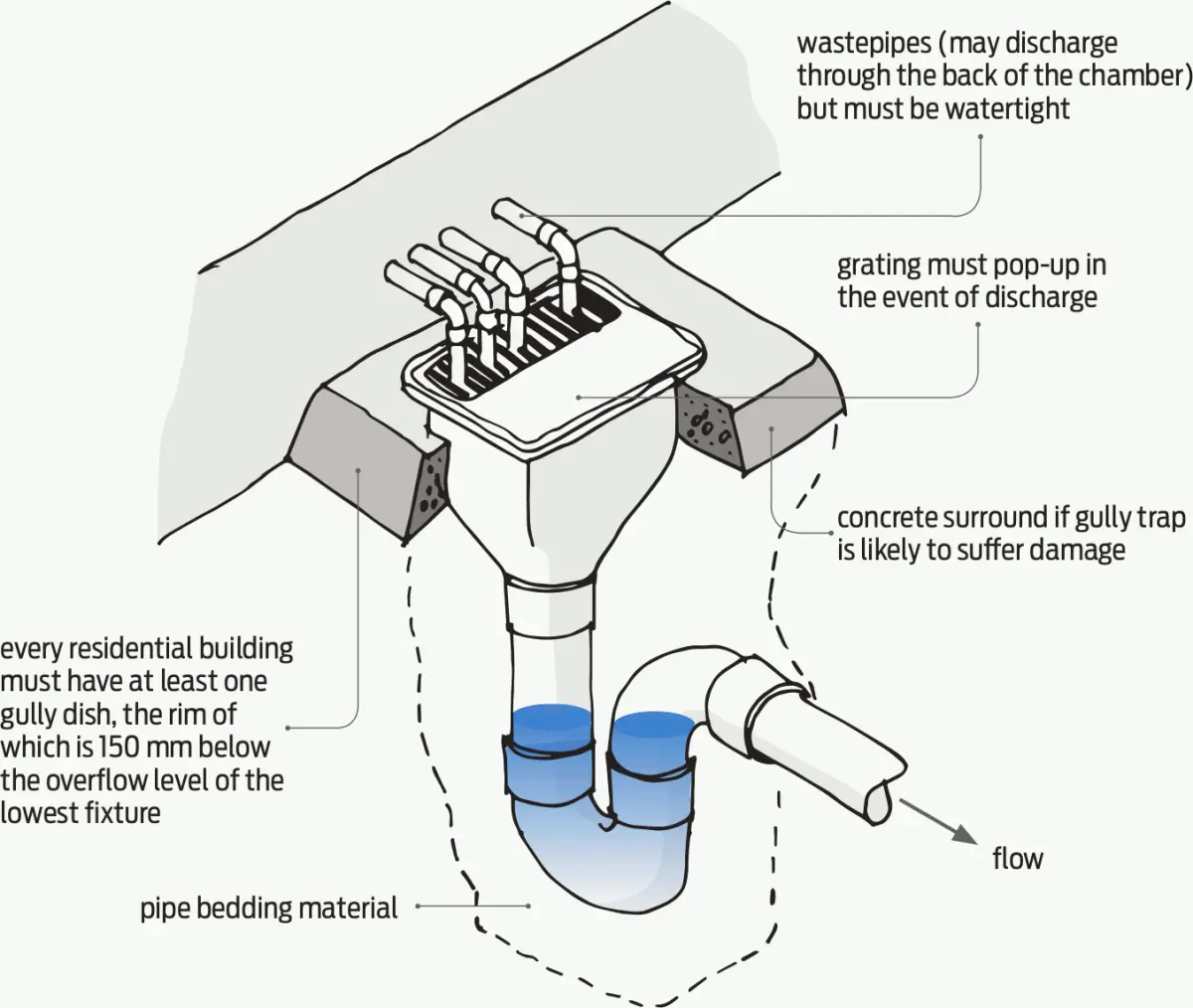
Waste pipes may discharge into a gully trap from the top through the grating or through the back of the chamber. Discharge pipes must be arranged to permit easy cleaning of the gully trap.
Specific requirements for gully traps include:
- being located within the legal boundary of the land the building is on
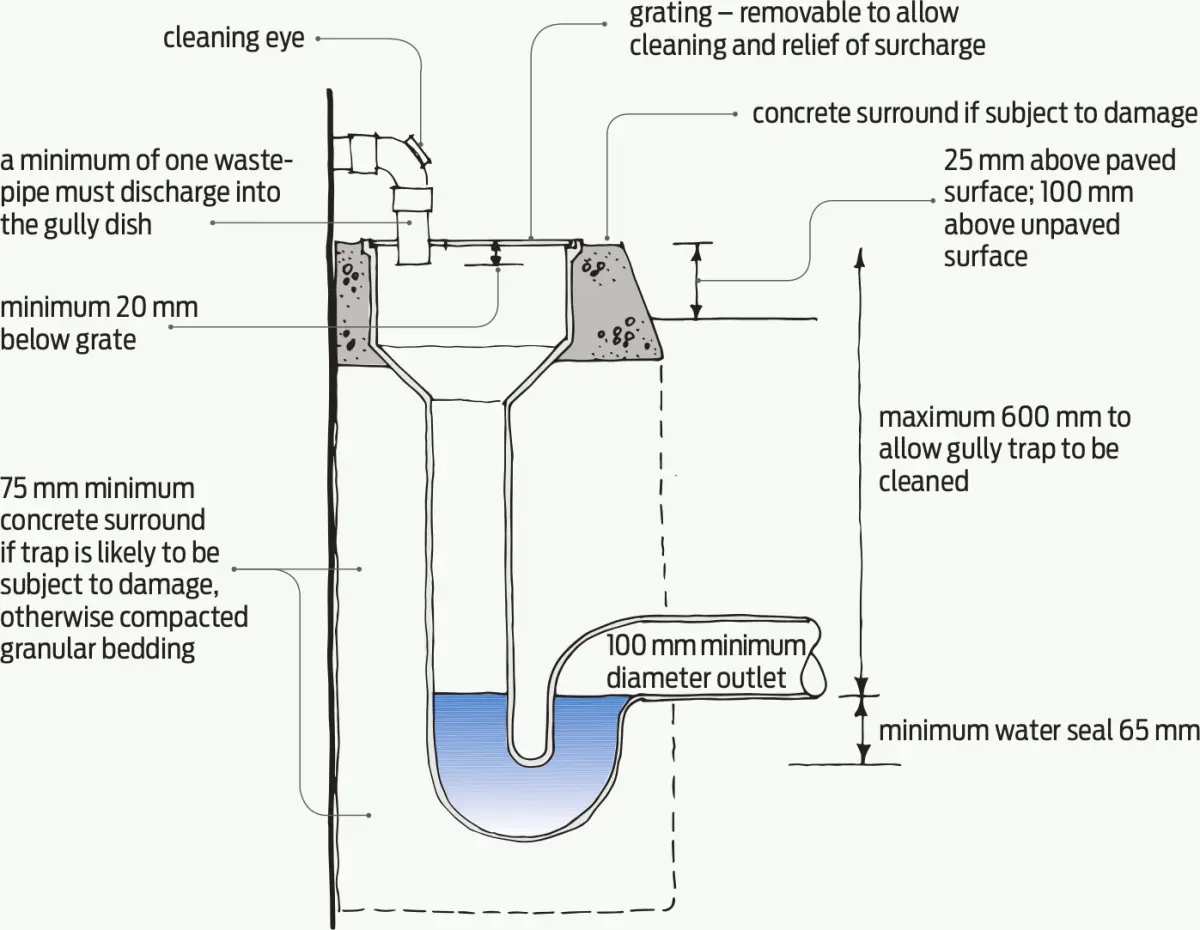
- being installed so that the rim of the gully dish is at least 150 mm below the overflow level of the lowest fixture that drains into it
- having a water seal that is no more than 600 mm below the rim of the gully dish
- having a minimum water seal depth of 65 mm
- not allowing surface water to flow into the trap
- being constructed so the grate will allow a surcharge or overloading from discharge pipes or from a blocked sewer line.
No surface or groundwater
Surface water is prevented from flowing into the trap by ensuring that the rim of the gully dish is at least:
- 25 mm higher than a paved surface
- 100 mm higher than an unpaved surface.
The outlet pipe from the gully must be at least 100 mm in diameter and located a minimum of 20 mm above the water seal level and 20 mm below the grating. The pipe connection must be watertight so groundwater cannot enter the sewer system.
Any deck above must allow access
Gully traps must be accessible for cleaning and maintenance.
A deck may be built over a gully trap, but at least 600 mm of clear access space above the trap must be provided. This is for access to the gully trap and drainage inspection points.
Installing a gully trap
When installing a gully trap, it must be adequately supported by either:
- being set in compacted bedding material such as granular, non-cohesive fill that has a maximum particle size of 20 mm
- 75 mm thick concrete surrounding the entire gully dish and separated from the building foundation.
Note: While drainage pipes can be run under a slab (see Build 157, Pipes under slabs), it may be prudent, if sufficient fall is available, to run them around the building’s perimeter for ease of maintenance.