

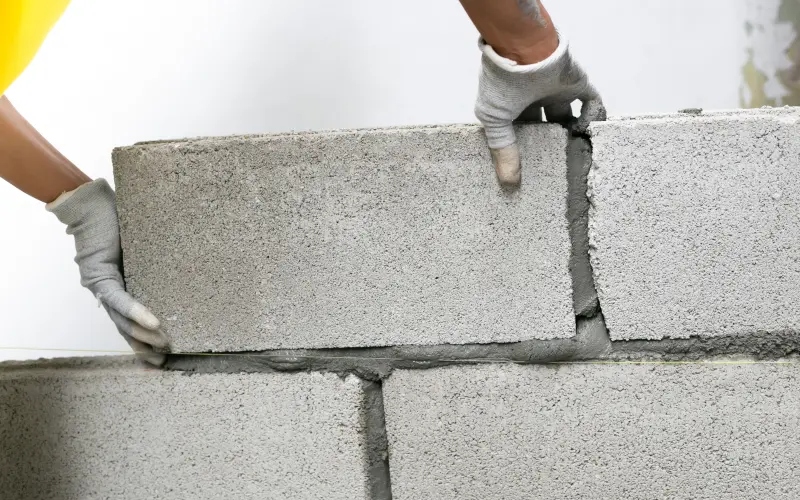


Uncoated concrete masonry is not a waterproof construction element in itself, and as such requires waterproofing where it is part of an external wall to a habitable space. Clause 2.3.1 of NZS 4229:2013 Concrete masonry buildings not requiring specific design is quite clear in noting veneer wall construction as the only exception to this requirement.
Code compliance
The reason for the waterproofing is to ensure that concrete masonry walls comply with the New Zealand Building Code (NZBC) Clause B2.3.1(a) to be durable for at least 50 years and Clauses E2.3.2 and E2.3.3 to ensure that no damage to other building components results from the ingress of moisture through the masonry walls.
Two procedures need to take place to achieve this level of durability and functionality.
Suitable coatings
The first requirement is that the masonry wall must be suitably coated.
The aim of an exterior coating system is to prevent the entry of liquid water. The transmission of water vapour should still be able to occur and one way of achieving this is by using an alkali-resistant acrylic coating. The coating should only be applied when the wall has a moisture content of less than 70% relative humidity. Two or three undiluted coats will give a dry-coat thickness of between 180 and 250 microns, which the standard specifies, although this does depend on the product used and the method of application.
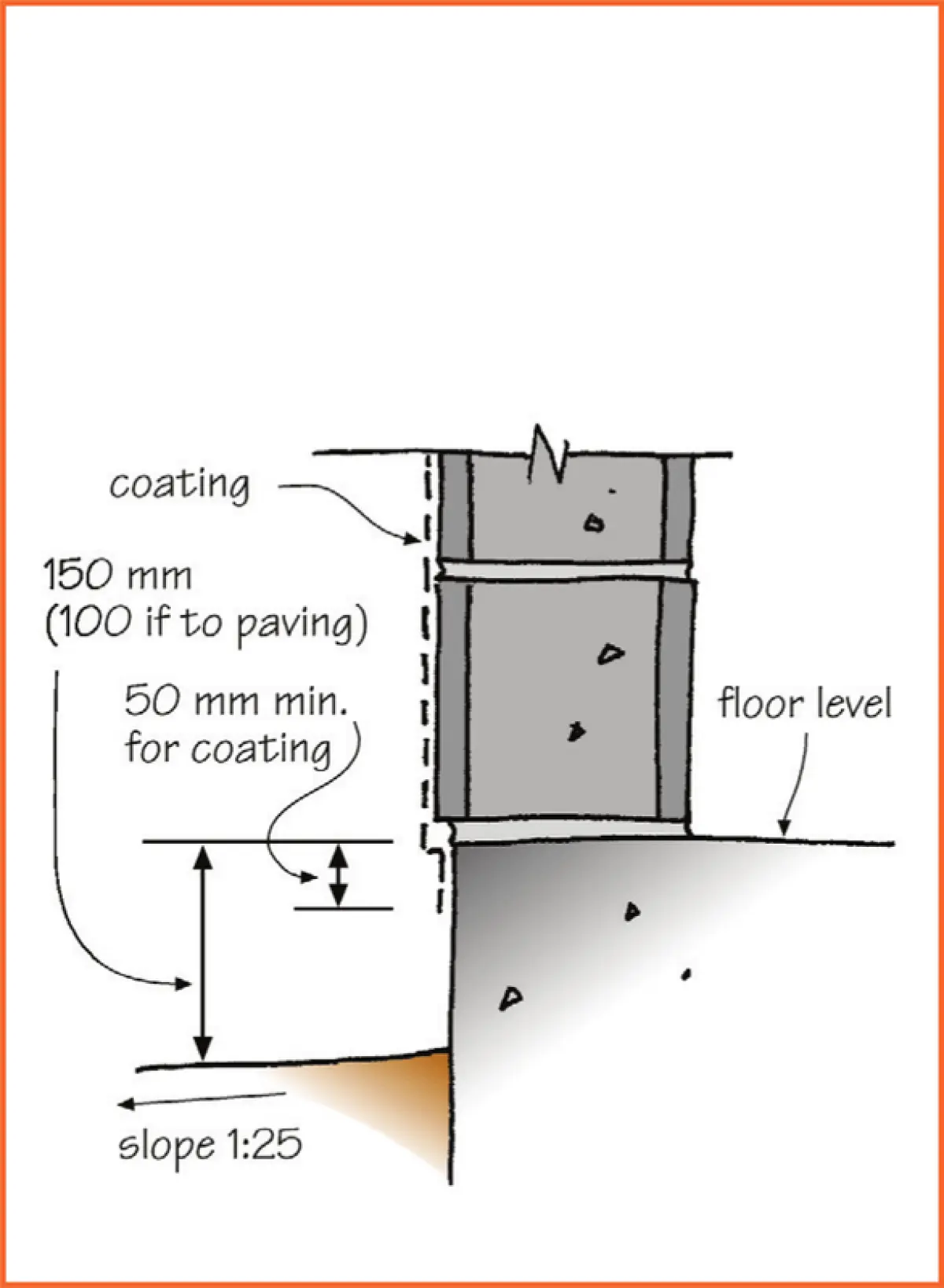
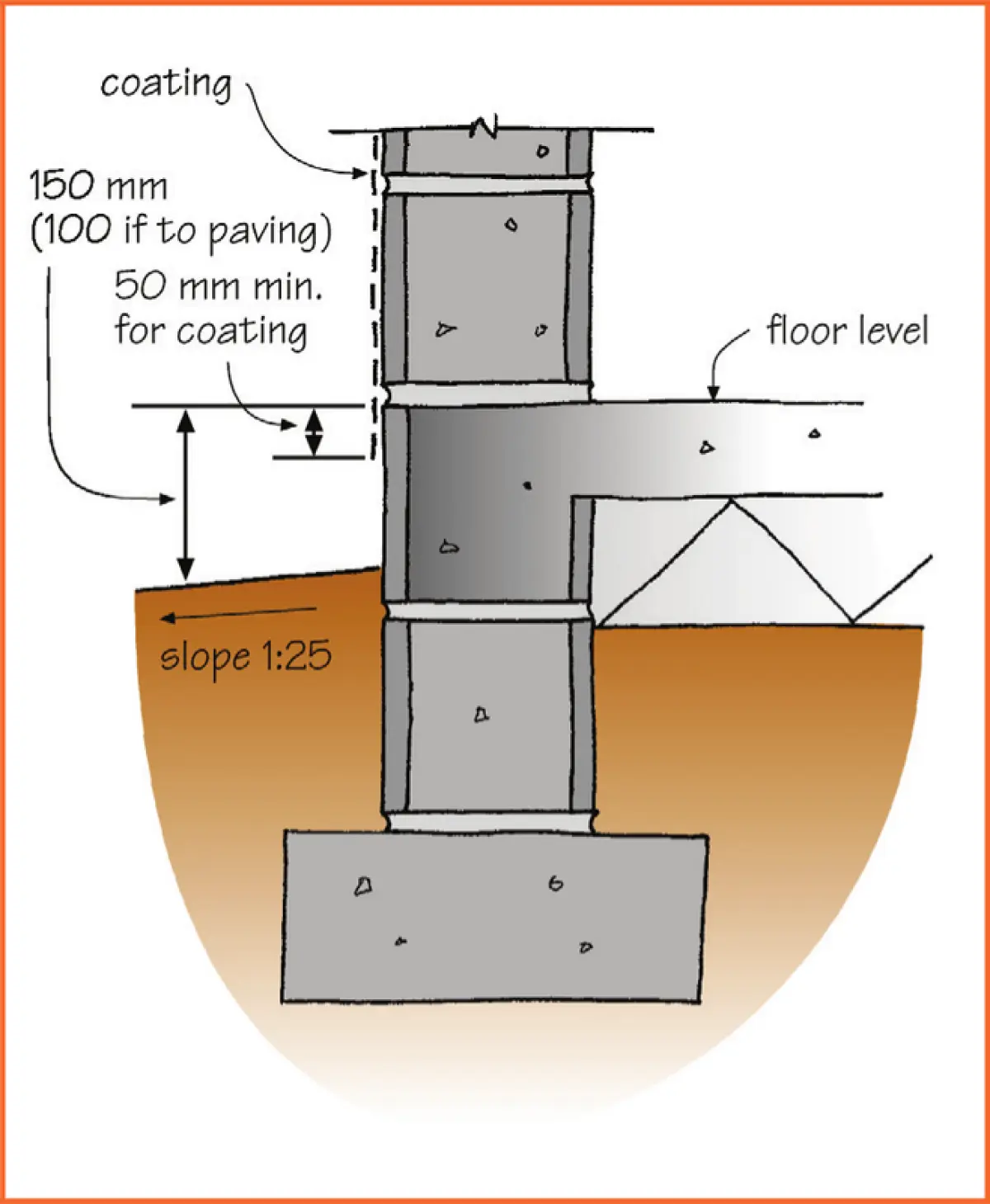
The coating system must extend at least 50 mm below the level of the adjoining concrete floor slab. See Figures 1 and 2. This continuity of the coating system is vital to direct water away from the floor/cladding junction.
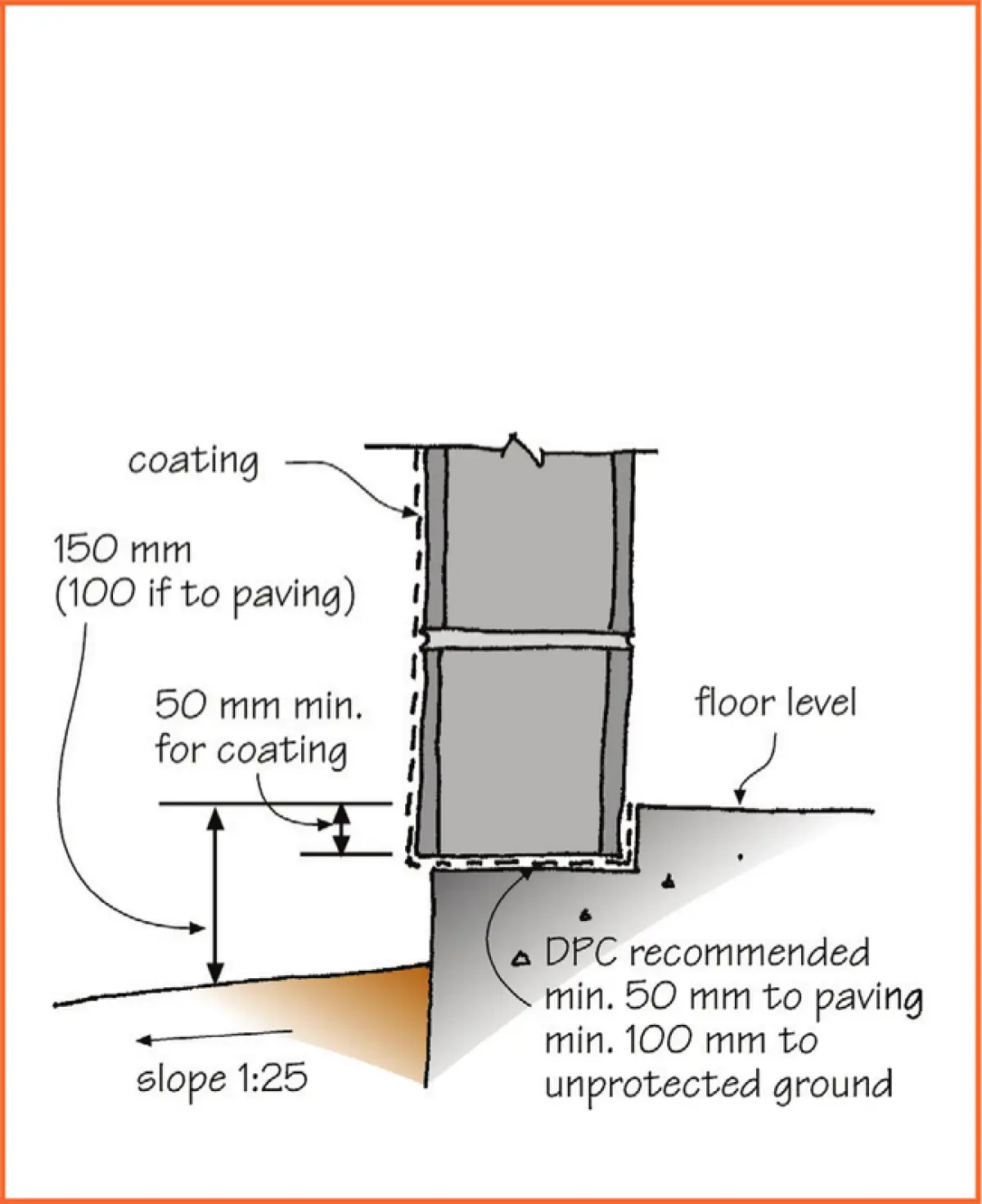
A recommended solution to the problem of water moving through the floor/cladding junction is to rebate the floor edge and incorporate a DPC. The coating requirement still applies to the face of the masonry with the rebated option (see Figure 3).
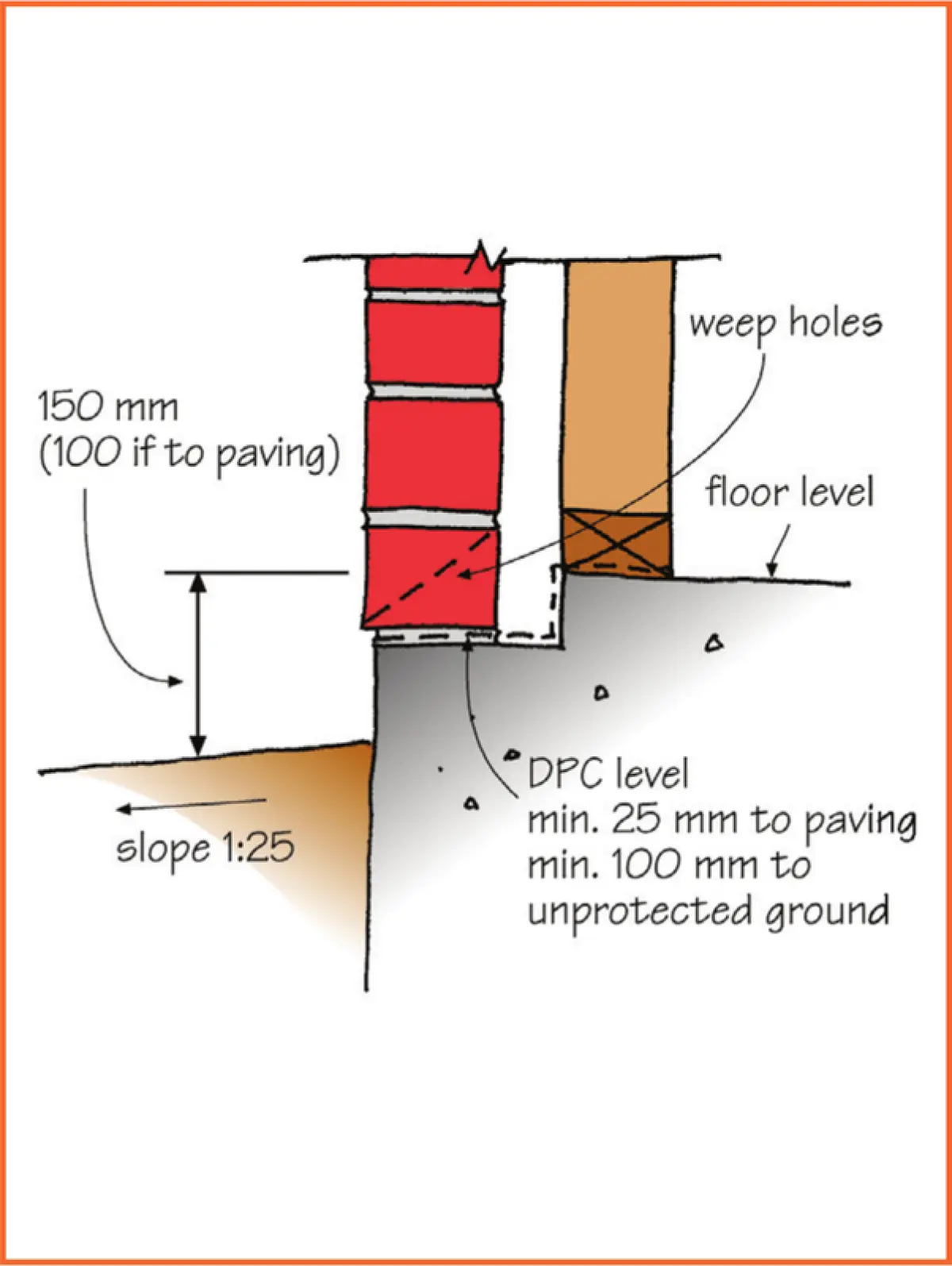
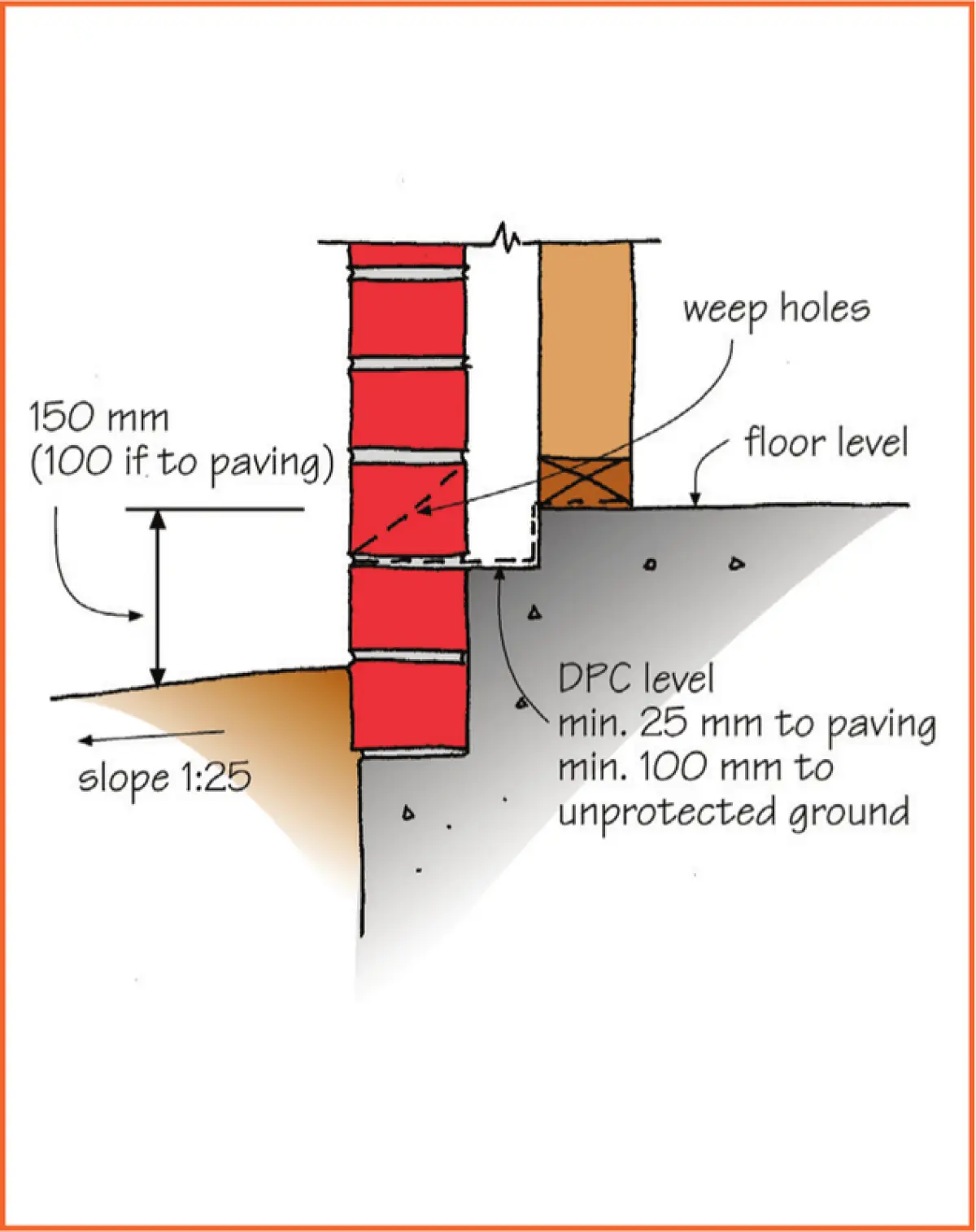
Veneer or cavity walls have a greater resistance to weather than solid masonry because of the designed ability to control any incoming moisture by means of the air gap. In extreme conditions moisture may pass through the veneer but as it does not have a path into the building it either dries out or flows down the inner face and out through weepholes (see Figures 4 and 5). For this reason, NZS 4229 does not specify applying a coating system.
The veneer can start beneath the ground level but there must be a separation layer (DPC) at the weephole level. The DPC level must be at least 100 mm above unprotected ground and 25 mm above permanent paving.
Clearance to finished ground
The second requirement is that there must be a clear delineation from the landscaped ground at the foot of the wall.
In addition to having a coating system applied continuously down onto the foundation, there must be a clearance height of 150 mm from unprotected ground or 100 mm from paving to the finished floor slab level. This height is measured from the top of the cleared or landscaped ground alongside the foundation to the top of the adjoining finished floor slab. The cleared ground alongside must slope away from the building’s walls at a rate of not less than 1 in 25 for a distance of at least 1 m. These requirements apply to both solid masonry and veneer walls. See Figures 1–5.
The only exceptions given by NZS 4229 are for the walls of non-inhabited buildings and for garage entries. In these cases, the ground clearance height requirement is relaxed to 40 mm. If, however, a driveway slopes towards the entry, a drainage channel must be installed to carry away any surface water.
Note: To assist with clarity in the Figures, wall ties, underlay and linings are not shown.
Brick — a time-tested system
Steve Henderson, consultant, has recently been involved with building developments using plastered brick and cavity walls. He is concerned about the public perception of this form of building, which now equates any plaster finish with weathertight problems, when this is not always the case.
There has been considerable discussion in the media recently about new homes that have developed serious leaks because of poor construction. The houses that appear to be most affected by the problem are those with an exterior plaster finish. While it is true that a plaster finish can hide a myriad of faults, it is not necessarily the plaster finish that is at fault.
One sure way of avoiding the problem of leaking buildings and rot is the time-tested cavity and clay brick veneer cladding system. A clay brick cladding system is a very reliable weather shield. Clay brick is the dominant cladding material in many countries, and it is interesting to note that more homes were built in New Zealand in the last 12 months in brick than any other material.
The current building design trend for new homes and apartment blocks to have a plaster finish over a substrate is now seen to be causing problems. The problem buildings were not built using a clay brick cladding system. Kiln-fired clay brick is an extremely stable cladding material and the ideal substrate for a plastered finish. Internationally, plastered brick has been a proven and durable cladding solution for decades.
So, for those who are looking for advice on what building materials to use, do look at all the options.