



Innovation is necessary to increase construction productivity growth, which has lagged behind other industries in Aotearoa New Zealand. It’s also needed to promote a highly productive and low-emissions construction sector.
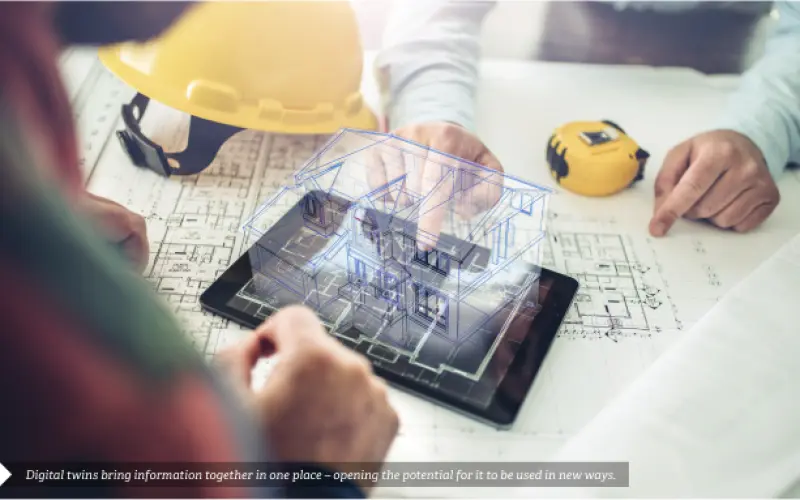
Digital twinning is one example of technology that has the potential to transform the industry. It involves creating a digital replica of an asset that responds to and represents real-world data such as an interactive 3D model. Digital twins can be used at any stage in construction – from monitoring progress on a build to monitoring its ongoing maintenance.
The power of digital twins lies in bringing information the industry already has together in one place and opening the potential for that information to be used in new ways.
What was once recorded on yellowing maintenance logbooks, dusty plans and dense hardcopy specifications can now be fed into a digital twin. However, unlike other systems, digital twinning goes a step further – it incorporates live information from real-world sensors so the model evolves with changes to the real building.
How twins are different from BIM
Building information modelling (BIM), which has been around since the 1970s, refers to modelling a digital representation of physical and functional characteristics of an asset. It is used to make decisions about the design and management of that asset throughout its life cycle.
Like BIM, digital twinning aims to create a digital representation of an asset – but it goes further.
The goal of a digital twin is to create a model as close as possible to a real-life representation of a physical asset. This includes incorporating real-time data into the model so information from the real world informs and changes the digital model.
A good way to think about the difference is that BIM is a passive system whereas, once set up properly, a digital twin is an active living system that adapts to reflect the real world.
This means a twin can have predictive power and can simulate scenarios that predict how the real-world asset will perform in changing environmental conditions.
Implementation of digital twins
There has been huge investment overseas in digital twin technology. In Victoria, Australia, an AU$40 million state-wide twin has been implemented after the success of its much smaller model of the Fishermans Bend precinct in Melbourne. Similarly, NSW has implemented an impressive digital twin of the town of Bathurst, laying the groundwork for further development of the model.
Aotearoa is also taking steps in the right direction. Wellington City was recreated in a digital form that incorporated data from cycle lanes, roads, car parks and sea-level rise.
This model is being expanded to include assets and more sensor data with the aim of informing council decisions.
The Toitoi Hawke’s Bay Arts and Events Centre represents a more intensive approach to digital twinning.
In Heretaunga Hastings District Council, a true digital twin has been implemented as the model incorporates sensor data on CO₂ levels, humidity, water and energy use to provide layers of data beyond a traditional 3D model.
What it costs
Heretaunga Hastings District Council initially invested $110,000 to get its modelling system up and running. However, the Council estimates adding 40 other buildings into the system will only cost around $3,000 per building. There will also be the ongoing cost of maintaining the system information and potentially subscribing to twinning software. Citywide projects will, of course, cost more.
With the tight labour market for digital services, there is a risk digital twinning service costs will increase with demand for twins. If organisations wish to maintain their digital twins at a low cost, they will need to upskill their in-house resources to manage the day-to-day requirements of their twin system. Adoption of a uniform software or data format, as suggested by Te Waihanga | New Zealand Infrastructure Commission, may help to mitigate such a skills shortage.
How far can this technology go?
Currently, Te Waihanga is looking at standardising software in the public sector so information can be transferred between assets and brought together under a larger twin system. This is aimed at one day creating a unified national digital twin that, at a minimum, will bring Aotearoa’s public infrastructure under the same digital model.
Legal considerations
Ownership and licensing of the intellectual property in digital twins is one legal consideration. Twins could form a significant part of the value associated with a building, and prospective purchasers will want to ensure they continue to have access to the twin. Developers will want to retain the ability to use twinning systems created by contractors in the development of the building for future maintenance. Contractual arrangements will need to address these issues.
A further consideration is the status of a twin and risk allocation. If twins are treated as deliverables or tools, similar to how as-builts are currently treated, the scope of liability for a defective twin will be minor.
However, if twins have the same status as the physical contract works, defects liability and warranties may become significant areas of risk. If any issues arise with the digital twin and it fails to identify particular components of a building – or there is error – and that causes a party to suffer loss, the question of who bears the risk in these circumstances and up to what limit of liability will need to be considered and drafted into the contract.