




While the recent changes to compliance with Building Code clause H1 lifted requirements for roofs, windows and floors, the performance needed from walls scarcely changed. The construction R-value required for unheated walls is just R2.0 in all climate zones. MBIE has flagged that change is coming, and a requirement for higher-performing walls will be included in a future Building Code update.
In the meantime, there are several ways of making big improvements above the minimum Building Code requirements. One is to use 140 mm structural framing in the external walls rather than 90 mm, which allows for better-performing insulation to be installed. The other is to install a secondary layer of thermal insulation to the internal face of external walls. These two approaches can be combined.
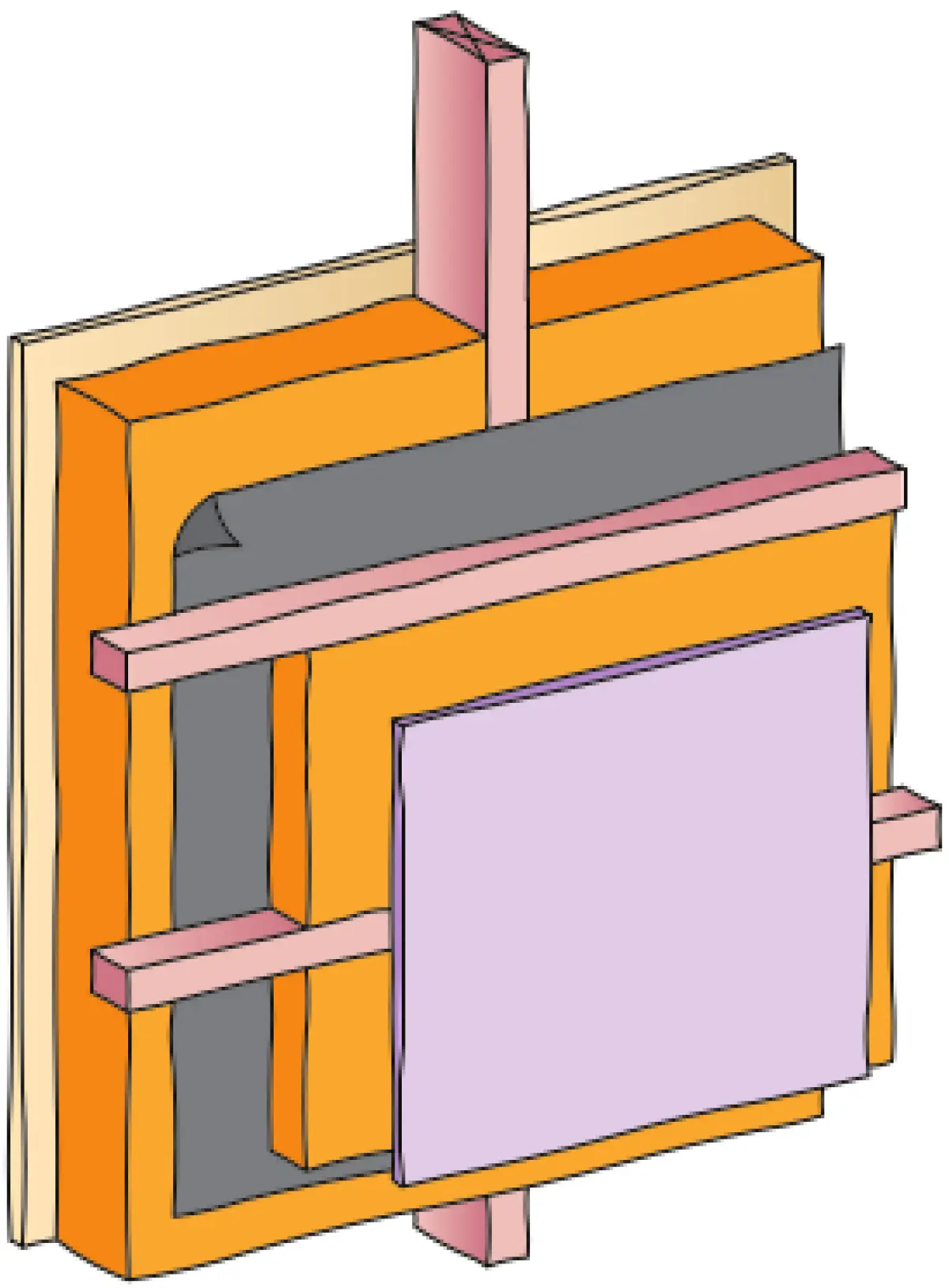
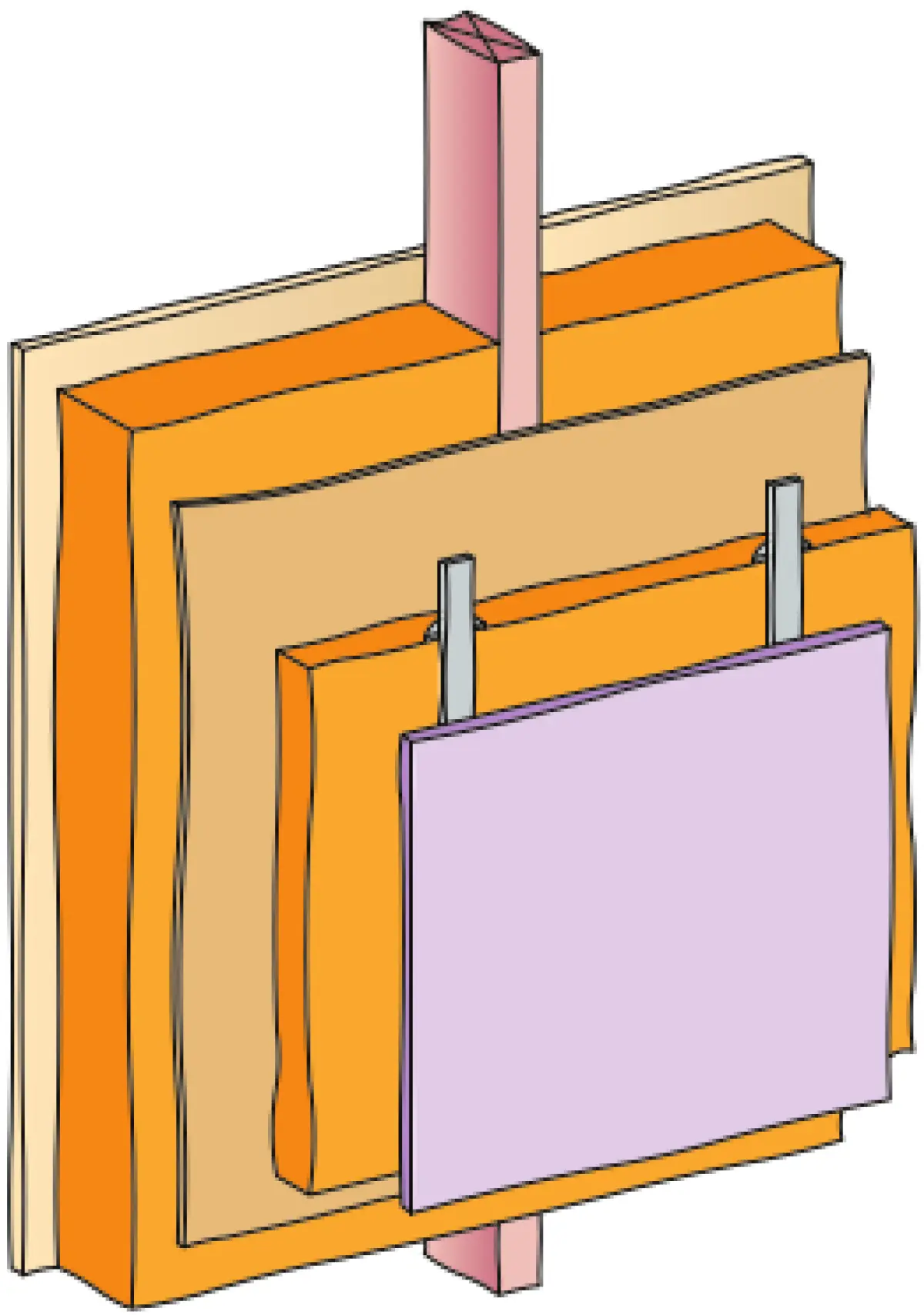
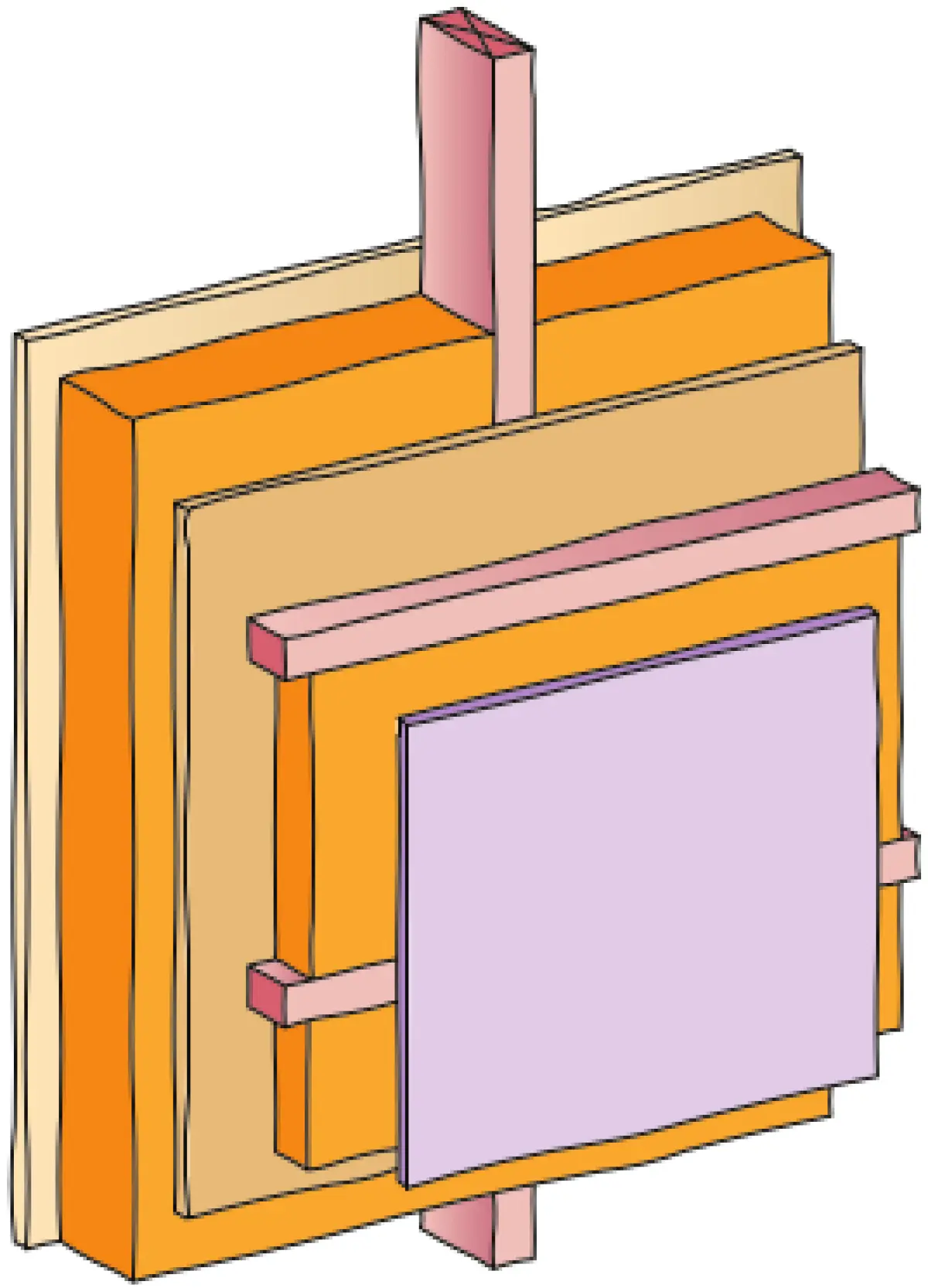
There are three main options for a secondary insulation layer in the BRANZ House insulation guide 6th edition, shown here in Figures 1–3. All these options have been used in houses consented and built in Aotearoa New Zealand in recent years.
The framing
One form of secondary insulation layer used in several higher- performing houses takes the form of a cavity constructed with 45 x 45 mm or similar timber battens fixed horizontally across the studs (see Figure 1). The battens are not structural and can be fixed at centres to suit the insulation dimensions and for the fixing of the interior linings. Very often, the performance is optimised with the use of 140 mm studs for the structural framing, which allows insulation products with values of R4.0 or higher in the main insulation layer.
The fibrous insulation product in the secondary cavity (with 45 mm battens) is usually around R1.0 or R1.2. This can give a construction R-value for the whole wall (assuming 140 mm structural framing) of around R3.0 (or higher where framing ratios are reduced).If the secondary cavity used 90 mm framing, R2.8 fibrous insulation products could be used, and the construction R-value of the whole wall could be around R5.0.
In addition to allowing for more insulation, this approach greatly reduces the thermal bridging in the wall. Thermal bridges are locations where heat can more easily travel from one side of a wall to another. Wall framing is a classic thermal bridge, with much higher thermal conductivity than thermal insulation, providing a pathway for heat to escape from a building. Research has found that our houses often have higher framing ratios – the percentage of a wall area made up of framing – than had been assumed, greatly reducing the actual thermal performance achieved in practice (see ‘Moving beyond the bridge’ in Build 182).
The benefit with a secondary insulation layer is that the only bridging comes where the battens cross the studs (see Figure 1). An alternative way of constructing the secondary cavity is using metal rather than timber battens (see Figure 2).
Bracing requirements
While plasterboard wall linings are often used to provide the required wall bracing in housing, this is not possible with a secondary insulation layer, so bracing needs to be provided another way. This could be using a rigid underlay on the outside or additional bracing – such as plywood or oriented strand board – between the two insulation layers (see Figures 2 and 3).
Protecting against moisture ingress
It is important to ensure that the interior lining is airtight to stop air from carrying moisture into the wall cavity. This becomes crucial as the thermal performance of walls increases and the risk of condensation increases. There have been documented failures in new buildings caused by air leakage from the building interior carrying moisture into the wall structures where it has then condensed and caused damage. Air and moisture can pass through gaps or can pass through materials themselves by diffusion.
An air control layer prevents air and moisture vapour leaking through the wall. This can be rigid – such as the plywood in Figures 2 and 3 – or flexible.
Penetrations of the air/vapour control layer can be reduced if wiring services are installed in the secondary insulation layer rather than the primary layer. This generally requires minimum 45 mm battens to allow for switches/outlets.
The air/vapour control layer can be tested for air leakage if required before the secondary cavity is insulated.
The payoff
Installing a secondary insulation layer to the internal face of exterior walls involves more labour time in installing the cavity framing and insulation. While it adds a comparatively small amount to material costs, this is likely to be offset by operational energy savings because of the considerably improved construction R-values achieved.
In some circumstances, it is possible to achieve close to a doubling of the construction R-value of the wall using a secondary insulation layer. In addition to operational energy savings, substantial improvements in thermal performance also make for healthier and more comfortable homes.