

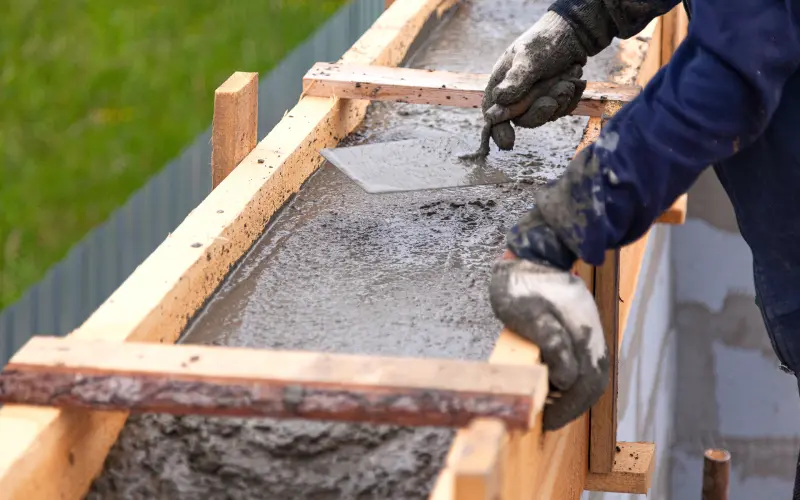


The construction of formwork is taken for granted by all except those doing it. It is difficult to find information about it – there is no mention in the Building Code, no New Zealand standard to follow (Australia has AS 3610), no ‘how to’ pamphlets in the local merchants’ shelves and of course there is usually no lasting monument to well constructed examples.
Finishing carpenters often take the glory when a job is being reviewed, yet the work of the person doing the formwork is equally vital in producing a quality result.
Need to be able to build and unbuild
The design and build of formwork is usually done by site staff. Unless a proprietary system is being used, it is up to the carpenters on site to plan how to build and support the formwork, and also how to unbuild it. Being able to strip the formwork effectively is an important part of the task.
Building formwork is something that is best learned by listening and working alongside more experienced tradespeople. Learning only by experience can result in failures along the way.
Huge forces to consider
Wet concrete exerts huge forces against the forms. The concrete and reinforcing together weigh approximately 2.4 tonnes/m3. Lateral forces are generated in walls creating horizontal bursting pressures, which are increased by internal vibrators during compacting. (This exerts similar pressure to a hydraulic jack.)
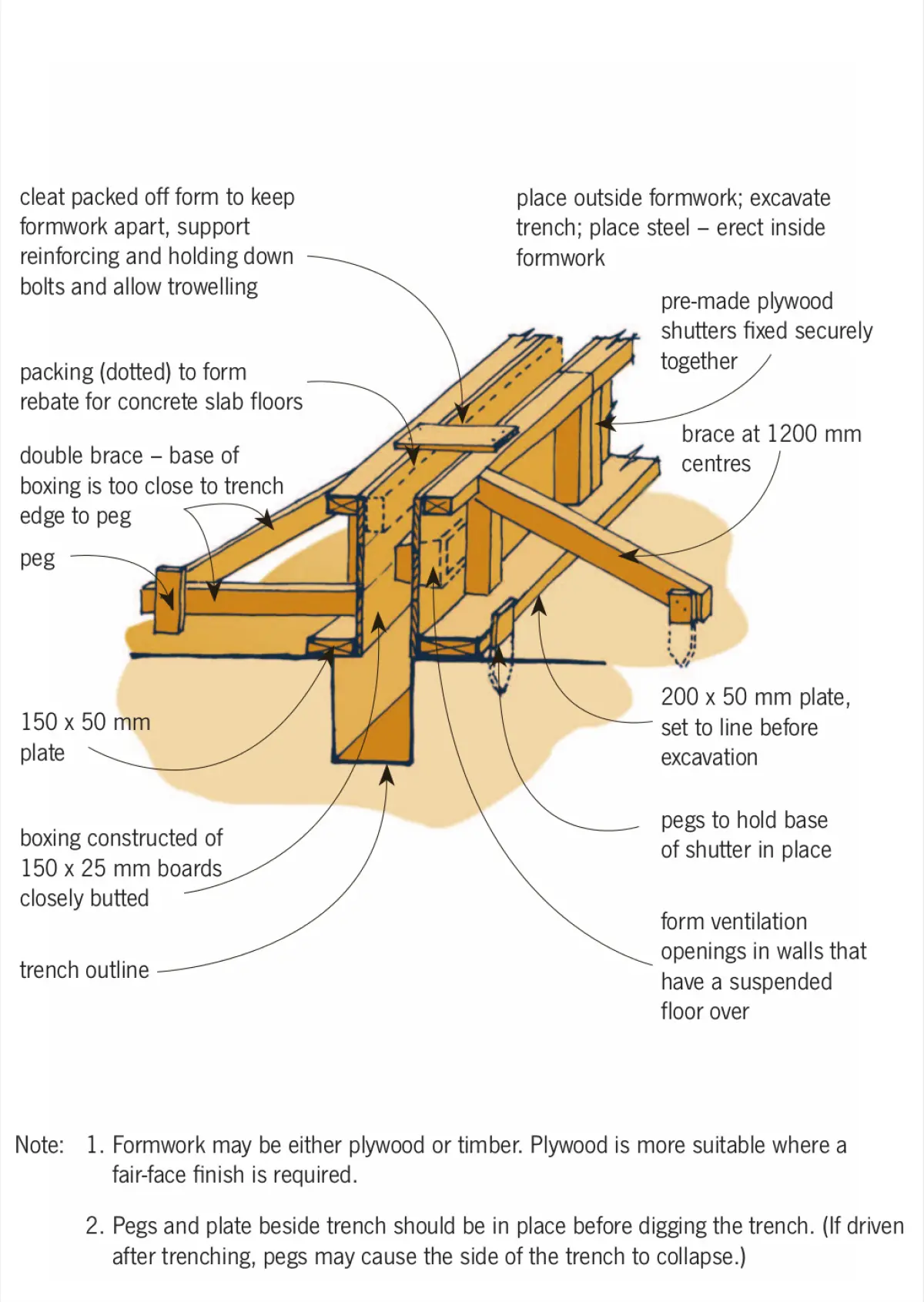
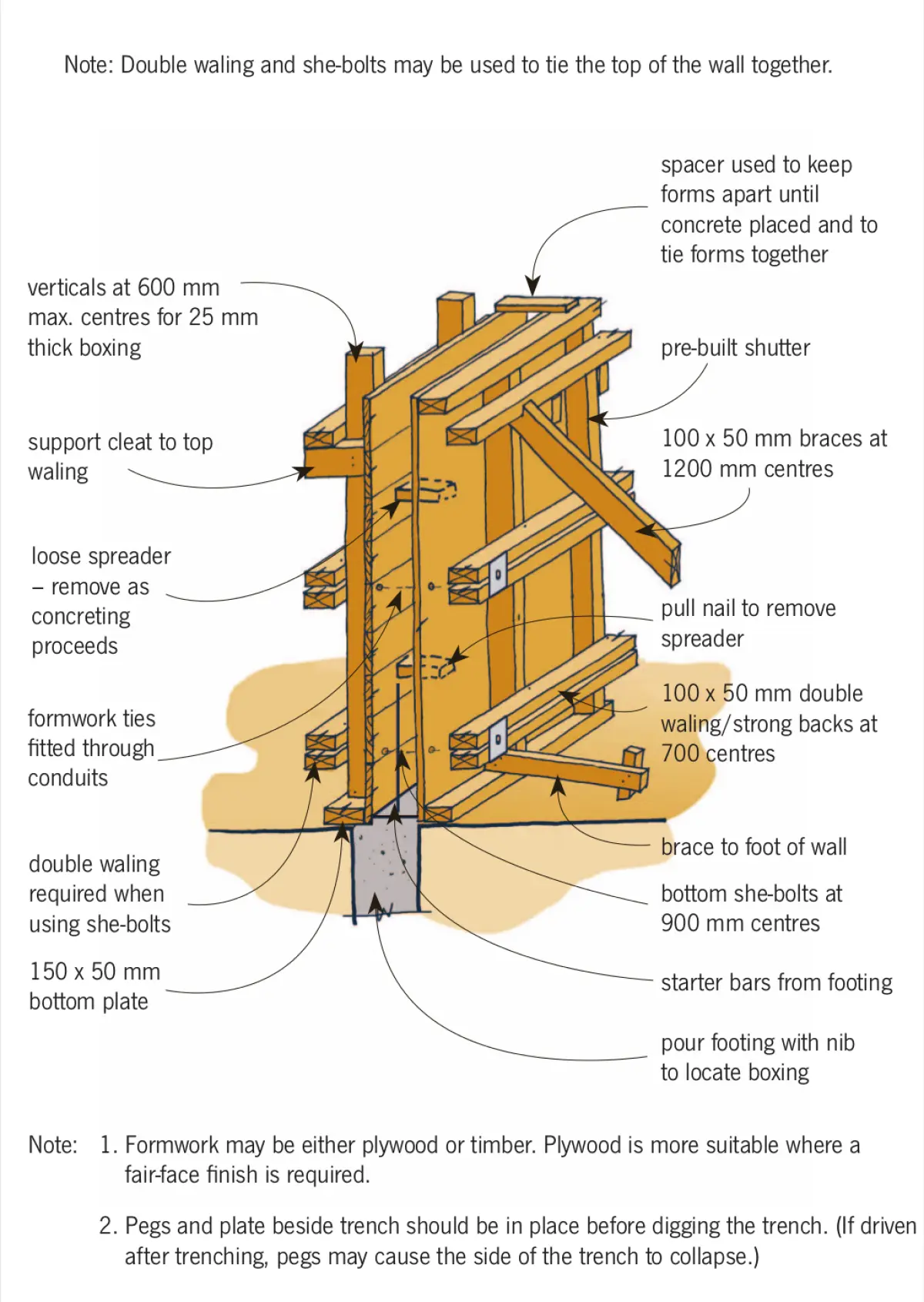
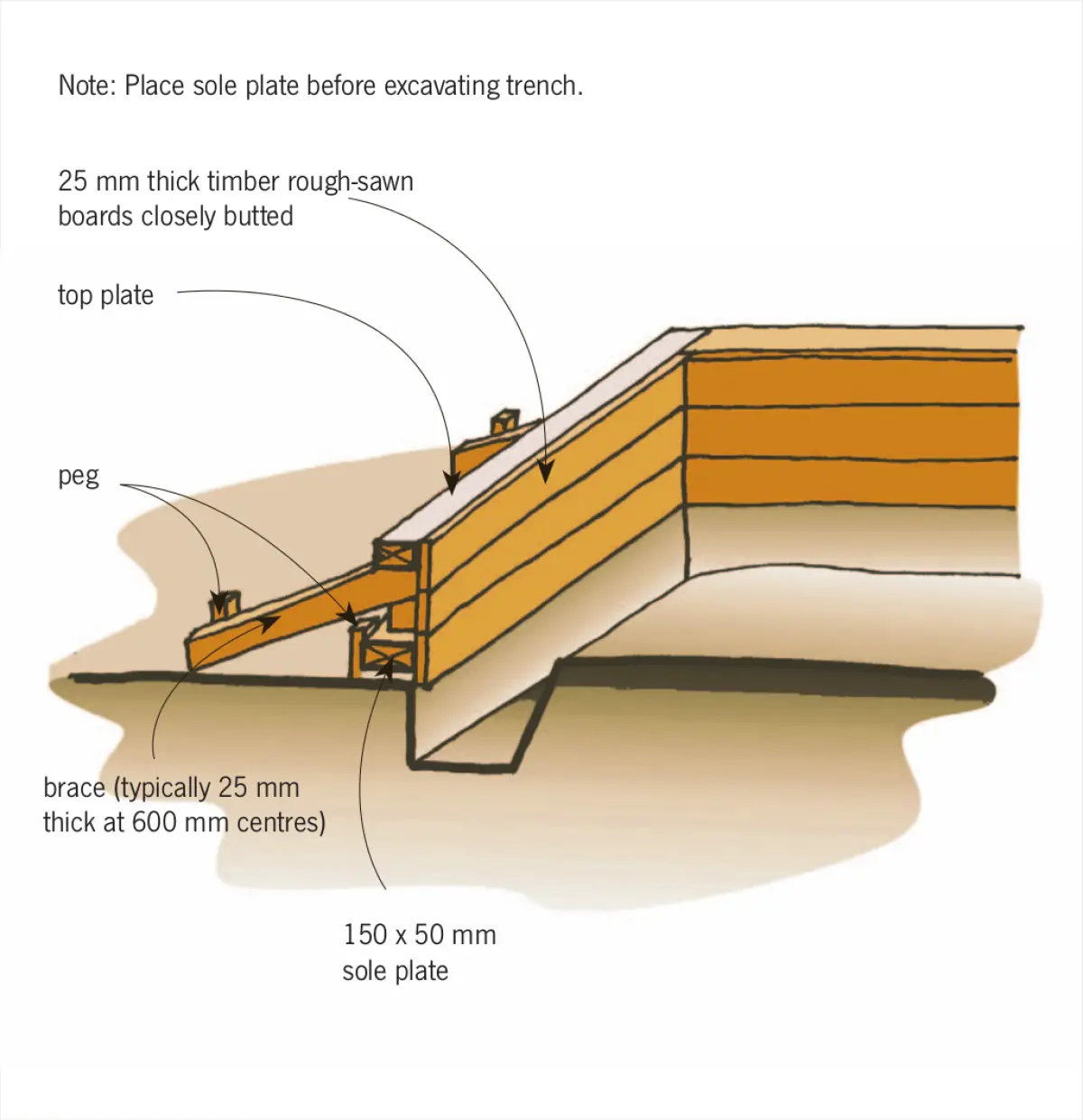
Formwork needs to resist lifting and bending in every direction and be able to also support the live loads of people and equipment during the pour. Once things start to shift, you’ll never get it back.
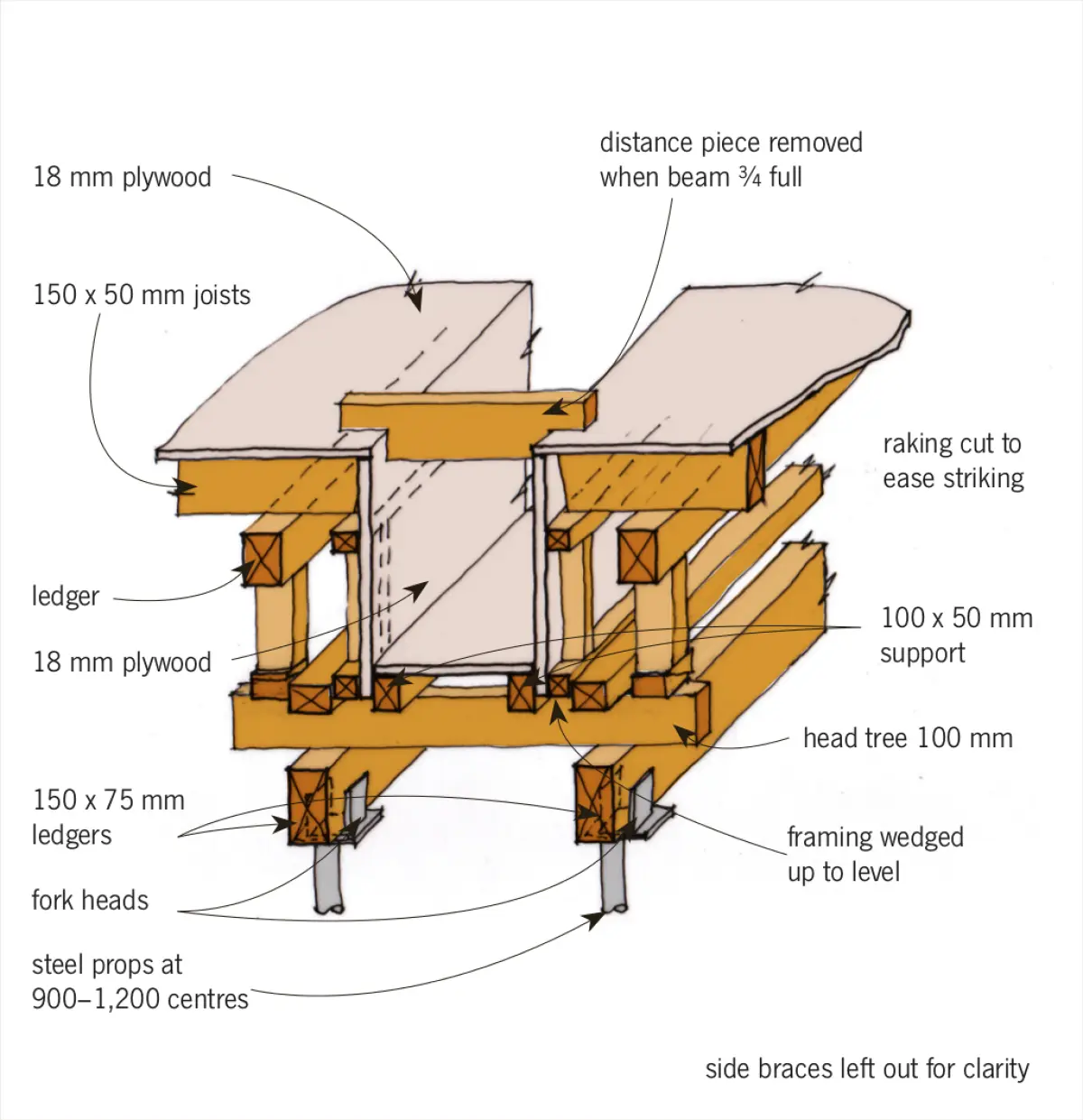
Planning is vital
The formwork may not have to look good (except for the face that is imparting the surface finish) but it has to be strong and yet still able to be stripped. When deciding on what to use for formwork, consider that:
- proprietary systems will have all the engineering calculations done and have all the necessary components for the job
- using higher grade timbers is often quicker than using ‘boxing’ grade, due to its likelihood of being truer
- absorbent form surfaces can draw moisture from the concrete
- plywood sheathing of forms should have the outer ply face grain running parallel with the span of the sheet – it is stronger this way
- a 90 mm nail will take a lateral load of 360 N in radiata pine.
Designing and building
Wet concrete doesn’t quite act as a fluid, but it does have many of the same attributes, such as being forced out of gaps and open footings when there is a head of pressure above. Care has to be taken in making sure forms will keep the concrete where it is meant to be until it hardens.
When designing the formwork, think about:
- access for placing the concrete, vibrating it and stripping the forms
- how to clean out before the concrete pour – specific ports may be needed in high wall forms
- how you will screed the top of the concrete accurately – the top of the forms or sometimes a line of nails can be used
- how to tie walls together – the use of conduits and through-bolts may be precluded, necessitating snap-ties or she-bolts, which remain in the concrete.
When building the formwork, remember:
- any deflection of formwork should be no less than 3 mm or 1⁄₂₇₀ of the span
- don’t cut timber to length unless necessary
- make sure all formwork running joints are tightly butted together to minimise grinding, stoning or ‘bagging’ work after stripping
- sealing cut edges will stop the drawing out of water from the concrete mix
- never hammer nails fully home on formwork. Leaving the heads proud aids the taking apart of the forms. Consider using hex-head drive screws.
Make sure it’s very strong
It’s unlikely that anyone has been sacked, injured or killed by making formwork using too many props, strong-backs or holding down fixings… but they have from not using enough.
When the formwork is completed, subject it to a strenuous test of pushing and pulling in all directions. It has to be extremely strong.
And now the pour
The most forces on wall forms are applied at the time of placing. There will be fewer forces if the pour is done in layers (approximately 1–1.5 m), but it is important that there is no more than 30 minutes gap between these otherwise a construction joint will form.
Keeping formwork in place aids the curing process, so don’t rush to strip it just because the concrete is hard.
Finally, remember the easiest time to clean the forms is straight after stripping.
For more: CCANZ have some useful information booklets – IB 29 Formwork for concrete, IB 41 Formwork detailing and IB 64 Surface retarders. See www.ccanz.org.nz, then Publications.