




A good relationship with a client can make or break a building project. Disagreements during builds are common, and if poorly resolved, they can cause significant stress for everyone.
Nearly 75% of builders surveyed by BRANZ said tension in their relationships with clients affected their mental health, with over half experiencing moderate to high symptoms of depression and anxiety.
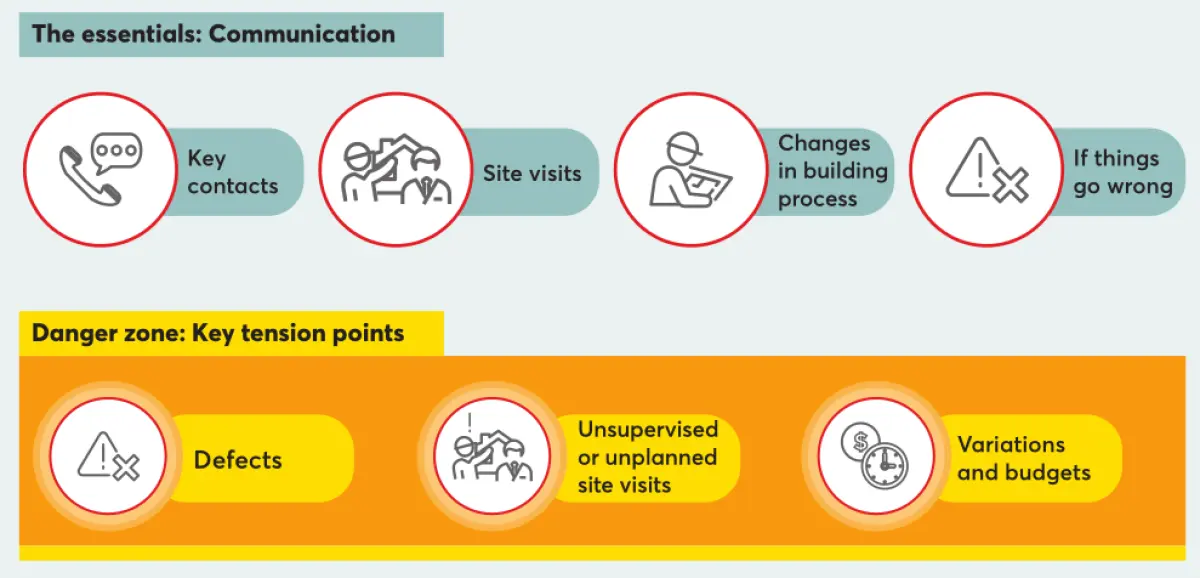
Most conflicts can be settled with clear communication and good processes. BRANZ research with builders and clients has revealed the tension points during a build process and identified key steps to minimise friction.
First meeting
The first meeting is a chance to talk about how the relationship will work. Be proactive, clear and realistic so everyone is on the same page.
- Outline the build process and milestones.
- Agree when and how you’ll communicate.
- Agree who will be the key contact.
- Agree how often clients can expect site visits.
- Agree on budgets and the process for dealing with variations and delays.
Communication
Clear communication is essential to a healthy client relationship. Clients often want regular contact, but being available all hours isn’t realistic or healthy for builders. A conversation about when and how you’ll communicate helps everyone understand what to expect. Let clients know:
- your working hours and availability
- how often they can expect responses and progress updates
- the frequency and length of client site visits.
Our research shows that successful client relationships often use face-to-face meetings with emails to follow up on key points.
It’s best if there is one designated key contact for the client. Consider your own expectations for contact between clients and subcontractors, and clearly outline these in advance.
The key contact should be available at agreed times and communicate clearly and proactively.
Site visits
For clients, accessing the site is important so they can see how the build is progressing, but these visits must be supervised. Having unsupervised clients on site can lead to conflict when the builder isn’t there to explain unexpected issues. Be sure to:
- explain health and safety for site visits to ensure both client and workers are protected
- explain why clients need to be accompanied by the project manager or builder on site visits
- clarify the process for clients talking to subcontractors.
Changes in the build process
- Explain provisional cost (PC) jobs versus fixed cost. Agree which jobs will be PC. Consider if you will provide an estimate for these. Make sure the client is clear about the process.
- Let the client know you’ll be in touch if you need to agree a cost variation.
- Be clear about the impact that variations will have on budgets and timeframes.
If things go wrong
Disagreements are common, and it’s important to resolve these quickly. Establishing ground rules will give you a better chance of maintaining a positive working relationship.
Defects
For clients, even minor defects can impact their trust and confidence in their builder.It is important to acknowledge defects and communicate the plan to resolve them.
Variations and budgets
Variations to the original plan can affect budgets and timeframes. Builders need to explain variations and exclusions early to set realistic cost expectations and develop a process for dealing with unexpected costs and delays.
For more: Explore BRANZ’s builder and client relationship research at www.branz.co.nz/pubs/research-now/building-sector-wellbeing