

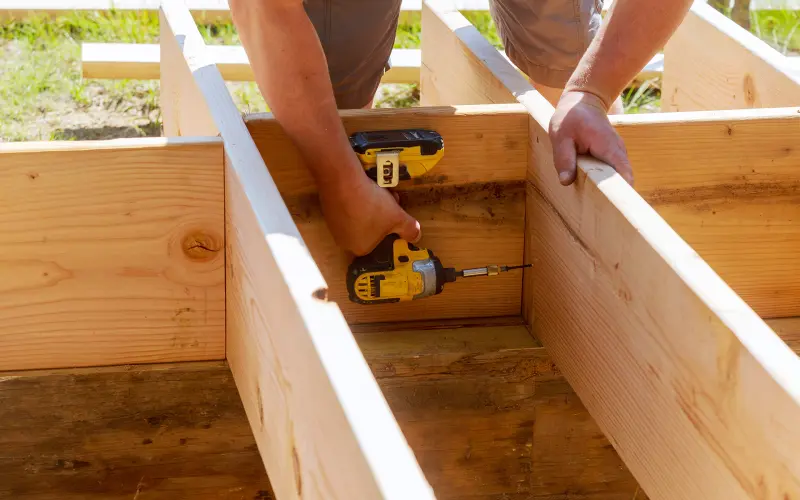


NZS 3604:1999 Timber framed buildings requires floors in domestic buildings to be designed to a minimum 1.5 kPa floor load and decks and balconies to a minimum 2 kPa floor load. Tables are provided accordingly, so when we design a floor or a deck we can refer to the appropriate table to select joist and decking sizes and spans.
But have you ever thought about why deck loadings differ from floor loadings, or what the design loads actually mean?
Defining loads
A kPa (kilopascal) is a measurement of pressure, whereby 1.0 kPa is the pressure exerted by 100 kg over 1 square metre. Thus, a kilopascal may also be defined as a force per unit area, or put another way, weight over a given area.
We could therefore ask why we don’t simply refer to mass loading rather than using a measure of pressure. Although when we refer to floor loadings we are referring to downward-acting pressure (or gravity) only, a kilopascal measure can also be used to describe forces acting in directions other than downwards. To be able to describe all loadings in the same way, we use kilopascals rather than kilograms to describe these loadings.
We’ve defined the kilopascal as a force per unit area, but how does this relate to a deck design load of 2 kPa? Simple – if 1.0 kPa is equivalent to 100 kg over 1.0 m2, then 2.0 kPa must be equivalent to 200 kg over 1.0 m2. To put this into more practical terms, if we take three people of average weight of, say, 66 kg, and they stand close together on 1.0 m2 of floor, the loading over the 1.0 m2 area is 2.0 kPa.
Design parameters
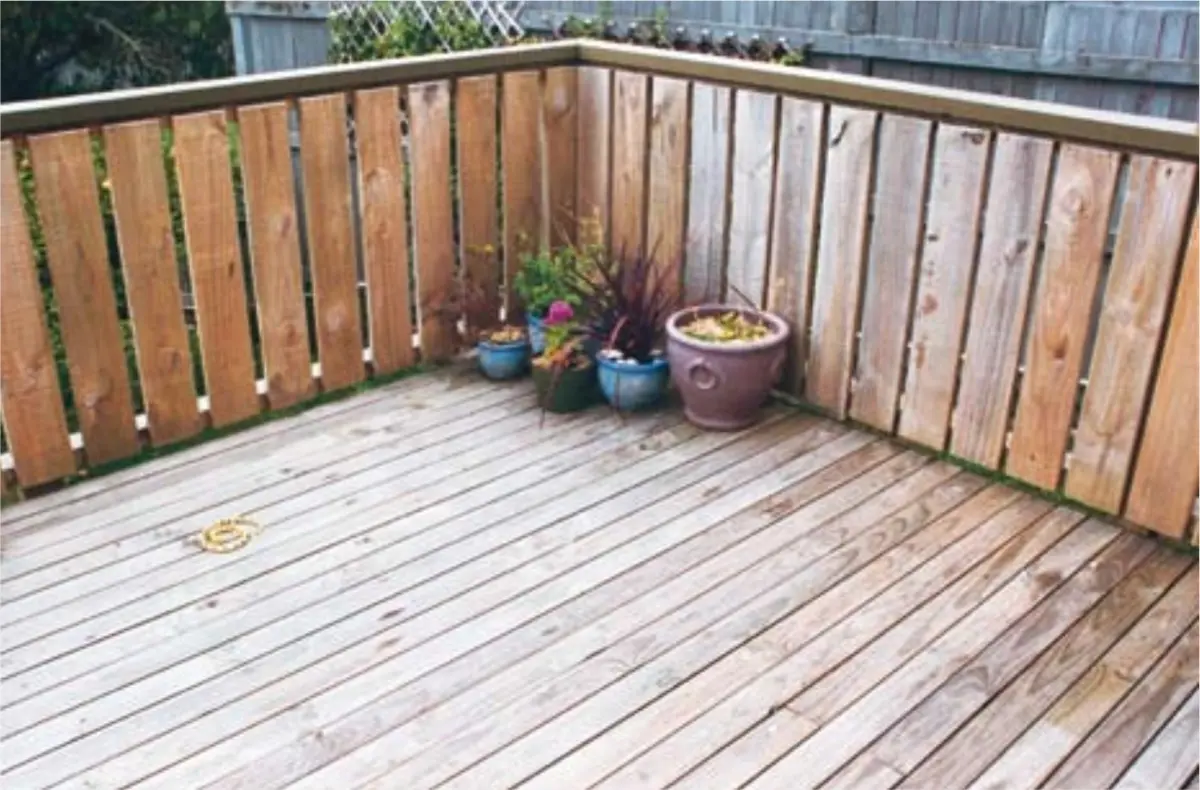
Armed with this information, it becomes easier to understand why a deck or balcony might need to be designed to a higher floor loading than a domestic floor. They are likely to carry a large number of people at one time, such as in social situations. Unless appropriately designed, they may not be able to withstand the loads that this would impose. For example, in 2005 in New Zealand, there were two balcony collapses; one in the Marlborough Sounds, the other in Auckland. Neither case had any serious injuries, but there could easily have been. In one collapse, approximately 40 people in a wedding party were on the balcony. In the second case, a teenage party had around 200 people crammed on a balcony. In both cases, it is likely that the actual loadings on the balconies exceeded the design loads permitted under NZS 3604.
The loading may be further increased by dancing or jumping, and another scenario is that people are more likely, in a panic situation, to rush on to a deck rather than remain indoors. Both the rush of people, as well as the sudden increase in loading, may cause a deck to collapse.
We cannot prevent overloading on decks and balconies occurring occasionally, so we must design to ensure that a deck or balcony is able to withstand the maximum likely imposed loads. NZS 3604 provides design parameters that include safety margins against possible overloading for 2.0 kPa floor loads for decks, provided they are:
- supported from the main part of the building
- no more than 3.0 m above the ground.
The design parameters in NZS 3604 include:
- thickness of decking – cl. 7.4.3
- slip resistance of decking – cl. 7.4.4
- joists – Table 7.1 (b)
- bearers – Table 6.6, part B
- piles and footings – section 6
- stringers (when connecting deck to building) –Table 6.7 and cl. 6.13
- barrier (required if over 1.0 m above the ground) – cl. 7.4.1.2 (f) and NZBC Clauses B1 and F4
- bracing when deck projects more than 2.0 m from the building – cl. 7.4.2.
Spa pools
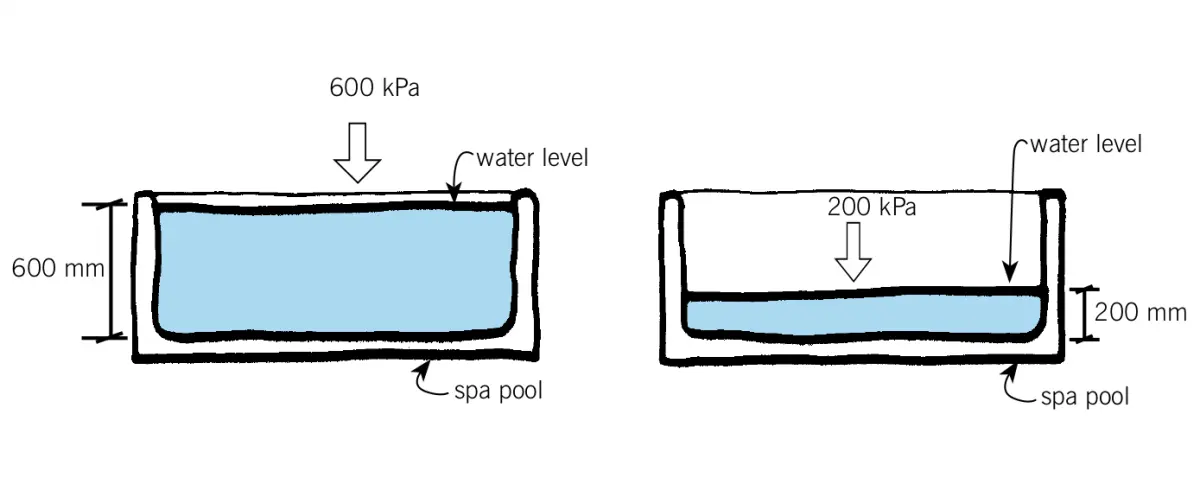
Another significant consideration for a balcony loading is the addition of a spa pool. A spa pool is generally a retrospective addition to a balcony, and balconies are seldom designed to carry the extra weight. Water exerts a pressure of 10 kN/m3. Converted to more easily understood values, this means for a deck loading design of 2.0 kPa, the water in the spa pool must be no more than 200 mm deep. And this is without the addition of people in the spa pool! Although not specifically stated in NZS 3604, this is why any balcony or deck that is to support a spa pool must have specific engineering design.