




An article in Build 205, The vexed issue of requests for information, explored the ongoing frustrations experienced by applicants and building consent authorities in the building consent process. It noted evidence for the claims on both sides of the issue, with missing or incorrect documents and coordination problems found to be among the main root causes, often centred around fire safety design.
Multi-disciplinary team leaves opportunity for errors
In most cases, building fire safety design requires input from many professions in the design team:
- Fire engineers typically establish that the overall fire safety strategy complies with Building Code performance requirements. They analyse fire behaviour, occupant evacuation behaviour and fire service intervention and how these elements relate to Building Code requirements.
- Architects specify most of the building elements, which must meet a range of requirements, including protection from fire.
- Product suppliers and manufacturers generally know how building systems using their products will perform in fire.
- Specialists detail active systems such as sprinklers and alarms or building elements for fire and smoke separation performance.
- On-site trades make decisions that may affect fire safety such as altering penetrations through fire separations.
With so many roles and responsibilities involved, gaps in design documentation and coordination can affect fire safety performance.
Past efforts to make improvements
In the early 2000s, regulators and professional bodies recognised the issues, identifying unclear fire engineering roles, poor translation of fire design intent into construction and concerns about performance of fire safety systems over the life of the building.
Consequently, the Hot Topics report was published in 2007 with 11 recommendations and Engineering New Zealand issued Practice Note 22 Guidelines for documenting fire safety designs (PN22) in 2011.
The PN22 guidelines, together with changes in building design methods and increased uptake of digital design tools, have helped improve design coordination.
However, increasing building complexity and modern technologies have since increased demands on coordination. The PN22 guidelines needed an update.
What’s different in the new guidelines?
Published in April 2025, version 2 of the PN22 guidelines recommends a shift in focus for fire design documentation. Essentially, it is no longer sufficient to say that design coordination has occurred – the design team is now advised to show how it has occurred.
A new design coordination table is included in the guidelines to record and summarise the design coordination process and provide evidence that fire design coordination has been completed for essential design elements (see Table 1).
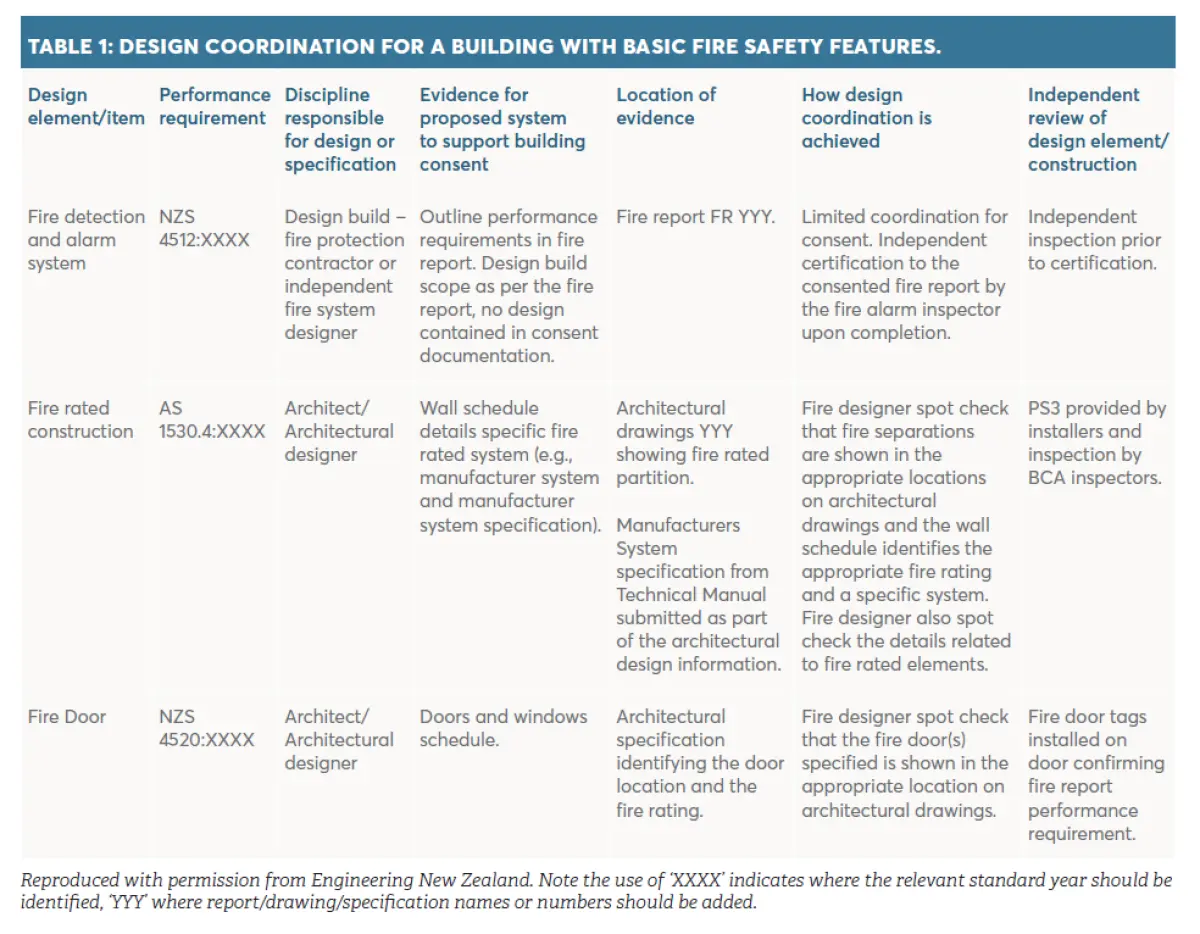
For each design element, the table asks you to record:
- performance requirements
- discipline responsible for design or specification
- evidence supporting building consent
- document location for that evidence
- how design coordination is achieved
- how the system and coordination will be reviewed.
Making these links explicit helps all parties see who is responsible for what and where that evidence can be found.
Using the design coordination table
For designers, many fire-rated systems can be covered by standard details. The most effective way of providing clarity for these details is to refer directly to the manufacturer’s specifications. This quickly and clearly specifies all components of the fire-rated system and provides clarity for the design team, builders and any party reviewing construction.
Designers can then focus on coordination efforts for non-standard details such as junctions between fire separations and the external building envelope, consulting with product suppliers if required.
Key takeaways
- Designers: Populate the coordination table as the design evolves, locking in standard proprietary fire-rated systems early and clearly recording any bespoke junctions or penetrations with their evidence and the responsible owner. Before submission, run a final sweep. If there are any gaps or omissions, fix it then, rather than wait for the BCA to raise a request for information.
- Site teams: If something doesn’t look right, stop and confirm it with the design team. Record agreed changes in writing, and photograph the finished detail for the compliance file. Documented queries early in the process prevent costly rework and help address questions that come up during construction monitoring.
Clear allocation of responsibility, explicit coordination and solid evidence reduce omissions, lift construction quality and shorten consent time. When everyone can trace each fire-safety decision, the voyage from concept to a Code-compliant constructed building becomes much smoother.
For more: PN22 Guidelines for documenting and coordinating fire safety designs