

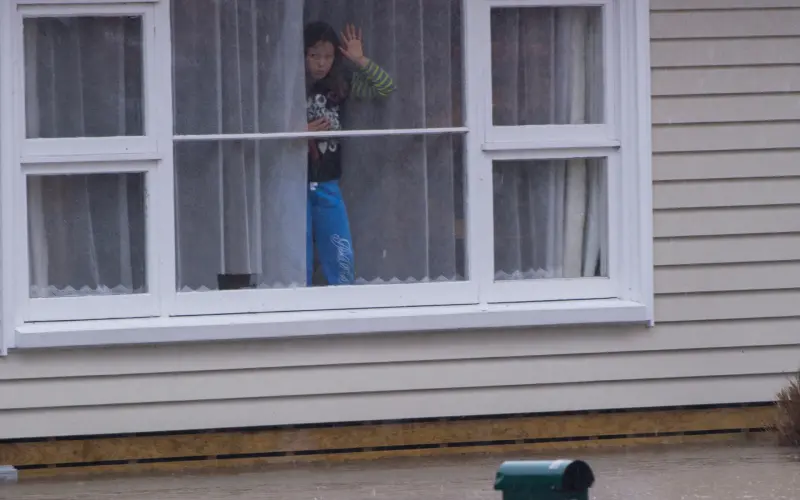


The results of climate change and the actions we need to take to moderate them have been known for a long time now. In a series of study reports about climate change that BRANZ published 23 years ago, we said, ‘The highest action priorities are for flooding.’ The flood damage seen in this country at the start of 2023 and the resulting multi-billion-dollar costs have brought home the consequences of not taking the steps we need to.
Rapid changes occurring
Earlier this year, the final part of the United Nations IPCC Sixth Assessment Report on climate change confirmed that all the changes that have been forecast for so long are now clearly under way: ‘Widespread and rapid changes in the atmosphere, ocean, cryosphere and biosphere have occurred. Human-caused climate change is already affecting many weather and climate extremes in every region across the globe.’
The report also described what we must do. The actions fall into two broad categories – mitigation and adaptation:
- Mitigation is about changing our buildings and communities to reduce greenhouse gas emissions. We must make all our buildings, new and existing, more energy and water efficient and reduce the embodied carbon in new builds.
- Adaptation is about making our buildings and communities more resilient to hazards such as flooding. This includes changing where we build new houses and moving existing buildings and communities out of harm’s way – a process called managed retreat.
Taking positive steps
There are some well-agreed steps that we can take to reduce the impact of greenhouse gas emissions in both new and existing buildings. The recent IPCC report, for example, pointed to changes such as:
- expanding the proportion of electricity generation from renewable resources, in particular solar and wind
- electrification of urban systems
- more urban green infrastructure
- greater energy efficiency.
A local research project (published as BRANZ Study Report SR478 Housing stock strategies responding to New Zealand’s 2050 carbon target) had very similar findings:
- Improving energy efficiency is crucial, in existing homes as well new builds. Operational energy use is the largest contributor to the total 2020–50 carbon footprint of houses, and existing dwellings account for over 80% of this.
- Decarbonising the generation of electricity is vital in reducing emissions in the housing stock. Under different scenarios, an assumed reduction in the emissions from electricity generation could account for 37–42% of the reduction in the carbon footprint of the housing stock between 2020 and 2050. (Under a business-as-usual scenario, the carbon footprint of the housing stock would increase rather than decrease between 2020 and 2050 if there was no reduction in the carbon emissions associated with electricity generation.)
The research found three strategies that could reduce the embodied carbon in new-build stand-alone houses:
- Building smaller but more comfortable, higher-performing homes can give an immediate reduction in carbon footprint because a smaller house requires less materials and less operational energy.
- Significant and ongoing reductions in building material emissions could be achieved through the more considered selection and replacement of building materials with lower-carbon alternatives. Using life cycle assessment to ensure such materials have demonstrably lower emissions than the materials they are replacing will be critical.
- Using more timber (from sustainable sources) can reduce a typical business-as-usual carbon footprint by around 9%.
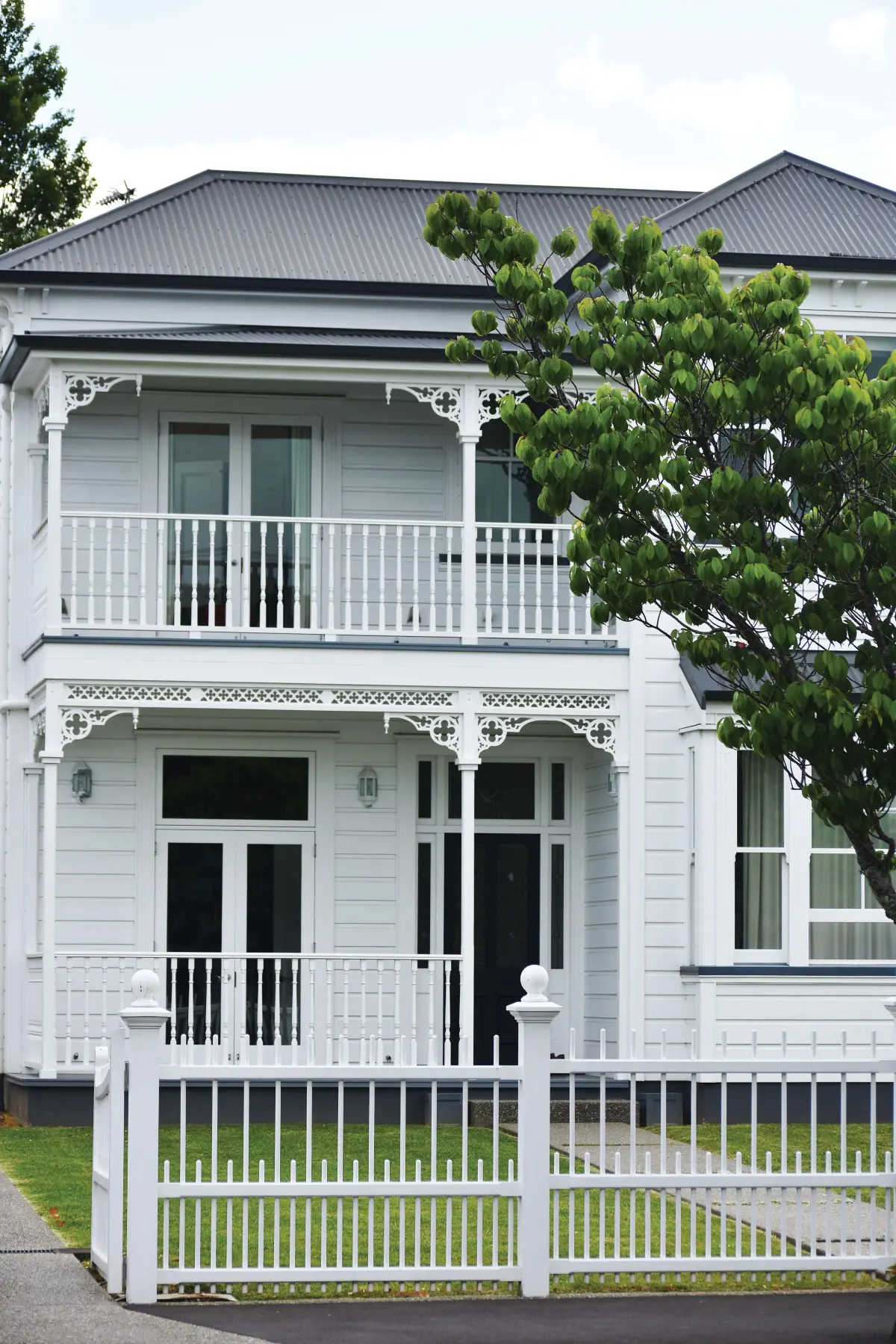
high-performance double glazing reduces heating needs.
The balancing act
While some elements of decarbonising buildings and construction are relatively straightforward, others can be thorny.
For example, replacing draughty single-glazed wooden-framed windows in an old villa with high-performance aluminium-framed double glazing should help reduce the heating energy required in the house.
But the savings in operational carbon achieved by this must be balanced against the significant embodied carbon in the new windows. Dr David Dowdell, science leader for the BRANZ Transition to a zero-carbon built environment programme, says that, with some renovation work, you won’t necessarily recover the carbon costs.
‘These issues can become very complex very quickly, but you need to make sure they don’t lead to paralysis,’ James Hughes, Technical Director Climate and Resilience at Tonkin + Taylor, told Build. Of course, draughty single-glazed windows should still be replaced with higher-performing windows to create a warm, dry and healthy home.
Warmer Kiwi Homes programme
The scale of work required is enormous. BRANZ commissioned Business and Economic Research Limited (BERL) to look at potential retrofit programmes for existing houses running up to 2050. The lowest cost was $26.6 billion, the most expensive $58.1 billion. BERL calculated benefits upwards of $50 billion in health and energy savings and upwards of $116 billion in wider wellbeing.
The report found that just installing an energy-efficient heater into every house is not enough. ‘For all measures to be effective they must work together, which means improving the walls, windows, roof and floor together. Heat pumps provided by Warmer Kiwi Homes have helped households, but a significant amount of heat is lost through gaps in the homes, limiting the benefits which the pumps provide.’ The report– ER79 Overseas programmes for improving the operational carbon emissions from existing residential buildings – lessons for Aotearoa New Zealand – is available at branz.co.nz/pubs/research-reports/er79/
Structural challenges
Larger construction firms and their commercial clients have the resources to implement changes, but for the small firms and group building franchisees that dominate house construction, it can be difficult.
Suzanne Wilkinson, Professor of Construction Management, Massey University, says small companies frequently do not have the time or money to invest in changes in the way they work.
If there is a core product on offer, any additional features to make it sustainable and resilient come at an additional cost. Often there is pushback from companies to additional work such as installing a greywater system and/or solar panels because it means longer construction times, and very often smaller firms have limited expertise in these areas.
As Suzanne says, small companies sometimes try to dissuade clients from sustainable or resilient features by stressing that they will add to the upfront cost of the build. ‘But upfront cost shouldn’t be the driver – resilience should be the driver. Resilient buildings do have a higher upfront cost, but the operational cost over their lifetimes is lower.’
Changes on the horizon
MBIE, through its Building for climate change programme, has said it plans to introduce significant changes over the period 2024–2029 to reduce whole-of-life embodied carbon emissions, transform operational efficiency and support adaptation work that will enhance the resilience of the building stock. Subject to government support and funding, MBIE will:
- launch a new Building Code compliance pathway for operational efficiency
- require mandatory measurement and disclosure of embodied carbon for new buildings at the consent stage
- phase in caps for embodied carbon in new buildings.
The New Zealand Green Building Council (NZGBC) is helping industry prepare for the changes. From 1 July this year, anyone completing a Homestar v5 assessment on a stand-alone home will need to carry out an embodied carbon calculation using the
Homestar Embodied Carbon Calculator developed by BRANZ or a third-party tool such as LCAQuick or ETool. ‘The knowledge of embodied carbon is relatively low at the moment, so our starting point is just to get people to measure it,’ Andrew Eagles, NZGBC Chief Executive, told Build.
The pathway ahead
‘We can either make the transition [to a low-carbon future] by choice, or we can have it forced on us by events,’ says James Hughes. ‘Scientists talk about an orderly transition or a transition that will be disorderly, chaotic and painful.’
‘The construction industry is currently facing significant challenges. Despite this, we need to be accelerating the actions we are taking on climate change and not pushing back against change,’ says David Dowdell.
‘Instead of thinking short term, we should be thinking about the future generations that are going to have to live with the consequences of climate change.’