




By applying circular design principles, the construction sector can make a significant contribution to New Zealand’s carbon reduction targets. New HERA research highlights that carbon emissions in low-rise commercial buildings can be reduced by more than 50% with
strategic design choices.
HERA’s research is particularly relevant as our construction sector remains a major contributor to carbon emissions. Embodied carbon – the emissions generated from material extraction, processing, transportation and construction – plays a significant role, making it critical to rethink how buildings are designed from the outset to accommodate reuse and recycling of building components at end of life to support the circular economy.
The role of circular design in low-carbon construction
Circular design aims to extend the life cycle of building materials and structures while reducing waste and embodied carbon. HERA’s low-carbon circular design hierarchy is much like the waste hierarchy, which provides guidance on waste reduction by prioritising reduction, reuse and recycling – offering a structured approach to minimising a building’s environmental impact.
The framework emphasises:
- designing for longevity – ensuring structures exceed their minimum lifespan through maintenance, repair and refurbishment
- adaptive reuse – creating buildings that can be repurposed for future uses, reducing the need for demolition and new construction
- designing for disassembly – allowing buildings to be easily dismantled and materials reclaimed for reuse
- material efficiency – selecting low-carbon materials and minimising overspecification to reduce waste
- sustainable material choices – prioritising materials with environmental product declarations (EPDs) and high recycled content.
By implementing these principles, designers, engineers and contractors can make tangible progress towards reducing the sector’s carbon footprint.
The top five takeaways for practitioners
For built environment professionals, reducing embodied carbon requires a shift in thinking:
- Think cradle to cradle – consider the entire life cycle of materials from production to end of life to maximise reuse and reduce waste.
- Optimise design for material efficiency – avoid overspecifying structural elements and instead thoughtfully optimise to ensure strength without excess material use.
- Be careful about claims that one material is better than another – instead be open to consider various materials and how each material’s advantages can be maximised through clever design and specification to meet national carbon reduction targets.
- Stay up to date with material innovations – ensure that old thinking is not applied to low-carbon options that might be available.
- Use up-to-date life cycle assessment (LCA) tools – many current tools lack data on the latest low-carbon materials, leading to skewed results. Ensuring accurate assessments will provide a clearer picture of potential carbon savings.
Collaboration for a sustainable future
Implementing these strategies requires a collaborative effort among all stakeholders in the building sector. Designers, engineers, contractors and clients must work together to prioritise low-carbon and circular design principles from the project’s inception through to completion. This collaborative approach ensures that sustainability is integrated into every stage of the building process, leading to more environmentally friendly and resilient structures.
By utilising frameworks such as HERA’s low-carbon circular design hierarchy, industry professionals can make significant strides towards a more sustainable and circular built environment.
Case study – small changes, big carbon savings
HERA examined six low-rise case-study buildings through LCA to evaluate the impact of different design choices on carbon emissions.
The reference building, a 2014 Christchurch office building, was used to benchmark various design alternatives. It was chosen because its cradle-to-cradle embodied emissions were closest to the average among the nominated buildings. The building had a conventional steel-concrete composite flooring system using a metal decking floor system, and its main seismic resistant system used concrete shear walls in one direction and steel moment-resisting frames in the other. The superstructure was supported on a raft foundation.
The study explored how low-carbon material choices, structural adaptations and alternative design approaches could influence embodied carbon. These results demonstrate that use of the hierarchy, when applied strategically, can significantly lower the carbon footprint of commercial buildings.
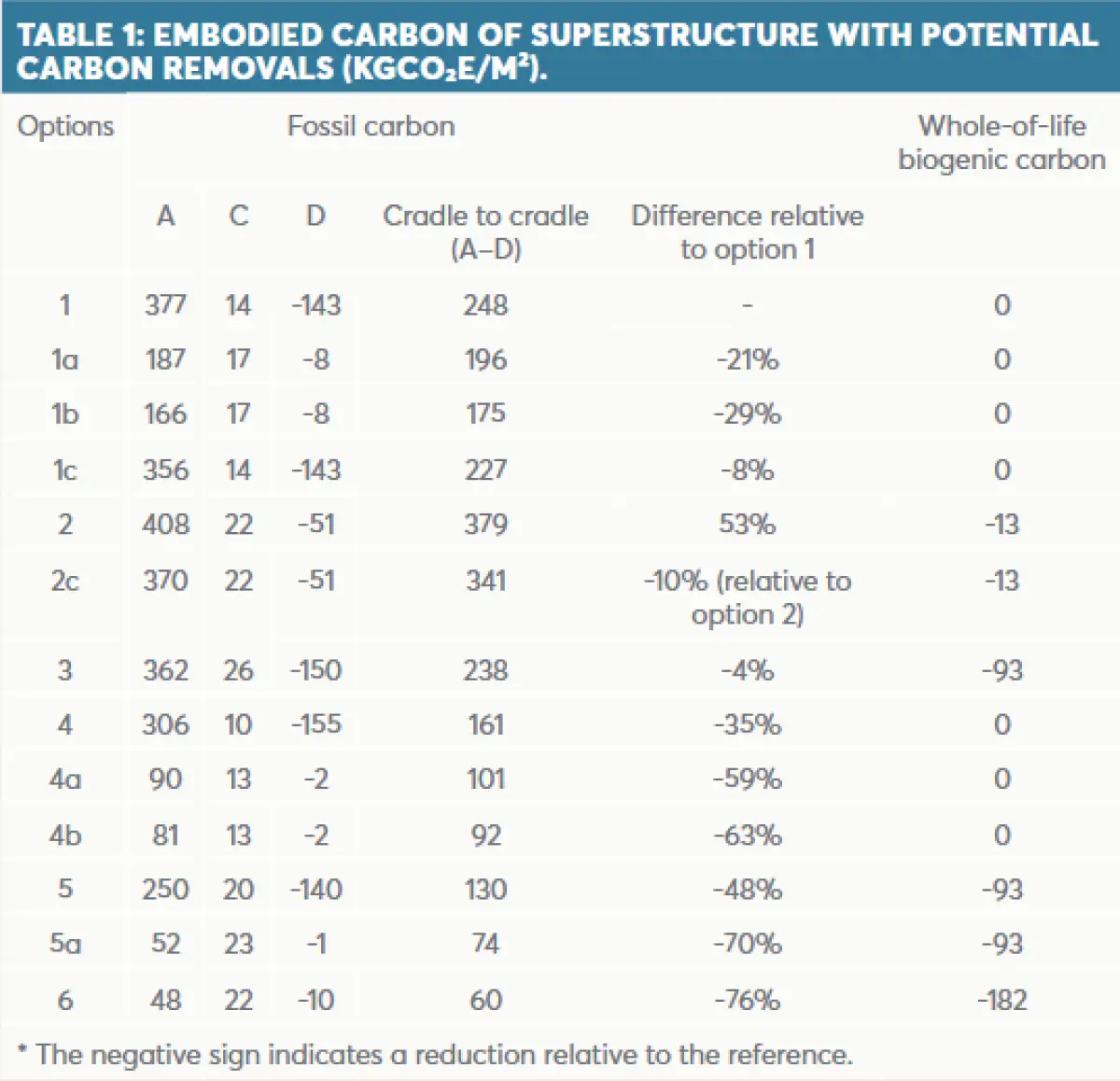
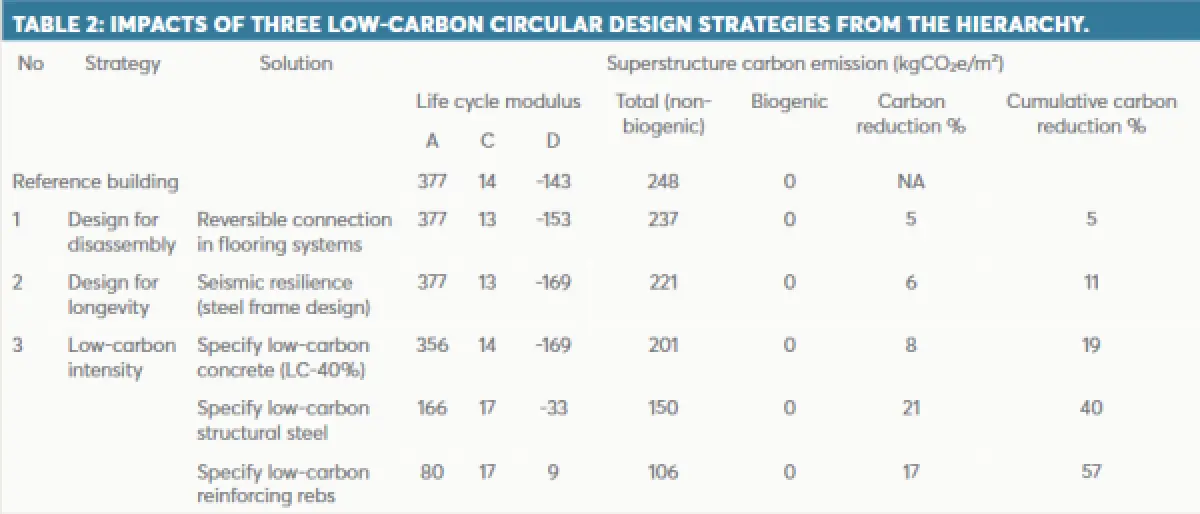
Tables 1 and 2 show the significant potential for carbon reduction, based on HERA’s case study, for carbon reductions using the hierarchy and specific design guidance for low-rise commercial buildings.
This research was supported by the Building Research Levy and the Heavy Engineering Research Levy (administered by HERA).