



Christchurch has gone a long way to achieving that mammoth task – evident in the city’s numerous modern and resilient buildings.
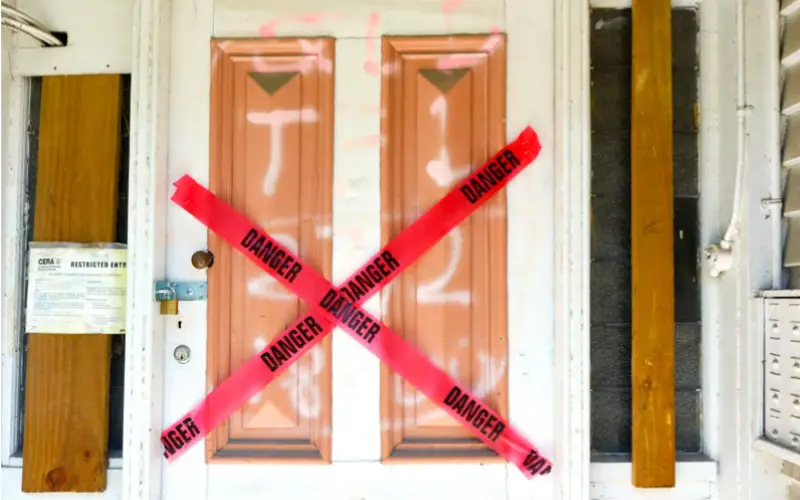
However, well over a decade on, the CBD is still peppered with vacant sites and derelict buildings that are impacting on private investment and are considered barriers to successful regeneration.
A recent research project reviewed the factors contributing to the slow progress.
Council prioritised barrier sites
In 2016, Christchurch City Council began focusing its attention on sites and buildings where owners had made no effort to remediate damage. The Council initially prioritised 31 properties considered barriers to positive perceptions of the post-quake city, adding a further 15 sites by 2018.
Public awareness and the Council’s case management approach of offering willing owners technical support and financial incentives helped achieve action on most of the sites.
While the decision to redevelop privately owned barrier sites rests mostly on individual property owners, the speed of progress on these sites is determined by the specifics of the local environment, including market conditions and the Council’s powers to enforce action.
Three factors are contributing to the delays in the regeneration of the central city’s barrier sites:
- Specific legislation that addresses the issue of barrier sites is absent and therefore the Council must look to a range of legislation for enforcement powers.
- Delays in the delivery of the city’s anchor projects – often cited as an impediment to private investment.
- A weak local economy before the earthquakes and strong post-earthquake competition from suburbs offering affordable, modern residential and commercial buildings.
Limited legal power
The Council is limited in its legal powers to deal with barrier sites.
The Building Act does not address the problem adequately. In the Act, only an occupied building can fit the definition of a dangerous building. If a building is unoccupied, which is the case with barrier sites, it must pose a danger to neighbouring properties before the Council can enforce demolition or remedial work.
If there is no immediate danger, the Council is left to work with the owner. In the absence of cooperation, the Council’s only means of action is a court order. Furthermore, not all abandoned buildings meet the definition of dangerous, which means the Council cannot act.
Another option is to deem a building insanitary under the Act. If the building is offensive due to disrepair, the Council may be able to act. However, legal testing of this provision for vacant buildings is likely to be expensive. Meanwhile, if the building falls within the definition of an earthquake-prone building, the Council can work with the owner to remediate or demolish the building.
The extensive powers in emergency legislation seem to provide a solution for dealing with Christchurch’s barrier sites. However, this opportunity is lost because the emergency period lapsed before the Council initiated the programme. Now the problem does not fit squarely within the parameters of ordinary legislation.
The review also demonstrated that institutional powers alone do not force action on barrier sites. Development projects require the right set of market conditions to test their feasibility.
Construction fled to the periphery
The central city is struggling to compete against the attraction of more affordable suburbs. Moreover, abandoned sites and empty land deter some prospective homebuyers.
Unfortunately, valuable opportunities to rebuild commercial properties in the CBD were also missed early on while the cordon was in place around the city centre. In hindsight, the Crown should have exercised its powers under the Canterbury Earthquake Recovery Act 2011 to limit commercial construction activity outside the CBD.
Unconstrained, developers on the periphery of the CBD and in nearby suburbs quickly met the newly created demand from prime tenants such as financial services and law firms who had been displaced from the central city. This has set back demand for CBD premises by at least 5–10 years – a full lease cycle.
Delay of anchor projects affected investment
The critical stimulus for the recovery was the delivery of 12 anchor projects. Over the years, some projects have been scaled back – for example, the South Frame project – while some have been considerably delayed – for example, the Canterbury multi-use arena.
Lack of planning and ambitious agglomeration of land in the CBD has put brakes on the rebuild, which has limited the city’s attractiveness to private investment in residential and commercial construction.
Demand for resilient buildings
Despite delays in recovery, the Christchurch experience is driving demand for resilient buildings. As businesses prioritise continuity, there is strong uptake of low-damage seismic design and structural systems that limit disturbance to operations.
The forced modernisation of most commercial buildings in the Christchurch CBD means it now outperforms Auckland and Wellington in the ratio of high-quality accommodation it boasts. Repairable buildings minimise economic and social disruption, help to retain character and a sense of place and reduce the recovery time and scale of demolition and reconstruction needed, reducing the likelihood of similar battles against barrier sites in the future.