



Sitting on the Ring of Fire, Aotearoa New Zealand is one of the most earthquake-prone countries in the world. It might be surprising then to learn that earthquakes are not the most prevalent natural disaster in this country or the costliest or even the most damaging.
Prone to disaster
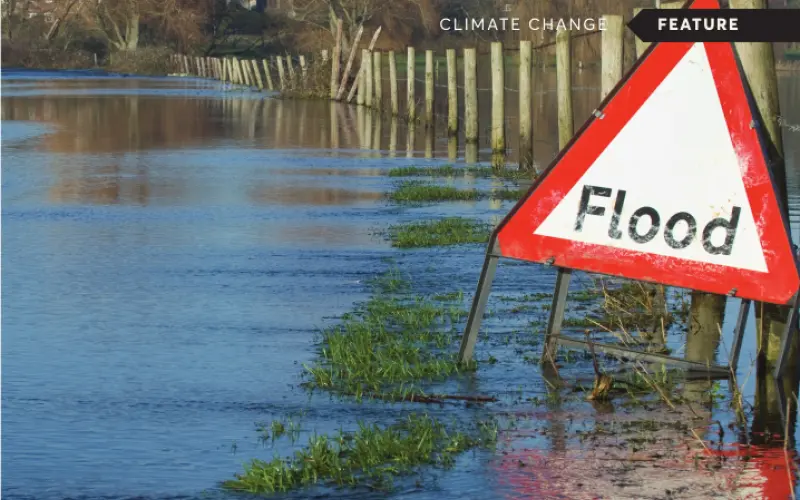
According to the Insurance Council of New Zealand (ICNZ), flooding is by far the most frequent and costly type of natural disaster in Aotearoa. ICNZ calculates that the 80-odd damaging flooding events the country experienced from 1976 to 2004 resulted in insurance payments averaging $17 million per year.
Despite the clear economic cost in the aftermath of a major flooding event, it’s notoriously difficult to quantify the scale of future risk. In perhaps the most comprehensive effort to date, which was released in 2019, NIWA estimated that roughly 675,000 New Zealanders were at risk of river or surface flooding.
Still, we’re not alone in dealing with routine inundation. It’s a global problem that, unfortunately, looks set to worsen. According to the World Economic Forum, flooding is also the most common natural disaster worldwide, accounting for 43% of all recorded disaster events in the last 20 years.
UK floods of 2007
One of the costliest of these events occurred in the UK between June and July 2007. The floods affected much of southern England and Wales, and Northern Ireland and Scotland were also badly affected.
More than 55,000 buildings were flooded, and thousands were forced to evacuate their homes. Electricity and transport infrastructure was severely disrupted, and crops across the country were devastated. Overall, the floods caused 13 deaths and cost an estimated £6.5 billion in damage.
How well the UK responded is a matter for debate, but the events of 2007 were certainly a catalyst for change.
Taking stock
Within a year, the UK Government launched a review of why the flooding was so severe and costly. It focused on flood risk management, the resilience and vulnerability of critical infrastructure, emergency response, emergency planning and the recovery phase.
The review recommended a shopping list of improvements ranging from government reform to new boots-on-the-ground civil defence measures. New legislation was passed to ensure authorities take responsibility for managing flood risk and encourage those in flood-prone regions to become more flood resilient.
Efforts to reduce flood risk generally encourage property owners and the building and insurance industries to consider four strategies – protect, accommodate, retreat and avoid.
Approach to risk management
The protect strategy reduces the frequency and extent of flood hazard. Stopbanks, seawalls and other raised defences are a common protect strategy seen around many Aotearoa communities. They’re an important measure to protect against immediate risks, but they also introduce their own risks. For instance, they can fail by breaching or overtopping.
Accommodate means reducing the consequences and costs of flooding. It encompasses a broad range of flood resilience techniques where the design of a property is adapted to better accommodate floodwater. It can be as simple as changing a normal door for a flood door or using waterproof paint on the outside of the building to act as a membrane.
Another common accommodate technique in New Zealand is to raise the dwelling higher off the ground. During a flood, such stilt houses allow water to flow around and underneath the living areas, reducing damage and enabling the occupants to remain in their home. But this also adds risk by isolating the property, and if flood water or its local effects remain for more than a few days, it becomes impractical for the occupants to remain.
Retreat is perhaps the most controversial strategy. It means the permanent relocation of people, property and assets away from flood-prone areas to safer regions. Retreat is often proposed in Aotearoa as a response to rising sea levels but is equally applicable to flood risk.
The final strategy – avoid – ensures new development of property or assets are not exposed to flood hazards. It focuses on how best to develop housing and communities in a way that avoids creating risk. It means understanding where flooding can occur, what happens when it does, especially during more extreme events, and making sure to develop in ways that avoid those risk.
Measures of success
For the UK, it was about tackling both existing risk, which it needed to identify and mitigate, and minimising future risk when developing land and communities. There was no golden bullet solution – a lot of different strategies worked together to better manage the risks.
But was the effort a success? According to Flood Re, a UK Government-backed reinsurance scheme, as well as increasing flood risk, the last 20 years saw rising insurance costs as homeowners in floodrisk areas found it increasingly difficult to secure insurance. Since the scheme’s launch in 2022 and the UK’s overhauled focus on risk management, adaptation and resilience, Flood Re reports that 90% of insurance providers now offer affordable insurance to homeowners in flood-prone areas.
While insurance is just one metric, it demonstrates that a different approach to managing flood risk can make a difference.
A video walkthrough of BRE’s flood-resilient demonstration home is available at https://www.youtube.com/watch?v=9oscAyXfZCw