



Back in 2009, BRANZ published Building the future – outlining four bold predictions for how Aotearoa New Zealand’s built environment could change by 2025. The stories drew on big uncertainties at the time: climate change, migration, infrastructure and housing quality.
Since then, the sector has shone a light – sometimes quickly, sometimes unevenly – on these themes. Climate resilience has become increasingly important, housing quality is improving and demographic change continues to shape planning debates.
Over the same period, BRANZ has grown and changed to add more value. It works to a clear long-term strategy that channels the Building Research Levy into four priorities – affordability, resilience, sustainability and quality – and connects research to real-world outcomes. It’s also strengthened partnerships and modernised how it shares guidance, including shifting Build to digital-only delivery later this year so that practical evidence reaches people faster.
In early 2026, we revisit the four scenarios. What has shifted, what’s working and where can the next decade of building with science make the biggest difference for Aotearoa?
The power of scenario planning
The objective of the Building the future research was not to predict the future but to provoke thought, guide long-term planning and prepare for uncertainty by exploring a range of possible futures.
The research involved stakeholder interviews and the identification of key drivers across social, technological, environmental, economic and political domains (STEEP analysis).
Seven critical uncertainties were uncovered – infrastructure, quality, waste and emissions, generational mindsets, migration and demographics, global external factors and existing housing stock – and formed the basis of four scenarios. These were depicted as short narratives to present the future in a more tangible and relatable way.
The four scenarios compared with today
The final inspection
In this scenario, building quality took centre stage. A retired builder turned independent inspector, who we called Jaap, helped homeowners navigate a new quality-focused construction landscape. His role bridged the gap between builders, clients and regulatory standards, reflecting a shift from cost-driven construction to a culture of quality and accountability.
Fast forward to 2026 and quality is an ongoing issue still very much in the spotlight. While the industry has seen improvements in building standards, driven by lessons from the leaky homes crisis and reinforced by regulatory reforms, better training and digital compliance tools, it’s telling that BRANZ continues to have a focus on quality, aiming to ensure buildings are safe, warm, dry and fit for future generations. Today’s affordability and supply constraints, along with skill and labour shortages, also contribute to quality issues.
Housewarming
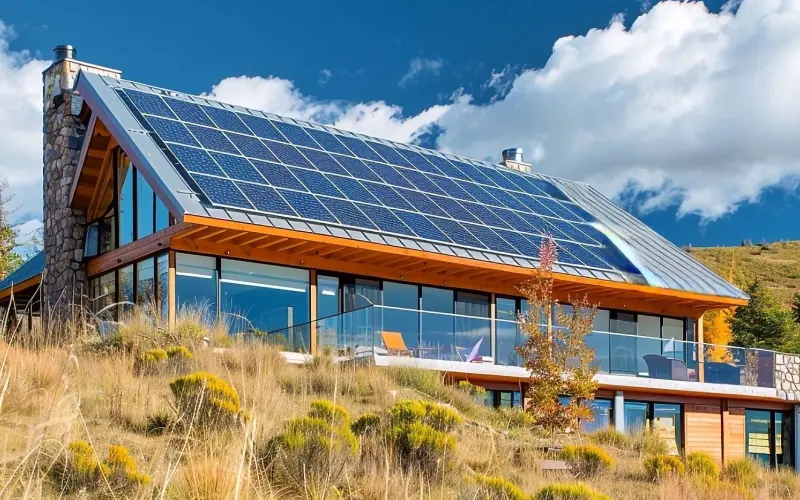
This scenario explored environmentally conscious building practices and climate resilience through the characters Craig and Sue, who built a sustainable home after surviving a cyclone. Motivated by environmental concerns and cost savings, they embraced green technologies and achieved a top green star rating.
Just over 16 years later, climate change has become a significant concern in Aotearoa New Zealand, especially in the aftermath of devastating incidents such as the North Island severe weather events of early 2023 and early 2026. Sustainability thinking has also moved from niche to more mainstream, as have green building practices.
Significant issues remain. Planned regulatory reform such as building for climate change and mandatory carbon reporting for new builds has not proceeded, while build costs continue to escalate.
BRANZ’s focus areas of sustainability and resilience remain highly relevant today – buildings are environmentally designed, built, maintained and recycled and buildings protect people from earthquakes, fire, extreme weather and climate change.
The roof shout
Set in Pāpāmoa, this scenario looked at the impact of climate refugees and demographic shifts. At a celebration for a new community health centre, the mayor reflected on the challenges of housing refugees displaced by climate change. Despite economic growth and collaborative construction efforts, tensions persisted over immigration, urban planning and housing quality, revealing deep social divides and past infrastructural shortcomings.
Today, while Aotearoa New Zealand has not seen large-scale climate refugee inflows, migration remains a key demographic driver. The return of expats during the COVID-19 pandemic and ongoing global instability have highlighted the issue of population pressure. Ethnic diversity is rising, especially in urban centres.
While community cohesion has held relatively strong, housing availability, affordability and infrastructure lag demand. Housing shortages and affordability issues have intensified, with multi-family occupancy and overcrowding becoming more common in lower-income areas. These themes align with BRANZ’s focus on affordability – housing is affordable for people to build, maintain and live in. The scenario’s portrayal of community resistance to change – reflected as concerns over zoning and infrastructure – mirrors real-world debates around densification, rezoning and social housing.
The grand opening
This story envisioned an infrastructure-led boom for Christchurch, with the city thriving from smart infrastructure investment and public-private partnerships. Robert, a site supervisor attending the opening of Christchurch’s expanded airport, described the scale of transformation, which even included magnetic levitation rail.
While Christchurch continues to recover from the devastating earthquake on 22 February 2011, the broader theme of regional development through infrastructure investment is still valid today.
Government initiatives like the Provincial Growth Fund and targeted transport upgrades have supported regional economies. However, the scenario also includes a cautionary note about suburban sprawl and resource constraints, and the tension between growth and sustainability remains a persistent issue.
BRANZ’s commitment to quality and resilience is reflected in the need for well-planned, future-proofed infrastructure that supports economic development without compromising environmental or social outcomes.
Where to from here?
Building the future offered a visionary look at what Aotearoa’s built environment could become by 2025. As an opportunity for reflection, it is a reminder that our future is not predetermined but shaped by the choices we make today. Strong partnerships between government, industry, iwi and communities and a long-term future-focused view are essential for success.
The report’s themes of housing affordability, quality, sustainability and climate resilience remain relevant today. While progress has been made in these areas, significant challenges remain.
As we look beyond 2026 to the next decade of building with science, BRANZ will continue to focus on the issues that matter.