

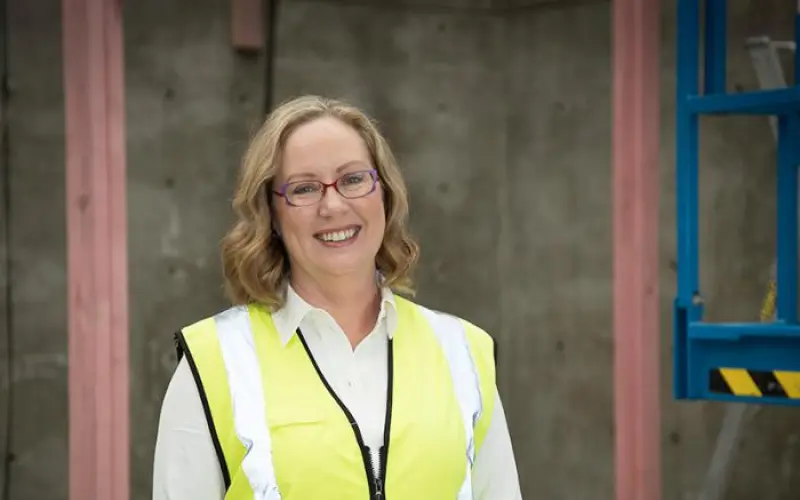


New Zealand’s building and construction sector is entering its biggest shake up in decades. As we navigate through 2026, almost every part of the system is under review – how buildings are consented, how liability is shared, how risks are managed and how consumers are protected. But not all changes under consideration sit at the centre of the debate, and the risks they carry can be easy to miss, as BRANZ CEO Claire Falck explains.
Less visible, but no less important to our sector, are proposed changes to how building research is funded. The government plans to remove the dedicated Building Research Levy that has supported building research for nearly 60 years and replace it with a different funding mechanism.
The aim is to achieve greater simplicity and more competition. BRANZ supports that direction. A more open, outward‑looking research system is a good thing.
But what has been proposed also deserves an honest, clear‑eyed assessment of risk. Without that understanding, reforms designed to strengthen the building sector could instead weaken the independent, public‑good building science capability that was created by industry and has taken nearly 60 years to build.
Reducing complexity
There are currently two levies on building work: one for regulation, paid to central government, and one for research, paid to BRANZ. The government recently announced plans to remove the research levy and roll that funding into the levy it already administers.
This means that funding would no longer flow directly to a dedicated independent building research body to be administered on behalf of the sector. Instead, it would be managed by central government on a fully competitive basis.
At face value, making all research funding contestable could be a no-brainer. However, the reality is the building and construction sector relies on long‑term, specialist research facilities and programmes that would be impossible to maintain under a purely contestable model – particularly in a small market like New Zealand.
The consequences would not be sudden or dramatic. They would be cumulative – quietly and gradually undermining building quality, resilience and safety across New Zealand.
What’s at stake
Most New Zealanders may never have heard of BRANZ, yet they rely on its work every day. Warm, dry and structurally sound buildings are the product of decades of independent research funded through the Building Research Levy.
The Levy supports essential tools and evidence across the system – from BRANZ Maps, which guide design decisions on wind and corrosion, to digital tools like Artisan that help councils inspect buildings remotely and improve build quality.
It also pays for the long-term research that supports the standards we take for granted: how quickly fire spreads across buildings, how timber performs in earthquakes, how moisture moves through walls, how steel corrodes near the coast and how new building products should be tested before they are trusted in homes.
This work is not commercially attractive, but it is essential. New Zealand’s building system is unusual by international standards – for example, we rely heavily on plasterboard as a structural bracing element – and our climate and seismic risks are not easily replicated offshore.
That means new products cannot simply be assumed to perform here as they do elsewhere. Without independent testing, risk is not removed, just hidden. The system can appear to work – until years later, when failures surface as leaks, structural weakness and costly remediation borne by the homeowner.
The risk of uncertainty
The government has been clear that funding for building research will continue and will be ring-fenced. That commitment is important. However, the question facing the sector is not whether building research should be funded but what level of certainty exists for the organisations responsible for maintaining long-term building science capability.
If a fully contestable approach had existed when BRANZ was founded, New Zealand would not have been able to invest in the long‑running studies, laboratories, specialist equipment, testing capacity and skilled scientists and researchers – people and facilities that now underpin much of the industry’s safety and performance.
This type of national research capability takes years to establish and requires stable, long‑term investment to be maintained. It cannot be sustained by annual funding, 3‑year funding cycles or project‑by‑project competitive grants.
Contestability drives innovation, but stability enables capability. Both matter – especially in a small market like New Zealand, where the cost of rebuilding lost national infrastructure is high and the consequences of getting it wrong are borne by homeowners and communities.
Risks to public safety
International experience provides a clear caution. Following the privatisation of the UK’s building research body, the Grenfell Tower inquiry found serious failures in the integrity and independence of product testing and certification. The inquiry highlighted how commercial pressure had displaced public interest science.
This is not a scenario New Zealand should risk repeating. Events here like Loafers Lodge are a stark reminder of how critical fire research and testing are to ensure regulatory decisions are informed by independent expertise.
An unintended consequence could be a gradual erosion of the quality and continuity of evidence available to regulators, councils and practitioners – weakening sector capability and reducing New Zealand’s ability to respond to emerging challenges such as climate adaptation, new materials, seismic risk and building performance failures.
A constructive path forward
Importantly, this is not an isolated policy conversation – it is part of a wider review in which no stone has been left unturned. Just as the sector is being asked to modernise how it builds, the research system that underpins safe, durable and energy‑efficient buildings is also being asked to evolve.
We believe the government’s objectives can be met by modernising the existing Building Research Levy Act rather than repealing it outright. BRANZ has already taken decisive steps to reduce its reliance on the Levy, strengthen industry‑led governance and diversify revenue. There is room for further improvement, and we are committed to a pathway to achieve this.
However, if repeal proceeds, several safeguards will be essential to protect the sector’s long‑term capability:
- Clear, ring‑fenced baseline funding for core research and specialist infrastructure.
- Multi-year transitional funding arrangements to avoid disruption to ongoing work.
- Commitment to long‑term programmes and tools – including longitudinal studies and essential digital resources such as the Artisan consenting app and BRANZ Maps.
Without these safeguards, there is a real risk that reforms intended to strengthen the system instead weaken the evidence base that supports the Building Code, product assurance and regulatory decision making.
Navigating change with purpose
Change is inevitable. What matters is how we respond. BRANZ is engaging constructively with reform, recognising the substantial work being led by officials at the Ministry of Business, Innovation and Employment to modernise a complex system while balancing competing risks. The opportunity now is to ensure that reform strengthens, rather than fragments, the long‑term building science capability that underpins affordability, resilience, sustainability and quality.
What we cannot afford is for the risk of change to erode the research capability that industry itself demanded and has supported for nearly 60 years.