

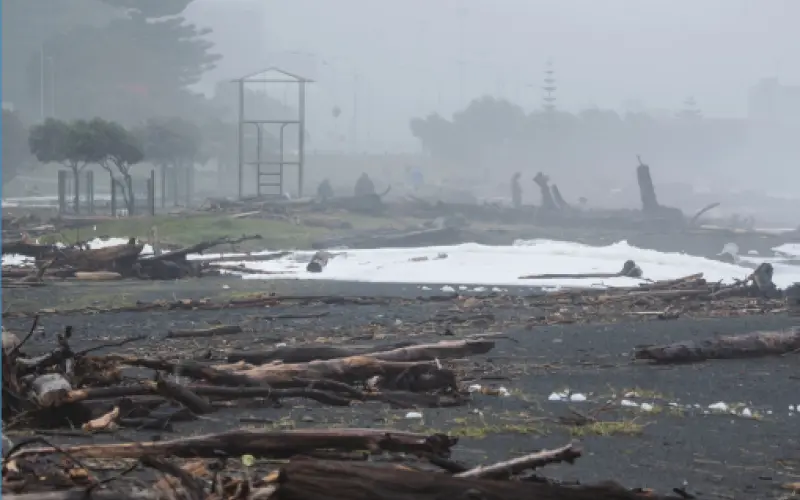


Climate change is causing meteorological hazard events to be highly variable and unpredictable. Urbanisation and growth of cities is increasing the numbers of people and infrastructure exposed to hazards, while the overall risk from climate change to people and infrastructure is growing because of vulnerabilities such as ageing infrastructure, poverty and inequity.
Building in resilience
Since the contributors to disaster risk are diverse, adapting to climate change to minimise risk requires a multi-pronged holistic approach.
Climate change adaptation refers to the process of adjusting to the changing climate to reduce negative impacts on human populations and ecosystems. It involves developing measures to reduce vulnerability and increase resilience to the effects of climate change.
Resilience needs to be built into all areas to enable communities to face variable risks, cope, respond, recover, adapt to a new normal and perhaps even thrive following hazard events. Climate change adaptation strategies can be applied at various levels, including individual, community and national levels.
Building back better (BBB) is a concept that has gained popularity in recent years, particularly in the wake of natural disasters. It involves rebuilding structures, communities and systems in a way that is stronger, more resilient and better able to withstand future shocks or disasters.
The concept of BBB advocates for the post-disaster recovery period to be used as an opportune time to improve a community’s or city’s holistic resilience. The post-Cyclone Gabrielle commitment to build back better is an example of this. In the wake of experiencing disaster events, the motivation and resources directed towards avoiding similar devastation and reducing future risk is high, allowing betterment initiatives to take place.
The goal of BBB is to enable and prepare communities to better face future risk and is therefore an important climate change adaptation strategy. However, adapting to climate change requires moving away from traditional understanding of risk. It is now necessary to consider the range of possible risk levels projected by climate change scenarios.
Adapting to risk
The acknowledgement of unknown levels of risk is also needed, which requires innovative adaptive solutions. In the BBB framework, disaster risk reduction is achieved through three strategies implemented together:
- Improving structural resilience of the built environment.
- Multi-hazard risk-based land-use planning.
- Adopting appropriate early warning measures and equipping communities with knowledge and education on disaster risk reduction for bottom-up preparedness.
The importance of community
It is unrealistic to rely on the built environment alone to reduce risk, so these three strategies need to be balanced and adopted as appropriate. Collaborative conversations and decision-making need to be done with communities around these areas.
BBB extends beyond disaster risk reduction alone to incorporating actions for improving psycho-social, cultural and economic wellbeing and resilience of communities.
Cyclone Gabrielle highlighted the role of neighbours, whānau and the local community as first responders. Building strong communities increases coping capacity in the face of climate change challenges as well as the ability to recover faster in the medium to long term. Finally, building back better requires institutional mechanisms, legislation, regulation, monitoring and evaluation that support the strategies.
Mitigation strategies
There is an opportunity to extend conventional applications of BBB to incorporate climate change mitigation strategies.
The use of green infrastructure and natural systems such as wetlands, forests and green roofs enable the management of climate change impacts while making positive contributions towards reducing emissions. For example, wetlands can be used as a risk-reduction measure to absorb excess water during floods while enhancing natural ecosystems, and green roofs can be used to reduce the urban heat island effect and provide habitat for wildlife.
BBB can also involve making changes to the way that communities and societies operate. For instance, the transition to renewable energy sources can reduce greenhouse gas emissions that contribute to climate change. Renewable energy sources such as solar, wind and hydroelectric power can also provide a more reliable and sustainable energy source, reducing the negative impacts of energy production on the environment.
The adoption of sustainable agriculture practices can help to maintain soil health and reduce the negative impacts of agriculture on the environment. The use of sustainable transportation options such as biking or public transportation can reduce greenhouse gas emissions and improve air quality. BBB for climate change adaptation will function best if such measures are incorporated.
While implementing BBB in post-disaster periods is effective, moving away from reactive responses to natural hazard events and adopting a proactive approach is also needed to break away from post-event repair-rebuild cycles.
Taking action amidst uncertainty
There is still debate in the engineering community as to the accuracy and reliability of climate projections, but Cyclone Gabrielle has illustrated the need to be diligent and cautious in making sure our cities and built environment are ready for future catastrophic events to minimise impacts on communities.
Proactive action requires a commitment to understand updated risk levels as per climate change projection models, thoroughly review the ability of our cities to cope and put the necessary resources in place to upgrade vulnerable infrastructure, rethink land use and innovate.
Read more about BBB and find tools for disaster management and recovery at buildbackbetter.co.nz