

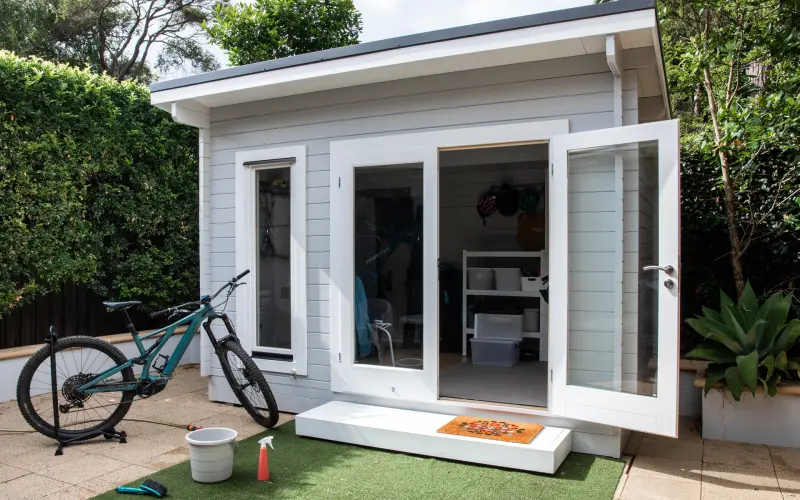


The new step-by-step guide – Constructing a sleepout that does not require building consent – describes how to select and install appropriate building products for a small sleepout.
Detailed information helps non-professionals decide where to construct a sleepout and where to position doors and windows and describes everything required to construct the complete sleepout – from the foundations to the roof.
Adaptable example
The guide covers building consent exemptions for designing and constructing a single-storey detached sleepout with a 10–30 m² floor area built with lightweight materials (Schedule 1 section 3A of the Building Act).
The sleepout example could be adapted to some other types of small building covered by the exemption in Schedule 1 section 3 of the Building Act.
Requirements outlined
The guide summarises the legal documents such as the Building Code and standards that homeowners should consult before beginning work.
It outlines when a certified builder, electrician or plumber is required to carry out or supervise some of the work and provides examples of how Building Code clauses apply to a small building.
What must be adhered to
The exemptions, which were added to Schedule 1 in August 2020, make lower-risk DIY building projects simpler, faster and less expensive for homeowners. They also allow councils to focus on ensuring larger and more risky building projects will comply with the Building Code.
However, while these exemptions loosen the regulations, the usual requirements about durability of materials, district planning, location of services and boundary restrictions still apply.
A sleepout must be at least its own height away from a boundary, precluding many suburban property owners from building to the maximum 30 m² without consent.
A sleepout is not designed to be lived in exclusively. Facilities from a nearby existing dwelling such as potable water must be available, and as a sleepout is part of a Schedule 1 exemption and is not a tiny house, homeowners wanting to include a toilet or cooking facilities must get a building consent.
Three options
The Building Act amendment in 2020 added three options for sleepouts:
- Single-storey detached sleepouts with 10–30 m² floor area that are built with lightweight wall and roof materials.
- Kitset/prefab sleepouts with 10–30 m² floor area designed or reviewed by a chartered professional engineer.
- Sleepouts with 10–30 m² floor area where LBPs carry out or supervise design or construction.