

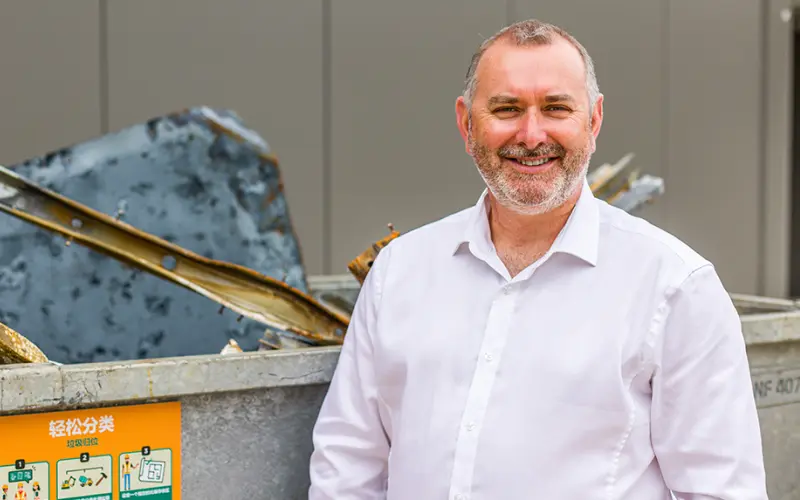


Q. What’s your background – where you grew up and your education?
I grew up on a farm in Tasman and later moved to Christchurch for undergraduate studies in psychology and anthropology at the University of Canterbury. After travelling and then living in the Czech Republic, I returned to Aotearoa New Zealand for postgraduate studies in anthropology and public health at the University of Otago. Later, I completed my PhD in anthropology at Macquarie University in Sydney.
Q. How would you define social science and how did you decide on social science as a career?
I have always been interested in how people interact with science and technology. Social science gave me a way of thinking and methods for understanding people’s experiences of science and technology from their point of view. I have been fortunate to work with world-leading researchers who mentored me and helped shape my skills and knowledge and nurtured my career. For me, social science has a good balance between creativity and social action. My focus to this day has been on public health and using social science to improve the health of people, communities and their environment.
Q. What’s your work history – pre-BRANZ and what you do at BRANZ?
Before coming to BRANZ, I was in a research group in the sociology programme at Monash University that was influential in banning unproven treatments using autologous cell products. Prior to that, I worked in a clinical research team at Royal North Shore Hospital in Sydney, which led me to focus on creating real-world research that impacts people’s lives. For several years, I also undertook research and taught at the University of NSW, the University of Sydney and Macquarie University.
At BRANZ, I am a social scientist and the Transition to a zero- carbon built environment programme leader. I lead research into industry behaviour change enabling the transition to net-zero carbon – such as skills regarding zero-carbon building and how construction companies are preparing to address climate and transition risk. Social science at BRANZ also helps to run the human research ethics process and provides research methodology advice to Levy-funded research and to external researchers.
Q. What does a typical day look like?
My day can be quite varied – one day, I could be giving a presentation to policy makers, the next asking builders, architects or designers questions about a specific topic. Despite the diverse nature of the job, a typical day usually involves research, so planning and undertaking research and writing up our findings is a core part. Another key aspect is sharing our research insights with industry, government journalists and others. We get a lot of interest from industry about zero carbon and provide advice and guidance to industry most days.
Q. What are the chief issues social scientists in the construction sector are engaged with or concerned about at present?
For me, climate change and the industry’s transition to a net-zero carbon economy is where social science can add value. I am working on a project called the Future of work that is examining the skills and competencies within the construction sector to see how we can change skills and industry training to ensure it has the confidence and ability to meet the zero-carbon challenge.
We are also starting a project in collaboration with AUT’s MBIE Endeavour project Te Hotonga Hapori that is looking at the impact of buildings and the urban environment on health and wellbeing. We are particularly interested in how internal environments and external impacts such as denser housing and the impact of local construction affect wellbeing. Social science has much to offer in understanding and explaining the many challenges we have as an industry.
Q. Has your work had a direct impact on the New Zealand building system – the people who work in it?
The Transition to a zero-carbon built environment programme has been a thought leader in industry, government and the science system around construction and zero carbon in New Zealand. Our research has informed work in government such as MBIE’s Building for Climate Change programme and the Ministry of Education’s Te Mahere Taiao–The Environmental Action Plan for School Property. My current work will help to redefine training standards for industry in relation to climate skills and competencies.
Q. What are the most challenging aspects of your job and those that are most satisfying?
Researchers at BRANZ have a strong commitment to engaging with industry and assisting industry and government with challenges they may be facing. Unfortunately, many of these are system wide and are often complex and hard to solve. Despite this, grappling with these complexities in collaboration with industry, other researchers and government is also quite rewarding.