

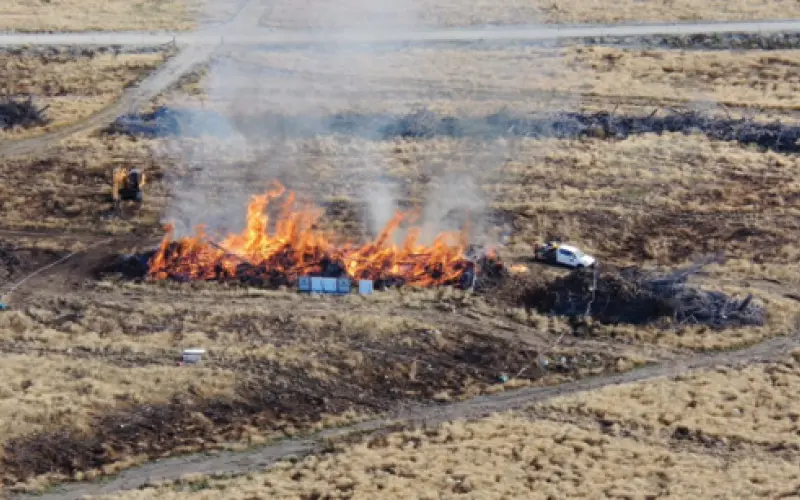


Climate change has been directly linked to the increased risk of wildfires. In recent years, rising temperatures have contributed to longer fire seasons, globally and locally. The threat is no longer confined to remote vegetated areas but has extended into urban zones, described as the wildland-urban interface. A recent example is the 2025 Eaton fire in Los Angeles, which devastated thousands of homes.
Closer to home, the 2020 Lake Ōhau fire demonstrated how rapidly wildfires can spread, destroying nearly half of the homes in the Mackenzie Basin village. While wildfires in Aotearoa New Zealand are generally less frequent and less severe compared to other parts of the world, these events have sparked the question – are we truly prepared for what the future may bring?
Understanding how wildfires enter communities
Once a wildfire starts, it can become hard to predict its behaviour as the fire will continue to burn and spread if there is fuel to burn, wind to drive it forward and low precipitation. Wildfires can enter urban areas in different ways – through direct contact with flames, through intense heat from a distance or through airborne embers landing on flammable materials like mulch or decks.
Combustible materials present in the urban settlement areas can easily catch fire during these devastating events. This is why managing fuel sources and designing resilient communities is key to reducing the spread of wildfires and its consequences. Strategies such as creating defensible spaces and using appropriate building materials can significantly reduce the risk. While a home may never be 100% fireproof, how we build and maintain infrastructure plays a major role in how long it can withstand fire, buying time for people to evacuate safely. As wildfire risks increase, the management and design decisions are crucial in protecting communities.
Designing for wildfire defence
Homes in Aotearoa are built from a range of materials – some non-combustible such as concrete and metal and others more flammable such as timber and plastic. While material choice is a key factor in determining how well a home can resist fire, with wildfires, material choice alone is not enough. In Australia, building in wildfire-prone areas requires meeting strict construction standards (AS 3959:2018 Construction of buildings in bushfire-prone areas) designed to protect communities. In Aotearoa, this standard has not yet been added to the Building Code.
As wildfire threats grow more frequent and severe, improved planning and regulation are essential to safeguard our communities. Equally important is research into understanding wildfire behaviour, building vulnerabilities and effective mitigation strategies, which are critical to informing preparedness.
Preparedness starts with research
To help Aotearoa better prepare for the increasing threat of wildfires driven by climate change, Scion launched MBIE’s Endeavour-funded Extreme Wildfire Programme in 2021. This research initiative brings together experts across multiple fields to tackle wildfire risk from several angles.
The programme includes several key workstreams such as experimental vegetation burns and extreme fire behaviour studies, understanding urban fuel sources within wildfire events, national and local-level fire planning and developing a roadmap for smart firefighting. With a strong evidence base, research outcomes from the programme can help shape tailored strategies, inform policy and ultimately strengthen preparedness against wildfires.
The vulnerabilities of the built environment
Understanding how buildings ignite during wildfires is a step towards developing more resilient communities. By zooming in on vulnerable features such as the building envelope, roof, deck, openings and surrounding flammable vegetation (see Figure 1), we can identify how fire can start and spread.
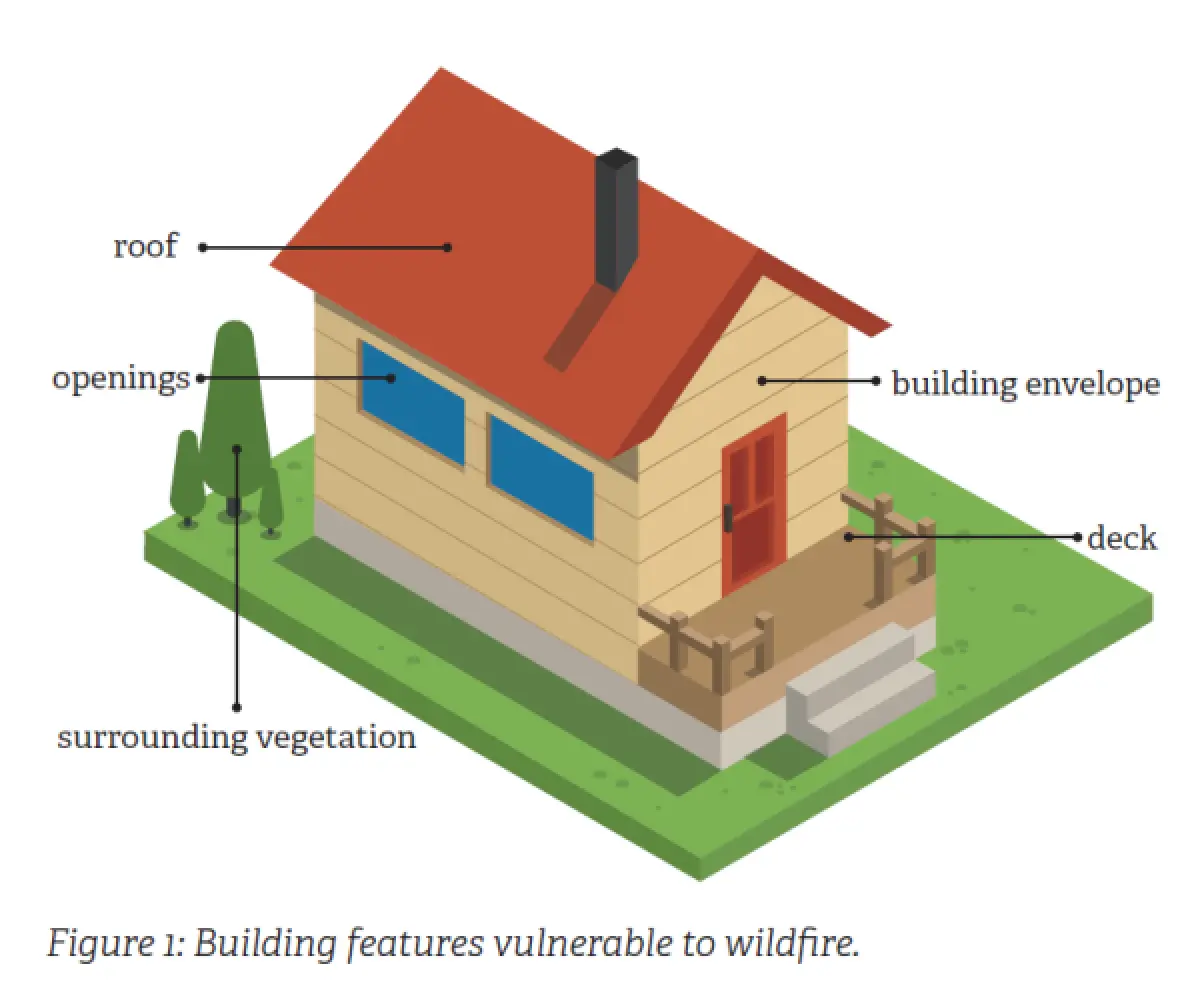
For example, embers can enter through small gaps in decks, radiant heat can break window glazing, direct flame contact can weaken timber structures and dry vegetation near a home can ignite easily and spread fire to the structure. Research at UC focuses on one of the largest and most exposed surfaces – the building envelope – investigating how typical building envelopes respond to wildfire conditions with the aim of reducing structure loss.
The building envelope, acting as an outer shell separating the interior from external threats, plays a crucial role not only in fire resistance but also in maintaining the structural integrity of a home during a wildfire.
Timber remains a widely favoured cladding choice in Aotearoa, valued for its aesthetic appeal and sustainability.
However, balancing design preferences with fire resilience is becoming increasingly important. This concern is highlighted by the Lake Ōhau fire, where 35 of the 41 homes that were destroyed had timber cladding as part of their building envelope – raising serious questions about the role of combustible materials used in houses in fire-prone areas.
The testing process
UC is investigating the processes that can lead to ignition of building envelopes during wildfires across three scales (see Figure 2). Field experiments were conducted in two different scenarios – windrow fires (representing static flame fronts) and stubble fires (representing fast-moving fire fronts). In these tests, we used 1.2 x 1.2 m building envelope panels made of weatherboard timber cladding, building paper, wall framing, cavity battens, insulation and plasterboard.
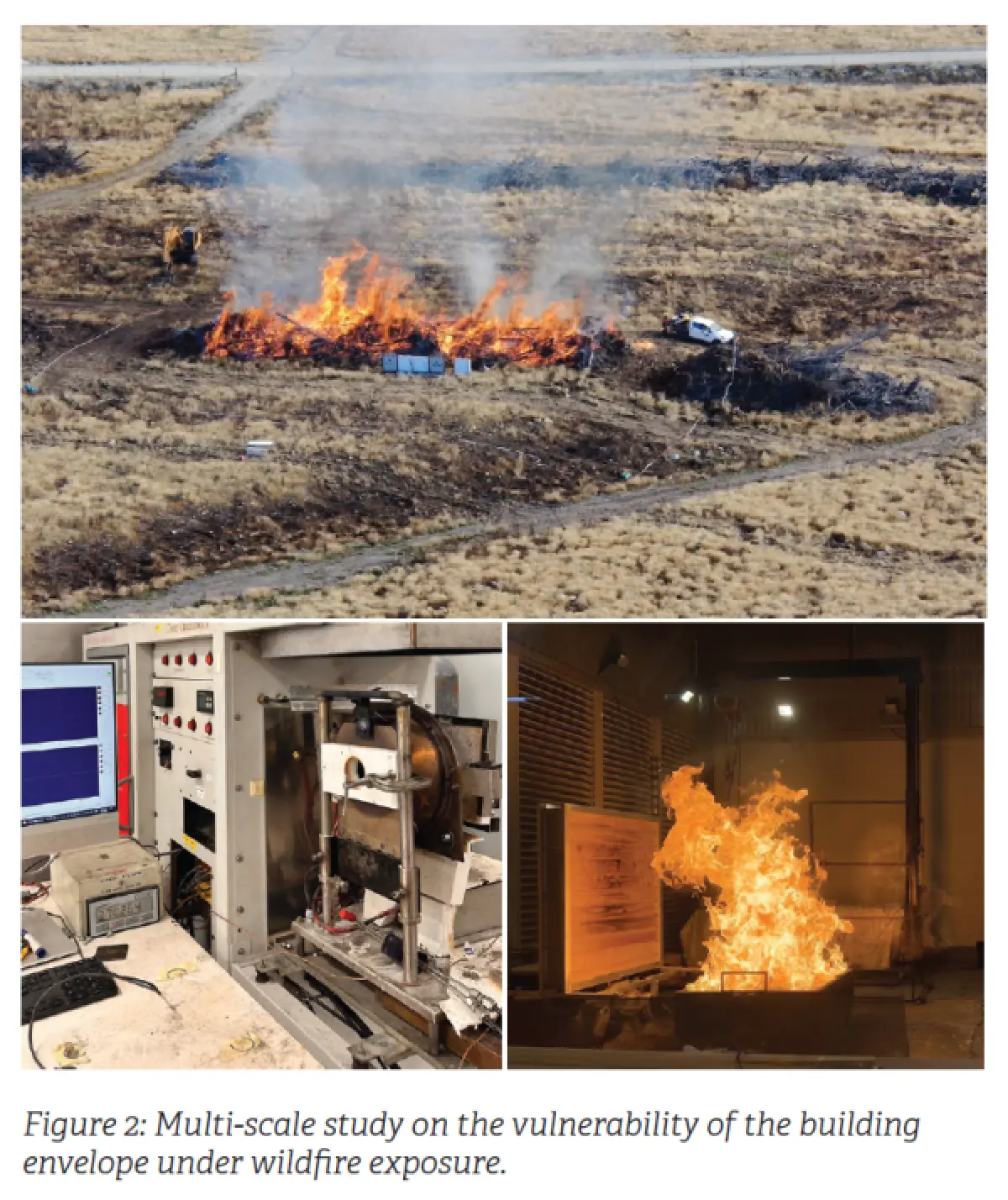
In the laboratory, the same type of panels will be exposed to controlled wildfire conditions to investigate the effects of both radiant heat and direct flame contact on the structure. At the lab bench, we are conducting tests using a vertical cone calorimeter to investigate the ignition properties and burning behaviour of timber cladding materials found in Aotearoa homes – including radiata pine, Western red cedar, Lawson cypress, macrocarpa and New Zealand larch – by simulating wildfire exposure through different levels of radiant heating.
The outcomes of the research will guide smarter material choices and support the development of safer, more resilient communities, particularly those located in wildfire-prone zones.