



During an October 2021 Rethinking Housing conference, BRANZ had expressed its concern regarding the growing gap between what housing in Aotearoa New Zealand costs compared to what median households earn.
At the time, unabated population growth and expansionary monetary policy caused the demand for housing to increase beyond the production capacity of the construction sector.
Shifting affordability beyond reach
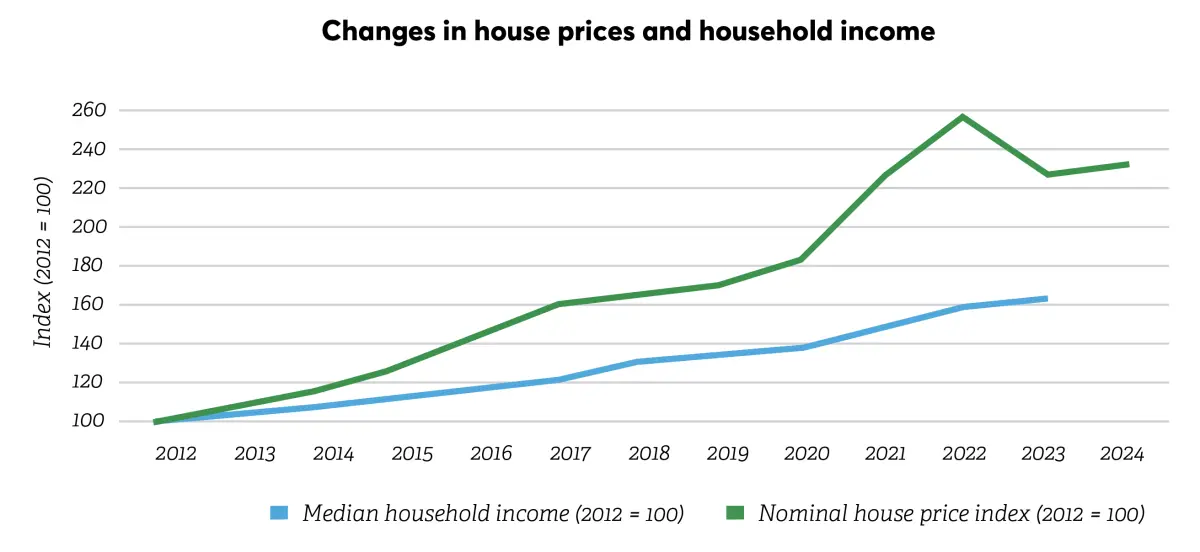
Consequently, average house prices increased by about 85 percentage points between 2019 and 2022 according to data sourced from the Bank for International Settlements. Median household incomes, however, only increased by 23 percentage points over the same period – effectively shifting housing affordability beyond the reach of low to median-income households (see Figure 1).
The impact of rapid population growth and expansionary monetary policy prior to 2022 also placed significant upward pressure on the cost of construction. Labour shortages and supply chain disruptions placed further upward pressure on the cost of construction.
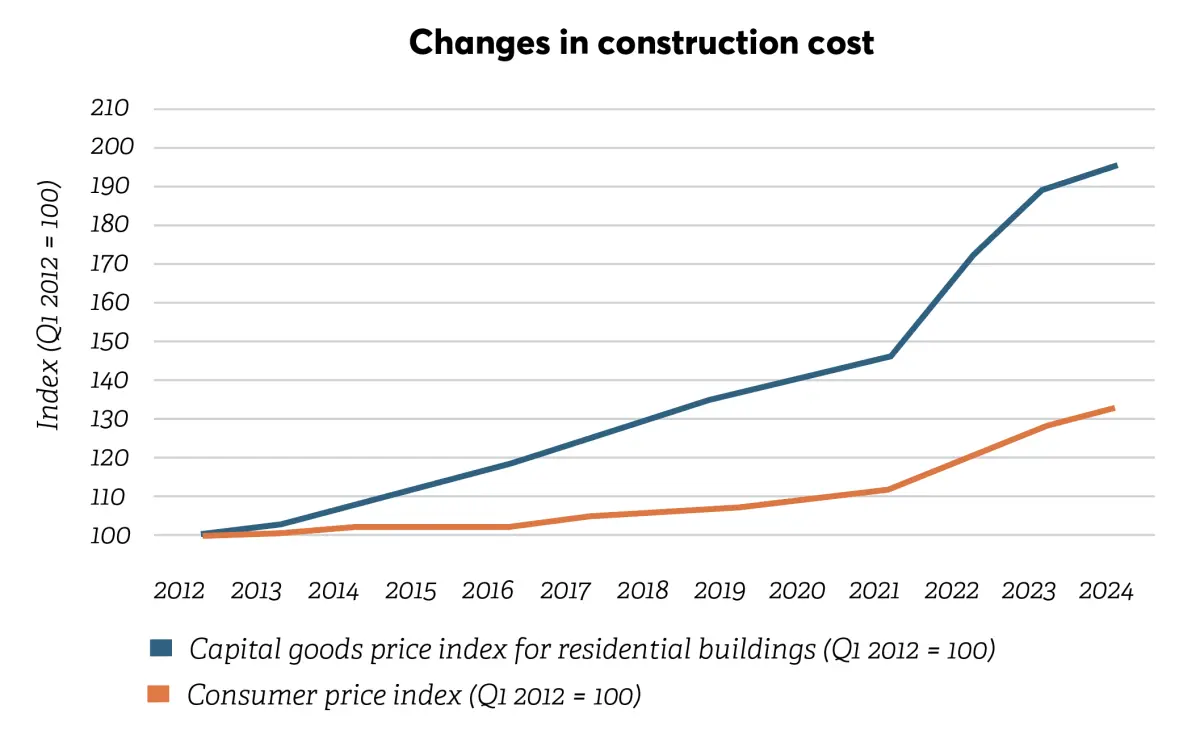
According to Stats NZ’s capital goods price index (CGPI), the cost of producing a standard residential house by a large-scale builder increased by about 52 percentage points over the past 3 years.
Over the past 12 years, the CGPI for residential buildings increased by 98% – a staggering 65% higher than general increases in consumer prices since 2012. While some of the increase since 2021 can be attributed to labour shortages and supply chain disruptions, the absence of a decrease in construction cost since markets have normalised is noteworthy.
From a construction affordability perspective, households’ median incomes – after accounting for inflation – only increased by about 31% since 2012, which is about 34% less than the increase in the CGPI for residential buildings. As the data suggests, like housing, construction cost is moving beyond what a growing proportion of New Zealanders can afford.
Construction sector not in control of the issues
The drivers of housing affordability such as immigration, labour shortages, monetary policy and a low national wage framework, however, fall beyond the direct control of the construction sector.
Likewise, black swan events such as the global pandemic or the 2010/11 Canterbury earthquakes influence markets and affordability in ways that fall beyond any control. What is evident is that, in Aotearoa, housing affordability and construction affordability go together. This raises the question, where and how can research focus to decrease the cost of construction and improve housing affordability?
Housing affordability is one of Aotearoa’s most significant socio-economic issues. The concept of affordability means different things to different people. One perspective is that house prices should fall within a range of three to five times annual median household income. Another perspective is that adequate, including affordable, housing is recognised as part of the right to an adequate standard of living.
BRANZ ups investment in affordability research
In its 2024 Building Research Levy Investment Priorities Statement, BRANZ signalled an intension to invest further in affordability research. Work is now under way to define housing and construction affordability.
Creating a common language around affordability in housing and construction will lay a foundation for future research to harness those areas of the housing and construction system that could improve affordability. BRANZ’s independent and impartial role within the construction sector positions it well to explore opportunities from an objective, systems perspective.
If you wish to be involved, discuss affordability issues with us or have your say about what role we can play, please get in touch. Our email address is economics@branz.co.nz.