


Meet Jarred, Amy, Ryan and Griffin – just a handful of scientists bringing their skills and commitment to BRANZ. The projects they are working on will help drive understanding of building science into the future.
Jarred Butler – Building Environmental Scientist
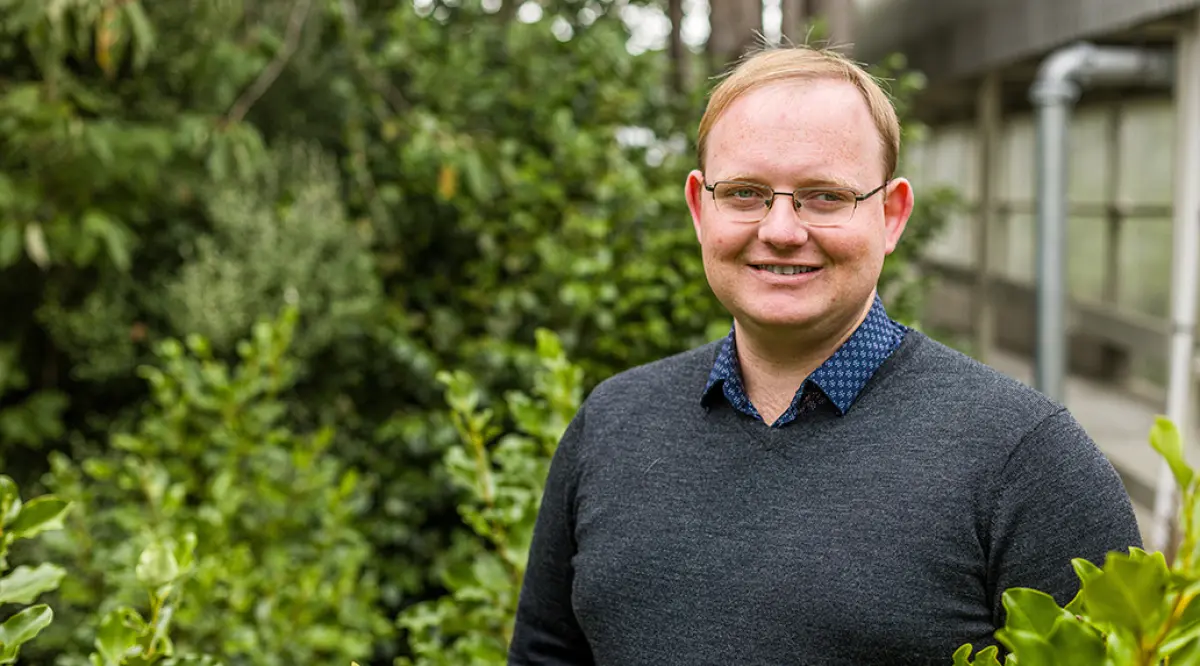
Jarred has worked for BRANZ for 6 years and has already made a major contribution to its work around net-zero carbon construction. ‘My big thing most recently has been NECO₂’, he says, referring to the National Embodied Carbon Repository that holds environmental data on construction materials. With over 4,500 products already covered, it is a crucial resource for anyone assessing the carbon footprints of buildings.
He has seen a lot of early adopters – mostly the larger architectural and engineering firms – that have integrated an assessment of the carbon content of materials into their standard processes. ‘Unfortunately, a lot of smaller firms don’t have the resources to upskill in this area.’
Jarred grew up in Napier, and while the climate was generally benign, he still recalls that, on cold days, the whole of the family house could not be heated ‘and it was not nice to live in sometimes’.
His drive to improve things really began as a university student, when friends with a newborn baby would wake up in the morning to find the inside of their walls saturated as a consequence of very poor construction and insulation. The baby would get sick. ‘It was heartbreaking to see,’ he says.
‘Retrofitting the existing housing stock is one of the most important things we have to do. Poor housing has such a negative impact on people’s ability to lead the best lives they can.’ He says there is also need for a better ecosystem for renting. ‘There are things we can learn from countries like Germany.’
After making wellbeing improvements in the condition of existing homes and new builds, he sees progressing resilience in housing as the third big thing needed. ‘If we don’t do it now, the costs in future will be higher by order of magnitude.’ In some instances, ensuring resilience will require moving houses to safer locations – a step that requires a big initial sacrifice. ‘I understand the resistance to this,’ he says. ‘I live near the beach in Kāpiti!’
Amy Knight – Behavioural Scientist
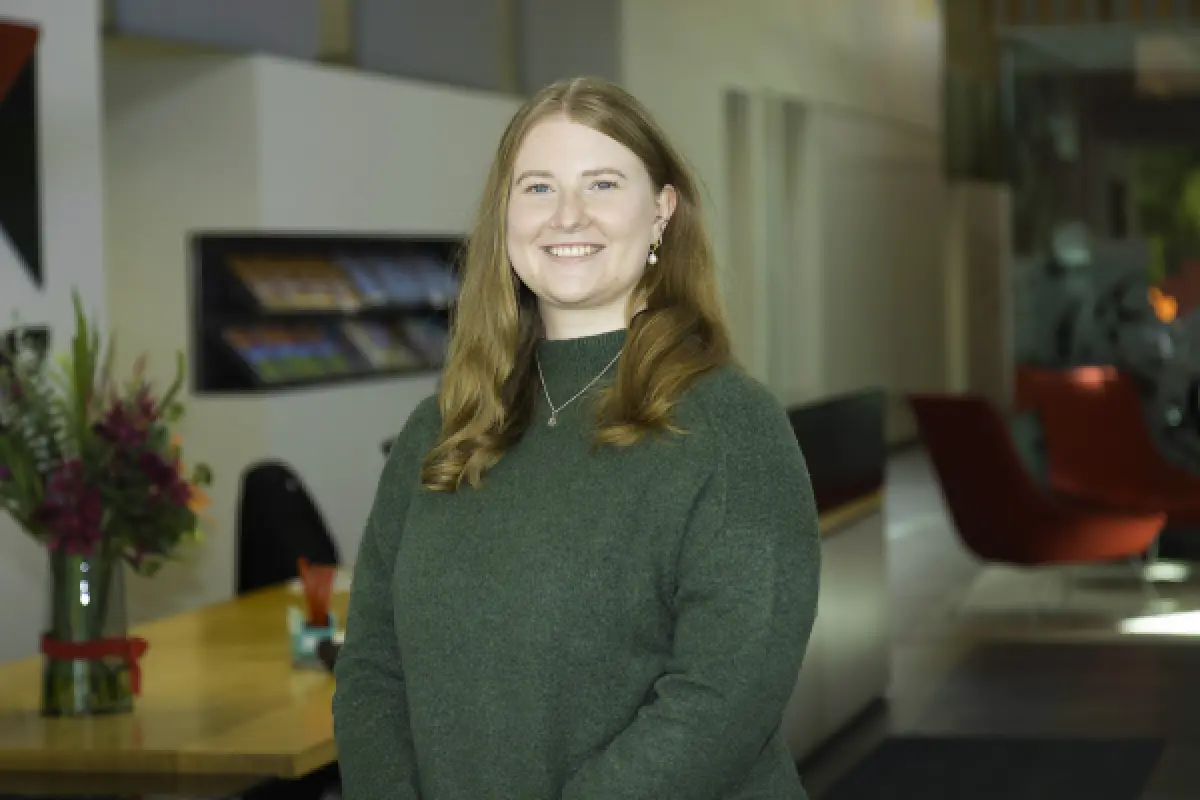
Amy studied psychology at the University of Otago but came to realise that a career as a clinical psychologist wasn’t for her. ‘It requires a very specific type of person,’ Amy notes. The building industry, however, has always been part of her life. One grandfather was a builder, her dad built all the homes her family lived in, her brother is finishing an apprenticeship and she has friends working in different trades. She enjoyed a uniquely South Island upbringing, with her dad operating a sluice on a gold claim he had on the Shotover River. ‘Although I can’t say that was one of my favourite things,’ Amy says.
Visiting friends in Dunedin’s student flats that were cold, mouldy and poorly ventilated showed her the impact that poor housing conditions can have on people.
As a behavioural scientist, helping people find ways to do things better is a key part of her work. At BRANZ, she has worked on the waste reduction programme REBRI, looked at the future of work and health and also safety issues. ‘The challenge is around the different sizes of companies. Big firms have the ability to do good training, but what the smaller guys can do around improving wellbeing and increasing knowledge – that’s an area I am very interested in.’
She sees that women are under-represented in the industry but is happy that more are entering the sector today and acknowledges the contribution of organisations such as the National Association of Women in Construction.
A healthy and supportive work environment is important. ‘Construction has always been a male-dominated industry, and there have always been a lot of stresses. Before MATES in Construction arrived, issues such as depression and suicide weren’t really discussed, but they are more talked about now. And problems such as bullying aren’t just limited to the building sector.’
Her interest goes beyond the industry workforce to homeowners and the contribution they can make to a healthier living environment. ‘We need to educate homeowners – for example, teach them about things like the settings on a heat pump and how to best use them.
‘It always comes back to people for me.’
Ryan Ward – Senior Structural Technician
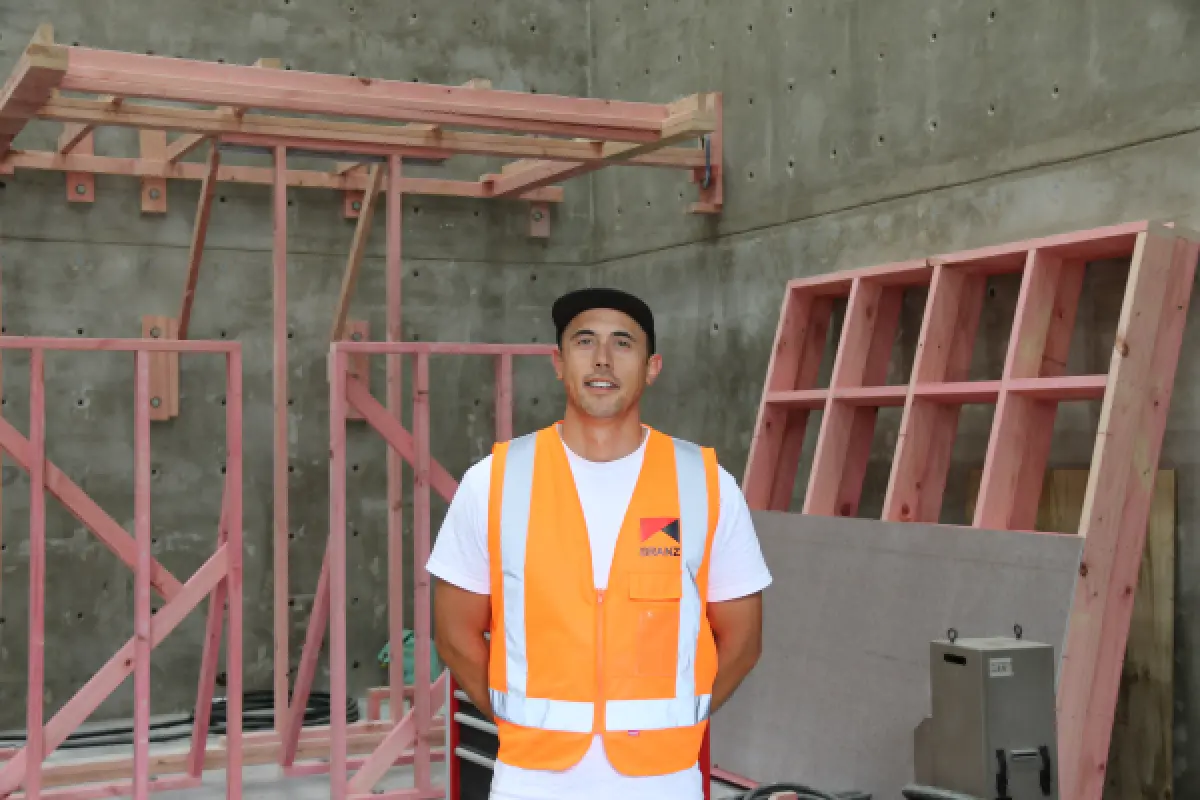
Ryan comes from a building background, having built houses for 12 years and then managing construction projects. In earlier years, during the holidays from studying commerce at Victoria University of Wellington, he earned money labouring on building sites and found that he enjoyed construction so much that, instead of starting work in the business world, he took a building apprenticeship.
Ryan is a senior structural technician at BRANZ working with engineers on a range of research projects and client tests, including bottom plate anchor testing, pile bracing of houses on hillsides and carrying out P21 tests for product manufacturers.
‘If you ask me what I do, I build stuff and break it,’ he says with a smile. ‘I love what I do.’ In the BRANZ lab, some of his work involves using a hydraulic ram to push a structure back and forth until it fails. ‘Sometimes we have to push and pull something up to 2 million times until it fails.’ He took part in rebuilding homes after the Canterbury earthquakes, so he has seen broken buildings in the field as well.
Like the others, he is clearly proud of the improvements being made in house construction and his work in that field.
Griffin Cherrill – Research Scientist
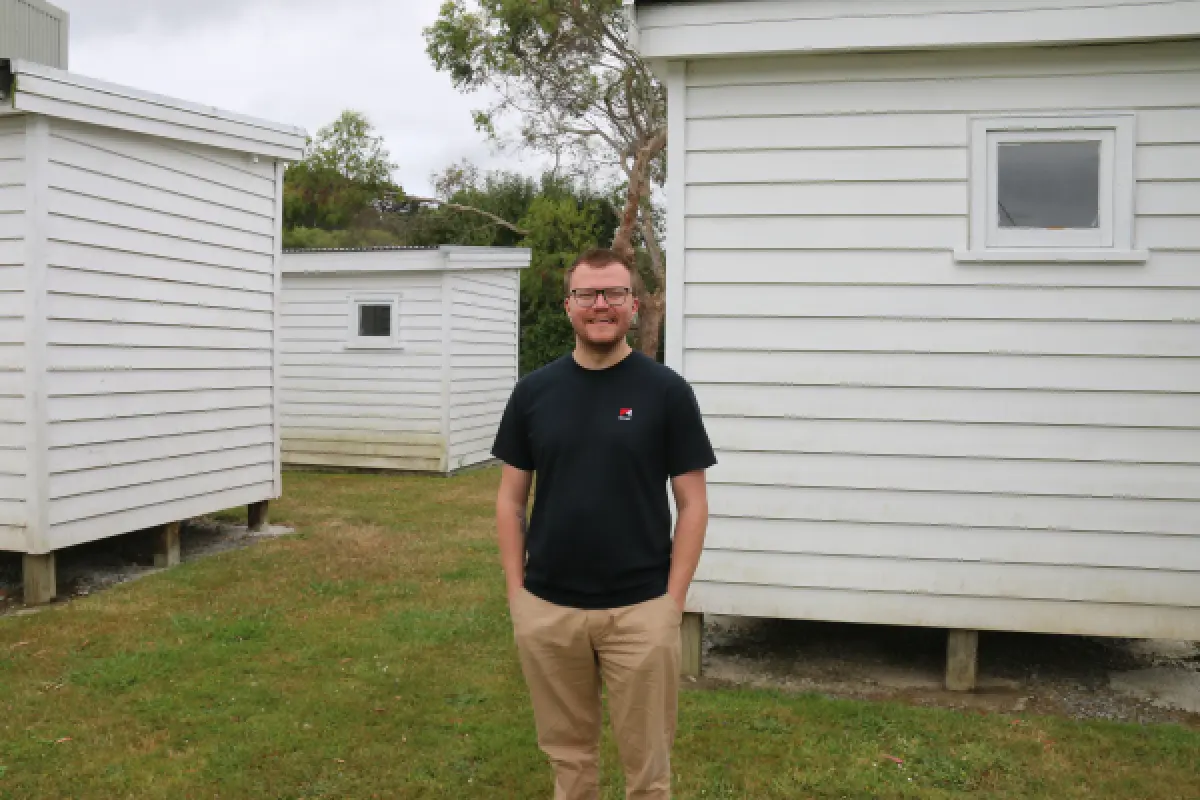
Griffin was keen on becoming an architect when he was small but came to realise that it was the technical side that he was drawn to rather than the creative side. He says that the work he does in BRANZ ‘is the perfect thing for me’.
Currently, that work involves building computer models looking at the risk of condensation growth and mould in a house and then working out which tools provide the most reliable measurements and assessments.
‘Modelling is very time consuming and involves a lot of data, but it has huge benefits. We look at a building as a whole rather than individual areas. You can’t overstate the amount of work this takes.’ Griffin says modelling can assess everything in the Building Code. He is currently working on a project with MBIE that’s assessing potential improvements to Acceptable Solutions and Verification Methods.
He is in the process of working on a test building on the BRANZ campus, improving the windows and testing a hybrid wall retrofit strategy for existing timber-framed homes.
He says a focus on the retrofit space is a good idea. ‘Maintaining character and heritage is important to the building community – character homes can be upgraded to improve performance.’
When it comes to the findings of BRANZ research, he says, ‘A lot of what we do is funded by the Building Research Levy. We should be pushing the boat out and testing the ideas that are beyond the status quo.
One of Griffin’s ambitions is to create more conversation between the people who conduct the research and the people who use it. ‘People on the ground doing the work should have access to what we are doing.’ Communicating science and scientific analysis to non-scientists is important to him. ‘I did my PhD to make myself more useful and make a difference. Otherwise, what’s the point?’