

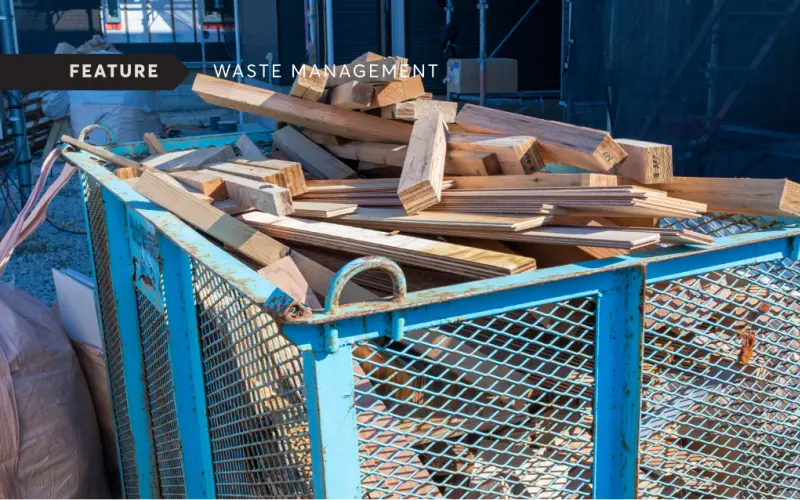


Collaborating with Auckland Council and others, commercial construction company Naylor Love undertook a waste management trial at its construction site on the Auckland University of Technology (AUT) North Campus – separating resources on site and changing how leftover building products and materials are used and disposed of.
At the end of the trial, over 90% of construction waste had been diverted from landfill and the company saved 40% on its usual landfill costs.
The trial aligns closely with the Construction Sector Accord’s goal of reducing waste and embodied and operational carbon. Naylor Love showed how diverting resources from landfill can benefit both businesses and the environment.
The problem with waste
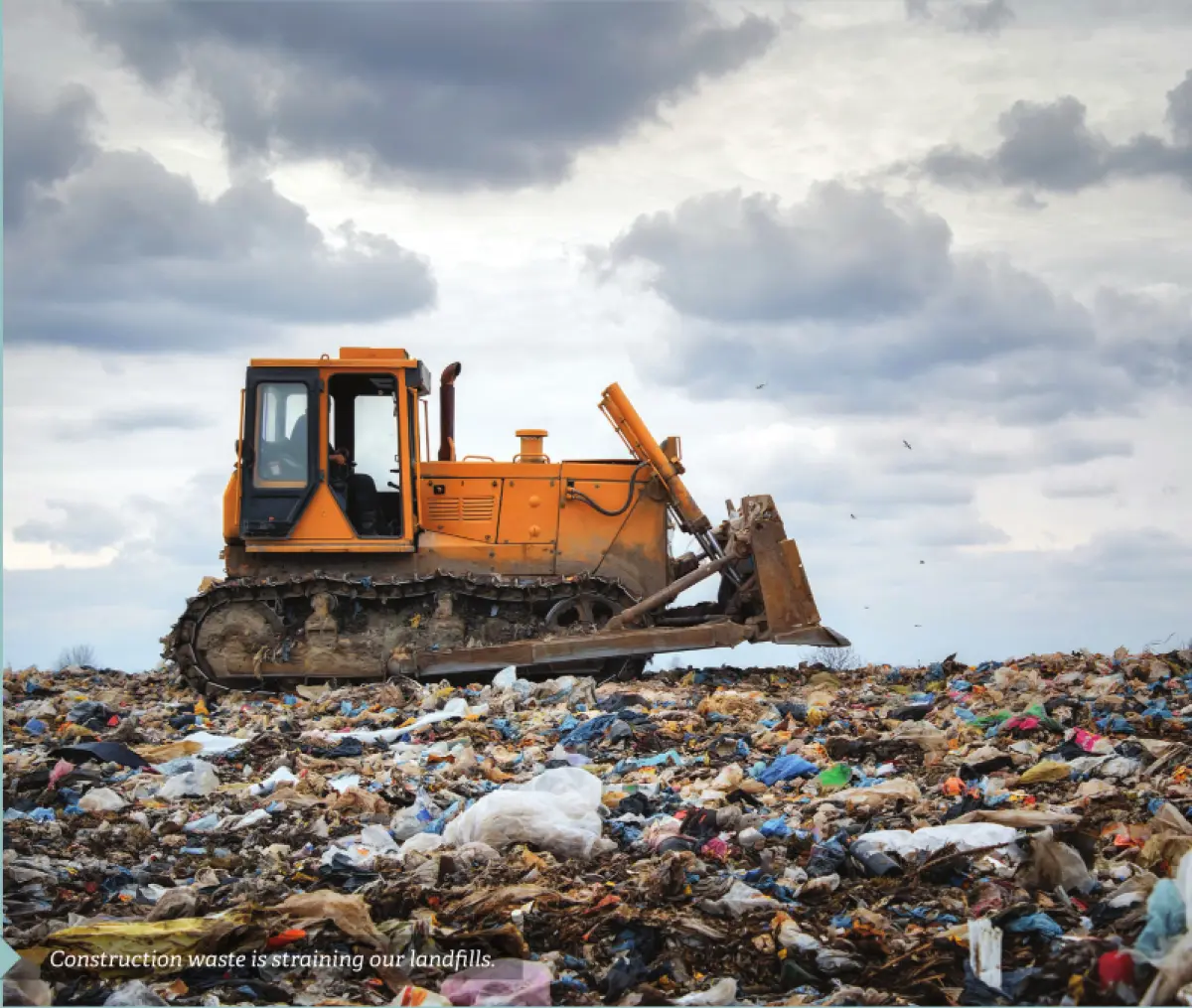
Construction waste is a growing environmental problem in Aotearoa New Zealand. Increasing construction activity is straining landfills and waste management systems. Construction and demolition waste makes up an estimated 50% of the total waste going to landfill.
Waste is inextricably linked to resource loss, environmental pollution and carbon emissions. It also imposes an economic burden on both construction businesses and consumers as building products and materials are frequently bought then thrown away unnecessarily.
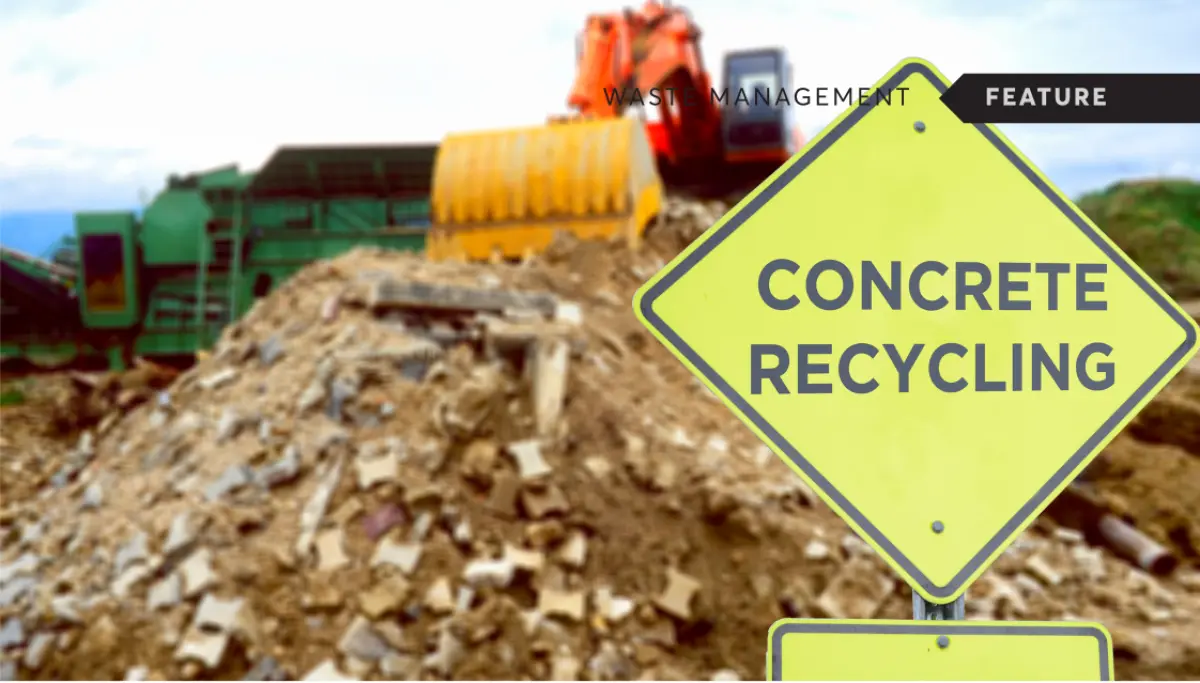
To address this, the construction sector needs to adopt environmentally sustainable practices such as reducing waste and increasing the reuse and recycling of building products and materials.
These practices are integral to the circular economy where resources are recovered and regenerated at the end of their useful life. It is an alternative to the traditional linear economy where resources are abandoned after use and become waste or pollution – the take-make-dispose approach.
What Naylor Love did
Naylor Love initially had no roadmap for adopting more environmentally sustainable practices. However, its approach to environmental issues has shifted over recent years as new tools and technologies have become more readily available. The company’s Group Environment Manager Annie Day used this momentum to help kickstart the company’s sustainability journey and explore whether Naylor Love could implement a circular economy approach to its work.
Annie upskilled, completing polytech training courses in sustainable practice and New Zealand Green Building Council Green Star and Homestar training. This helped the company form a sustainability strategy focusing on building materials and waste management.
The contract to deliver two buildings at AUT’s North Campus was an opportunity to put the strategy into action, and an agreement was signed to divert 90% of the construction waste, by weight, from landfill. Naylor Love’s initial steps were simple.
An accessible sorting area was established at the worksite where materials could be separated. Different bins were provided for different materials and clear signage showed people which bins to use. The signs were consistent with WasteMINZ guidelines.
Naylor Love developed an NZQA micro-credential for resource sorters. Elements of this qualification are now included in inductions on all Naylor Love worksites. Subcontractors on site are also trained in resource sorting, ensuring that correct sorting continues even when the resource sorters aren’t present.
Naylor Love found that some products and materials could be easily sorted on site while others couldn’t. It saw an opportunity to work more closely with its suppliers to reduce, reuse and recycle products and materials and divert them from landfill.
Changes to handling waste
Naylor Love made a range of changes to the way specific product and material waste is handled.
Cable ties
Traditional nylon cable ties aren’t recyclable. Estimating it would need approximately 8,000 for the project, Naylor Love found and imported a cable tie that could be unclipped and reused.
Reusable cable ties are now being retailed in New Zealand and increasingly being used on site for temporary works. At one Naylor Love project, they have even been approved for use for both temporary and permanent works.
Soft plastics and cardboard
Most of the materials diverted from the general waste bin were soft plastics and cardboard. Soft plastics were sent to saveBOARD, which upcycles packaging to manufacture low-carbon building materials. In turn, Naylor Love bought hoardings from saveBOARD that, when no longer needed, were sent back and remade into new building materials, creating a fully circular economy product.
PVC
Marley, Naylor Love’s PVC supplier on the project, agreed to take back PVC off-cuts from the worksite for remaking into new pipes.
Sto buckets
Naylor Love worked with Sto, a plastering manufacturer, to return clean mixing buckets that Sto then made available to customers for preparing Sto’s dry plastering mixture. Sto is now setting up a nationwide take-back scheme to ensure its buckets can be reused multiple times.
High-vis vests and branded clothing
Naylor Love partnered with Textile Products to turn used or damaged branded work clothing into a repurposed resource that could be used on site. An innovative new product called RETEX was the result. This is a thick rigid sheet used as temporary protection for finished products – for example, protecting timber balustrades while construction work is ongoing.
Once RETEX reached the end of its useful life, it was sent back to Textile Products to be remanufactured and reused.
Plastic drink bottles
Naylor Love wanted to stop recyclable plastic products such as soft drink bottles from being thrown into general waste bins. Auckland Council agreed to pick up drink bottles from the worksite as part of its municipal kerbside collection. During induction training, Naylor Love also encourages its staff to refill and reuse their plastic drink bottles.
Timber
In collaboration with Naylor Love’s concrete subcontractor, most of the untreated timber used for formwork was denailed, stacked and sent to the next job for reuse. In addition, resource sorters stacked off-cuts of timber longer than their arm for reuse on site.
Polystyrene
The foundations of the new building on the AUT North Campus site use polystyrene as a lightweight fill between ground beams. From the start of the foundations stage, Naylor Love struggled with the sheer quantity of polystyrene, which a subcontractor had significantly overordered.
Naylor Love worked with the University of Auckland to research ways of managing this waste – finding it could be remanufactured by the supplier who could complete shop drawings and manufacture precut shapes to reduce waste on site.
As a result, Naylor Love has developed a new operating method that involves bagging the off-cuts and transporting them back to the manufacturer.
For more, see BRANZ Bulletin 671 Reducing construction and demolition waste branz.co.nz/pubs/bulletins/bu671 and branz.co.nz/sustainable-building/reducing-building-waste