


The findings come from the Household Energy End-use Project 2 (HEEP2) – New Zealand’s most comprehensive study of indoor temperature conditions and energy use since the original HEEP research. The indoor temperatures report, published today, is the first in a three-part series, with reports on indoor moisture and household energy use to follow.
About the study
HEEP2 builds on the original HEEP study (1999–2005), enabling direct comparison over time. It includes more than 750 households across New Zealand, with a subset of homes monitored continuously for 12 months to measure electricity use and track temperature and humidity in living areas and bedrooms. The data spans regions and housing types, providing a national picture of how New Zealanders live.
Progress – but not enough
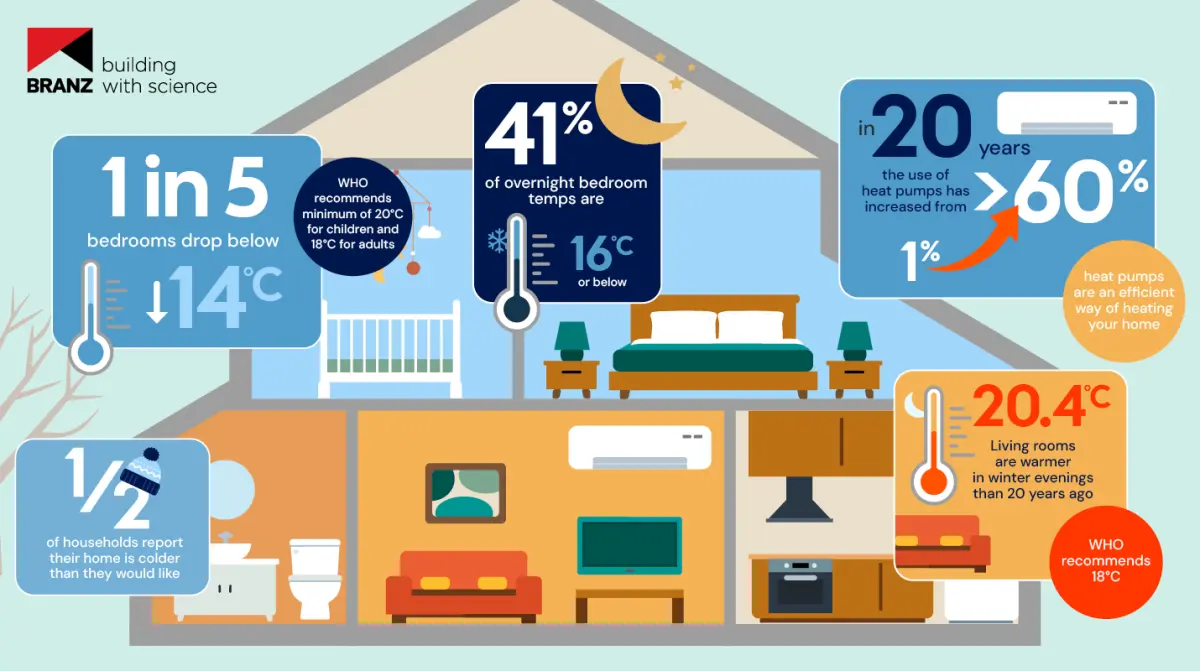
New Zealand living rooms are warmer in winter than they were two decades ago, with average temperatures up 2.6–3.5°C across the day. Evening living rooms now average 20.4°C, above the recommended minimum of 18°C.
BRANZ Senior Scientist Vicki White says this improvement is significant, but not consistent across all homes.
“It’s encouraging to see that homes are warmer on average in winter, but temperatures still vary a lot from home to home, with many households living in colder conditions and dealing with issues like damp and mould.”
Bedrooms still too cold
Despite overall gains, bedrooms remain significantly colder than living areas, especially overnight. Average bedroom temperatures drop to 16.5°C overnight and fall further to around 15.7°C by morning. Forty-one percent of overnight readings sit below 16°C, and nearly one in five (18%) drop below 14°C.
Heating patterns help explain why.
“While 85% of households heat their living rooms regularly in winter, only around one-third heat adult-occupied bedrooms, and 41% never heat them,” says White.
A particular concern for children
White says the findings are especially concerning for young children.
"In homes with young children we saw higher rates of bedroom heating, with around 40% of these rooms heated every day or most days in winter. But many young children are still sleeping in unheated rooms, spending long periods in temperatures well below what's considered healthy."
The World Health Organization recommends a minimum indoor temperature of 18°C, rising to 20°C for young children, older people and those with an illness. Temperatures below these thresholds have been associated with an increased risk of respiratory infections and cardiovascular effects, as well as raised blood pressure.
Heat pumps now more common
One of the biggest changes since the first HEEP study has been the increased use of heat pumps – from just 1% of homes to more than 60% today.
"Heat pumps are a big part of why living rooms are warmer in winter. They heat these spaces efficiently and effectively – a real change from 20 years ago, when households relied much more on portable electric or LPG heaters."
The report was funded by the Building Research Levy, with co-funding from the Building Levy by Ministry of Business, Innovation and Employment (MBIE) and the New Zealand Green Building Council (NZGBC), who supported the Canterbury-based study of dwellings built to Code and above Code.
Get the full study report
Household Energy End-use Project 2 (HEEP2): Indoor Temperatures in New Zealand Homes